
The rental car company wants to know who is paying. The body shop still cannot tell you whether your car is a total loss. The ache in your neck that seemed minor at the scene now wakes you up at night. And an adjuster you have never met keeps calling, friendly and in a hurry. Most people in your position are not looking for a lawsuit. You want your vehicle handled, your medical bills covered, and someone making sure the insurance company does not take advantage of you while you heal. Many accident claims really are simple in Carma Legal’s experience, but some are not. The signs you should hire a personal injury lawyer usually show up in the first week or two, often before you notice your claim has changed.
I am an injury attorney with Carma Legal, which serves injured people from its offices in Charlotte, North Carolina, and Mesa, Arizona. I have represented thousands of injured clients over about 12 years, in big law firms and in boutique firms. I am licensed in North Carolina. Before I represented injured people, I worked for insurance companies and defended claims for them, so I know how a file gets evaluated on their side of the desk. Below are the seven signs I watch for in North Carolina crashes, what each one means for you, and what to do about it.
1. Do I Need a Personal Injury Lawyer If My Injury Requires Surgery, Imaging, Specialists, or Weeks of Treatment?
Your claim is no longer a quick property damage settlement once your injury needs surgery, an MRI or CT scan, a specialist referral, or weeks of physical therapy. At that point your medical records become the heart of the case, and the insurer will read them closely, looking for reasons to pay you less compensation.
Adrenaline hides a lot at the scene. A claim that starts with a bumper and a rental car can turn into orthopedic visits, imaging, injections, therapy, and missed work, and each appointment adds cost and paperwork. The adjuster is not only adding up bills. They are testing causation: did the crash cause this, or was it already there? They are testing permanency: will this last? And they are looking for gaps in treatment they can call proof that you were not really hurt. If you are handling the claim yourself, you probably will not know those arguments are being built until an offer arrives that ignores half your treatment.
In one matter I handled at Carma Legal, my client received a lowball offer. I did not answer it by simply asking for more money. I went back with legal research and case-specific evidence, including jury verdicts and settlements from similar cases in the same county. In effect I told them: here are comparable cases, here are the similarities and differences, and here is why your number does not hold up according to the facts of this particular case. The offer went up. I still did not believe it fairly compensated my client given the circumstances we were working with in that case, and I refused to compromise on what I believed that particular claim was worth, so we kept pushing and got the insurer to mediation. The offer at mediation exceeded what my client expected in that individual matter. That outcome came from that case’s own facts, and yours will be judged on its own. What matters here is the approach: being willing to keep pushing, and bringing evidence to the table instead of haggling.
Where your case would be tried matters too. Insurers think hard about venue and the jury pool, because a jury in one county may see an injury very differently than a jury in another. That is why comparables from the same county carry weight. Takeaway: keep every record, follow your treatment plan, and do not let anyone put a number on your claim before you and your doctors know the full medical picture.
2. Is the Insurer Saying You Share the Blame? In North Carolina, That Can End Your Claim
Take any suggestion that you share the blame seriously the moment fault comes up. North Carolina follows contributory negligence. If a jury finds you even slightly at fault for the crash, that finding can bar you from recovering anything from the other driver.
Most states reduce what you can recover by your share of the blame. North Carolina is one of only a handful of places that still use the older, harsher rule. Contributory negligence comes mostly from court decisions, not from one statute. North Carolina law does put the burden on the defense: under N.C. General Statutes § 1-139, the defendant must raise contributory negligence in their answer and prove it at trial. Insurers know a jury might accept even a small fault argument, and they use that risk to push injured drivers toward a small check instead of a trial.
In practice, it sounds like this: you were going a few miles over the limit on Independence Boulevard, you changed lanes on South Boulevard without signaling long enough, or you could have braked sooner. None of that has to be true to cause trouble, because even a weak fault argument gives the adjuster room to push. What hurts most is when the evidence for that argument comes from you, in a recorded call where you said something like “I only looked away for a second.”
When fault is disputed, I build the answer from objective evidence: scene photos, witness accounts, video, vehicle damage patterns, and data from the cars themselves. North Carolina also has exceptions. One is the last clear chance doctrine, which can still allow recovery in some cases where the other driver had the final opportunity to avoid the crash. Whether an exception applies is a legal question, not something to argue with an adjuster on the phone. Takeaway: do not debate fault with the insurance company. Once fault is questioned, your claim needs a lawyer’s analysis.
3. Did a Commercial Truck, Rideshare Driver, Work Vehicle, or Pileup Put More Than One Insurer in the Fight?
When more than one driver, company, or insurer is involved, each one has a reason to blame someone else, and you are the easiest target. These cases turn into finger-pointing contests, and you need someone who knows how that contest works.
I saw this from the inside when I defended claims for insurance companies. Each carrier’s first job is to protect its own policyholder and its own money. When three parties share a crash, three adjusters are each trying to push liability onto the other two or onto you. I know that playbook well, because I used to work from the other side of it.
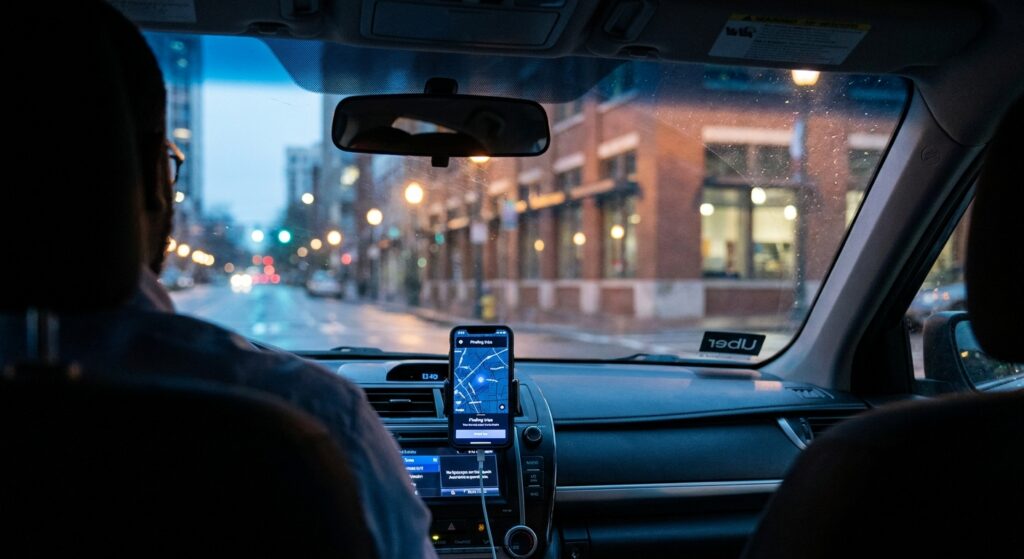
On Charlotte’s interstates, this comes up all the time. A crash with a commercial truck on I-77 or I-85 can involve the driver, the trucking company, the owner of the trailer, and whoever maintained the rig, and each may have its own insurer. Trucking cases also depend on records only the carrier holds, such as driver logs under the Federal Motor Carrier Safety Administration’s hours-of-service rules. A rideshare crash depends on what the driver’s app showed at that moment. A work van raises the question of whether the driver was on the job. A chain-reaction pileup on I-485 turns into an argument about who hit whom first.
Picture a three-car crash. The second driver’s insurer says the first car stopped short, while the first driver’s insurer says the third car pushed everyone forward. You are stuck in the middle, getting nothing while they argue. Add North Carolina’s contributory negligence rule, which can bar you from recovering anything if you are found even slightly at fault, and every insurer has one more reason to point at you. Takeaway: in a multi-party accident, you need objective evidence that locks down the order of events early, before each insurer’s version hardens into the official story.
4. Should I Give a Recorded Statement or Settle Fast When the Adjuster Says I Don’t Need a Lawyer?
An adjuster who pushes for a recorded statement, rushes a settlement, or says a lawyer is unnecessary is working to close the file, not to protect you. These moves come early because early is when you know the least about your injuries and your rights.
I see the same pattern again and again. Someone tries to handle the claim alone and says something to the adjuster that gets the claim denied. Or they sign a release while they are still hurt, without realizing what it gives up. Or they put off medical care because they think the pain will pass. Then they get frustrated and end up hiring an attorney later, after the damage is done. By that point I am not building the case from the beginning. I am working around the problems it already has.
You may be worried that refusing a recorded statement makes you look like you are hiding something. It does not. You generally have no duty to give a recorded statement to the other driver’s insurance company. Your own policy may require you to cooperate with your own insurer, which is a separate issue and one more reason to get advice first. A friendly adjuster asking “How are you feeling?” is not making small talk, and “I’m okay, just a little sore” can show up months later as proof that your injury was minor.
Here is what I tell clients I have worked with: keep photos of your vehicle damage and your injuries, get medical attention promptly and keep every appointment, do not speak to the insurance company yourself, and do not sign any documents. Takeaway: you can end the call politely by saying your attorney will be in touch. That one sentence protects more than most people realize.
5. Witnesses, Surveillance Footage, Traffic Cameras, and the Wrecked Car: Will the Evidence Still Exist Next Week?
Key crash evidence may not survive the week. Surveillance systems can record over video within days, witnesses become hard to find, and the car itself may be repaired, sold, or salvaged. The first days after a crash decide whether the most important evidence is saved or lost for good.
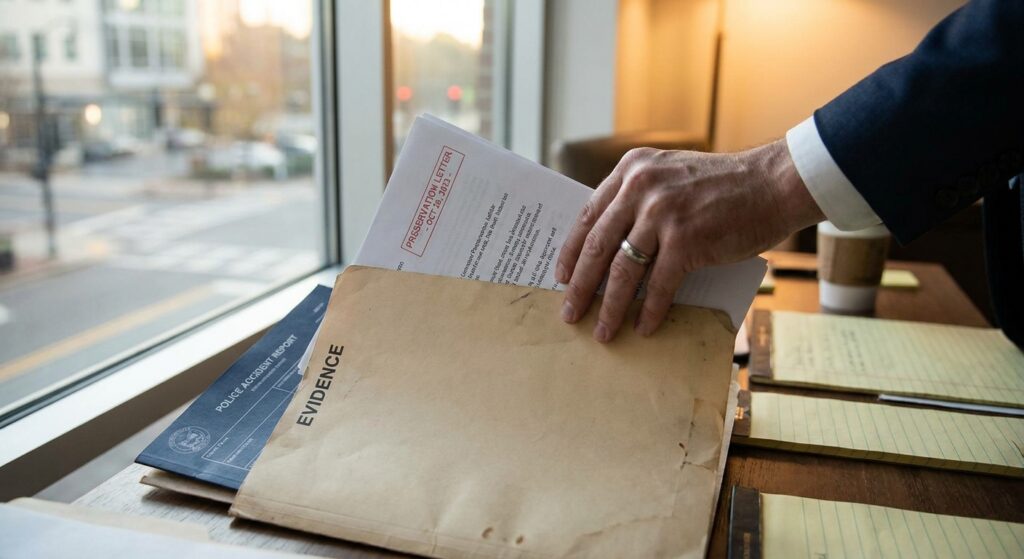
That is why, when a client comes to me early at Carma Legal, objective evidence is my first priority. I get the police report and the 911 records. I identify and contact witnesses while their memories are fresh and their phone numbers still work. I pull satellite images of the scene and look for surveillance and traffic-camera footage. I send preservation letters quickly, telling the other side not to destroy what they have. In serious crashes, I work to preserve black box, or event data recorder, information. Federal rules under 49 CFR Part 563 set what those recorders capture in vehicles that have them, including speed, braking, and seatbelt use in the seconds around a crash.
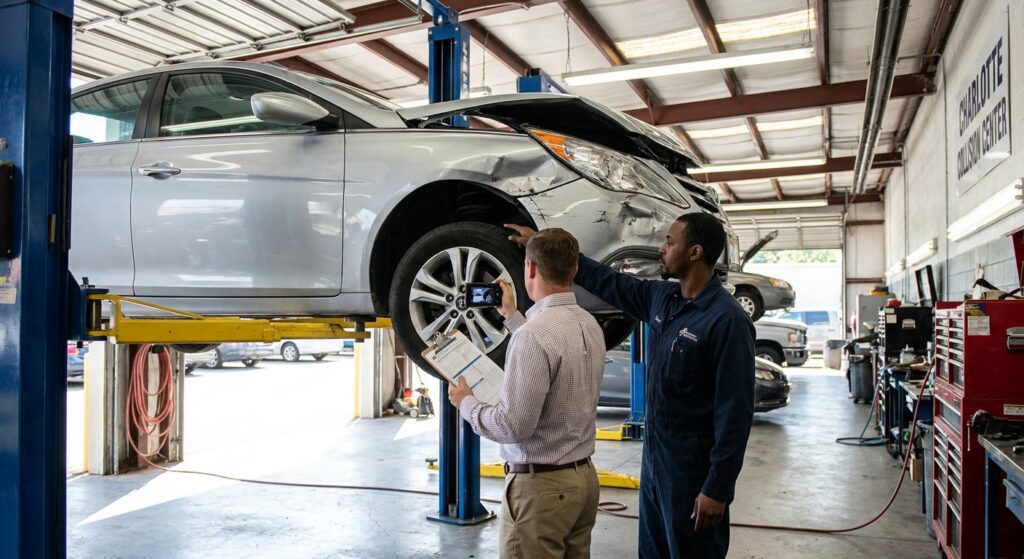
Picture a crash at a busy intersection on Providence Road. A gas station across the street may have a camera pointed right at the lanes, and that system may keep footage only a short time before it records over itself. If nobody asks for it, it is gone, and so is your clearest proof of who ran the light. The same goes for the wrecked car. Once the insurer sends a total loss to a salvage yard, the physical evidence and its data can disappear.
People handling claims alone almost never do this. They are focused on the rental car, the repair estimate, and the pain, which is understandable, so evidence preservation feels like a problem for later. Takeaway: it is not a later problem. It is the most urgent and most overlooked step in the first 72 hours, and it is a big part of preparing a case from the beginning as if it could go to trial.
6. Three Adjusters, Three Different Answers: Who Actually Pays After Your Crash?
Who pays after a crash depends on who caused it, what they were doing at the time, and which policies apply, and one crash can involve three or four policies at once. When adjusters give you conflicting answers, it is usually because each one is reading only its own policy and protecting its own company.
Several policies may be in play: the at-fault driver’s personal liability coverage, an employer’s commercial policy if the driver was working, rideshare coverage that changes depending on whether the app was off, waiting for a ride request, or carrying a passenger, an umbrella policy on top of the base coverage, your own uninsured or underinsured motorist coverage, and your own medical payments coverage. Each one has its own triggers, exclusions, and claim process, and some overlap while others conflict. North Carolina’s financial responsibility law, N.C. General Statutes § 20-279.21, sets rules for required liability and uninsured and underinsured motorist coverage. How those rules interact with the fine print is where claims get complicated.
Say a delivery driver using a personal car hits you on South Boulevard. The driver’s personal insurer may point to a business-use exclusion, and the company the driver was delivering for may say the driver was an independent contractor. You are left with medical bills, a car in the shop, and two adjusters who each say the other one should pay. People going it alone often give up here, or accept whatever the first company offers without knowing there was more coverage behind it.
This coverage confusion is also where the early stress of a crash hits hardest: when you get a rental, when your total loss gets paid, and how your bills get handled while you wait. I take those problems over directly at Carma Legal so you are not refereeing insurance companies from your kitchen table. Takeaway: do not guess which policy applies. Every policy, including its limits, has to be confirmed in writing before anyone talks settlement.
7. Should I Accept an Early Settlement Offer That Feels Wrong? Trust That Instinct
An early offer is not a sign your claim is going well. It usually means the insurer has already put a low number on your claim and wants you to sign before you learn how much compensation you may actually need.
Here is a common version of how it happens. An offer of $4,800 arrives five days after a rear-end crash on I-85. You have not seen a doctor yet, and you have already given a recorded statement saying your neck felt “a little stiff but okay.” To the insurer, that file looks closed: no medical records, your own words downplaying the injury, and a check ready to go. What most people do not realize is that the check comes with a release. Once you sign it, you generally cannot bring another claim for that crash, even if your injuries get worse or new symptoms show up weeks later.
From the insurer’s side, the math is simple, because a small payment now costs far less than a fully documented claim later. The offer is not about fairness. It is about timing. It arrives before your treatment is finished, before your doctors can speak to permanency, and before anyone has gathered the evidence. Of all the signs you should hire a personal injury lawyer, a rushed early offer is the one people most often recognize only after they have already cashed the check.
When I get involved at Carma Legal, I do not answer an early offer with a bigger number pulled from the air. I gather the full medical picture, confirm every available policy, and then negotiate with evidence, including comparables, meaning verdicts and settlements from similar cases, specific to the facts of the matter at hand. Takeaway: you do not have to accept or counter right away. “I am not ready to discuss settlement” is a complete answer, and it keeps your options open.
What Happens When You Call Carma Legal?
If you think your North Carolina injury claim may be too big to handle alone, the next step is simpler than most people expect. When you call Carma Legal, you talk to me, the attorney, not an intake team or a rotating case manager. The consultation is free, and I will give you honest guidance about whether your claim needs a lawyer at all.
You may be wondering whether you even need a lawyer, or whether you can handle this yourself. That is a fair question, and I would rather be candid with someone than take a case that does not need me. If your claim is a simple fender-bender with a quick recovery, I will tell you so. If one or more of the signs you should hire a personal injury lawyer is already showing, such as an injury needing ongoing treatment, disputed fault, multiple insurers, or a rushed early offer, I will explain what it means, what the insurer is likely to do next, and how I would respond.
You may also be worried about cost. Carma Legal handles injury cases on a contingency fee basis, so you do not pay anything upfront for hiring me. And if you are afraid of being handed off to a paralegal and never hearing from a real attorney, I understand. At high-volume firms, clients become file numbers. That is not the firm I want Carma Legal to become. We are very intentional about the cases we take, so I can manage each one personally, and you can email, text, or call me throughout your case. I want to be able to tell my client’s story because I actually know their story. That is what direct access to an attorney and clear communication look like in practice, and it is why every case I take is prepared from the beginning as if it could go to trial.
Carma Legal serves injured people from its offices in Charlotte, North Carolina and Mesa, Arizona, and this guide focuses on North Carolina law. If your claim involves a serious injury, disputed fault, more than one insurer, adjuster pressure, evidence at risk, confusing coverage, or a rushed offer, call Carma Legal at 702-934-2228 for a free consultation before you give a recorded statement, sign anything, or accept an offer you cannot undo. Before you call, write down everyone who has contacted you about the crash and what each of them asked for. That list often shows me right away which warning signs are already at work in your claim.
Not sure whether you’re seeing the signs you should hire a personal injury lawyer?
If you’re weighing whether your injury claim is straightforward or more complex than you first thought, a conversation can bring clarity. The injury lawyers at Carma Legal help people in Charlotte and Mesa understand what their case actually involves and whether representation makes sense for their situation. There’s no pressure to decide today, just honest guidance based on what you’re facing.
Outcomes depend on the specific facts and circumstances of each case, and results in one matter do not predict results in another.