
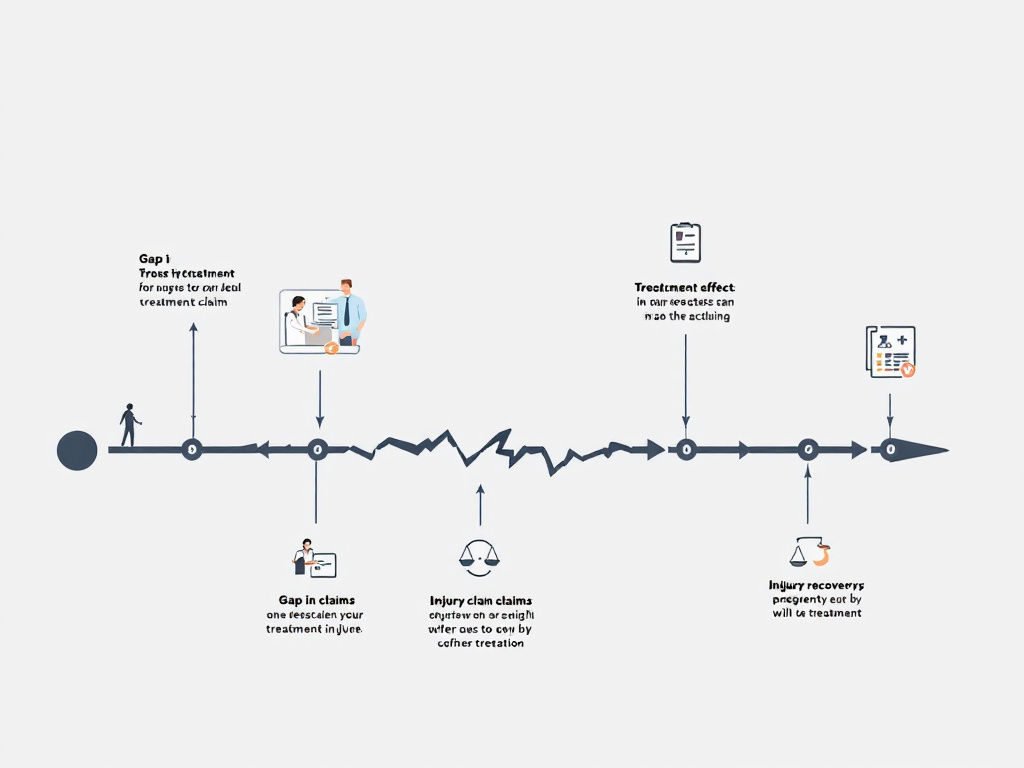
If you have been injured in a crash, you face a number of challenges. On top of your physical recovery, you need to navigate the legal process and build a strong claim for compensation. One factor that can undermine your efforts is the gap in treatment effect on your injury claim. Putting off medical visits or skipping appointments may raise doubts about the seriousness of your injuries and give insurance adjusters a reason to devalue your case.
In this guide, you will learn:
- What treatment gaps are and how they develop
- Why prompt care matters for both your health and your claim
- How insurers exploit gaps to weaken your case
- Legitimate reasons for treatment breaks and how to document them
- Steps you can take to avoid gaps and strengthen your injury claim
Understand treatment gap basics
A treatment gap occurs when you delay or pause medical care after an accident. Insurers and defense lawyers watch for these lapses to challenge causation, claim severity, and your credibility. Knowing the difference between initial and subsequent gaps can help you plan your treatment timeline and maintain clear documentation.
Types of treatment gaps
| Gap type | Definition | Risk threshold |
|---|---|---|
| Initial gap | Time from accident to your first medical visit | 1–2 weeks generally acceptable 3+ weeks raises doubt |
| Appointment gap | Interval between follow-up appointments | Up to 3–4 weeks manageable >4 weeks likely problematic |
Initial gaps often occur because you underestimate your symptoms or worry about medical bills. Appointment gaps may stem from scheduling conflicts, insurance issues, or miscommunication with providers. Both types can invite disputes over whether your injuries stem from the crash or a later event [1].
Treatment timing matters
Seeking prompt medical care not only safeguards your health but also strengthens your case. Timely interventions have been shown to stabilize the condition of victims suffering from traumatic brain injury (TBI), highlighting the importance of early treatment in personal injury cases [2].
Key benefits of timely care:
- Establishes a clear link between the accident and your injuries
- Helps doctors diagnose hidden trauma and prevent complications
- Produces contemporaneous medical records that support your damages
- Demonstrates your commitment to recovery, countering “failure to mitigate” claims
Should you wonder where to start, going to urgent care or your primary physician within 24–48 hours is often best. If your pain seems minor at first, remember that conditions like whiplash or internal bruising can worsen without treatment. For guidance on immediate steps, see “should i go to urgent care after car accident” to make sure you don’t miss crucial early care.
Gap in treatment effect on injury claim
Insurance adjusters routinely look for gaps in your medical history to reduce payouts or deny liability. A well-timed challenge can lead to lower settlements or even a lost case.
How gaps undermine your claim:
- Questioning causation: A long lapse suggests a separate incident caused or worsened your injuries [3]
- Arguing failure to mitigate: Skipped care may be portrayed as you not taking reasonable steps to heal
- Challenging credibility: Defendants claim you were never seriously hurt, making jury awards unlikely
- Disputing damages: Loss of wages, future medical costs, and pain and suffering become harder to prove [4]
Insurance tactics at a glance:
- Highlighting long breaks to shift blame
- Claiming treatment after a gap is unrelated to the crash
- Hiring medical experts to second-guess your needs
- Exploiting vague documentation or missing records
Impact of gap length
| Gap length | Impact on proving causation |
|---|---|
| 1–2 weeks | Generally accepted by juries |
| 3–4 weeks | Increasingly hard to show treatment relates to crash |
| Over 4 weeks | Likely to raise serious doubts about injury validity |
Common causes of treatment gaps
Understanding why gaps happen can help you avoid them. Common factors include:
- Perceived minor injury: You may dismiss pain as negligible
- Scheduling conflicts: Work, family or travel obligations interfere
- Insurance hurdles: Preauthorization delays or coverage questions
- Geographic relocation: Moving or being out of state for weeks
- Miscommunication: Missed reminders or unclear follow-up instructions
Many injured parties face these issues without realizing the legal risk. For example, skipping a follow-up because you feel better can be costly. Every missed appointment is a potential red flag for defense counsel.
Valid reasons for treatment breaks
Not all gaps harm your case. Valid, well-documented reasons can explain short lapses. Typical excusable reasons include:
- Separate medical emergencies or illnesses
- Family crises such as hospitalization of a close relative
- Initial diagnostic phase when doctors observe before prescribing treatment
- Planned treatment progression—shifting from acute care to rehabilitation
When these situations arise, inform your attorney and keep clear records. A note from your doctor, hospital discharge papers, or dated correspondence can show the break was justified and part of genuine healing [5].
Document your medical journey
Thorough documentation is your best defense against gap-based challenges. Follow this checklist to maintain a clear record:
- Keep a pain journal, noting symptoms, intensity, and their impact on daily life (see “pain journal for car accident evidence”)
- Save all medical bills, invoices, and receipts for doctor visits, tests and prescriptions
- Track appointment dates in a calendar or spreadsheet, including cancellations or reschedules
- Request detailed treatment plans and progress notes from each provider
- Photograph visible injuries and therapy-related exercises at home
- Ask your attorney about medical liens and obligations (“medical lien after car accident explained”)
By compiling consistent medical evidence, you make it difficult for insurers to argue your injuries are unrelated or exaggerated.
Strengthen your injury claim
To minimize the effect of any unavoidable gaps and boost your chances of full compensation, take these steps:
- Seek prompt initial care and attend every follow-up.
- Follow your doctor’s recommended treatment plan exactly.
- Keep your attorney in the loop on any delays or breaks.
- Coordinate your recoveries—both medical and legal—by understanding the car accident claim process explained.
- Prepare for adjuster calls by reviewing how to negotiate with an insurance adjuster car accident.
- Consider hiring an experienced lawyer early—learn more at do i need a lawyer after a car accident.
Overall, prompt and consistent medical care not only safeguards your health but also underpins your claim value. If you have questions about how treatment gaps may affect your case, contact a personal injury attorney for a free case review and personalized guidance.