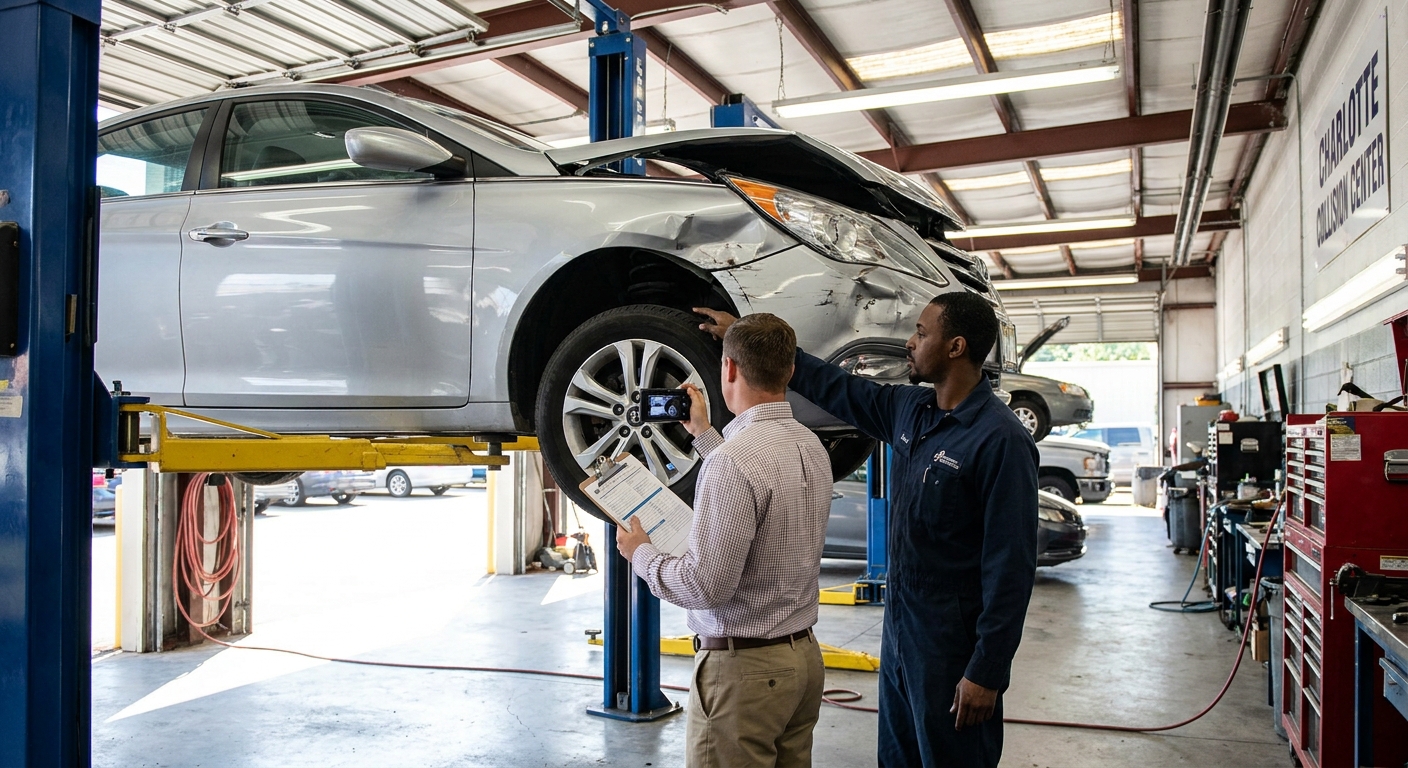
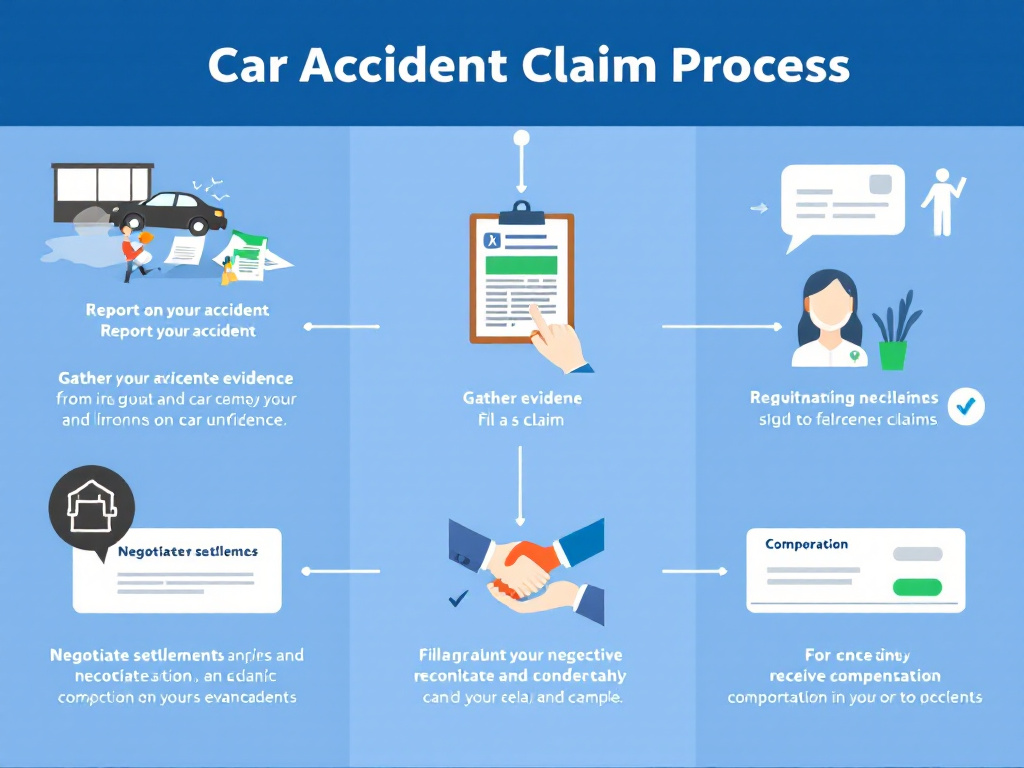
When you’re involved in a crash, knowing the car accident claim process explained in this guide will help you understand each stage of filing, from reporting the collision to securing compensation. You’ll learn what to do at the scene, how to document injuries and damages, when to notify your insurer, and what factors influence your settlement or lawsuit. With clear steps, evidence-gathering tips, timelines, and links to deeper resources, you can navigate your claim confidently and protect your rights.
Gather evidence at scene
Call emergency services
- Dial 911 to request medical responders and police. A prompt medical response protects your health and creates an official record of injuries and crash details [1].
- If possible, remain at the scene until first responders arrive.
Exchange information with other parties
- Get names, addresses, phone numbers, driver’s license and plate numbers, and insurance details from every driver.
- Note contact information for passengers and eyewitnesses who saw the collision unfold.
Document the accident scene
- Take clear photos or videos of vehicle positions, damage, skid marks, traffic signals, road conditions, and nearby signage. These visuals can be vital evidence later [1].
- Use your smartphone to capture timestamped images from multiple angles.
Seek prompt medical care
See a doctor immediately
- Even if you feel fine, internal injuries or soft tissue damage may emerge later. Prompt exams rule out serious issues and document injuries [2].
- Keep copies of all medical bills, hospital invoices, prescription receipts, and rehabilitation costs.
Follow prescribed treatment
- Attend follow-up appointments and therapy sessions as recommended. Insurance companies may question your claim if there is a gap in treatment [3].
- Record symptoms, medication changes, and how your injuries affect daily life in a pain journal [4].
Notify your insurance company
Report the accident promptly
- Call your insurer soon after the crash to open a claim file. Failure to do so can delay compensation and may violate your policy terms [5].
- Provide accurate details: date, time, location, involved parties, and a brief description of damages and injuries.
Cooperate and document
- Share photos, police reports, medical records, and repair estimates as requested. Maintain honesty to streamline claim evaluation.
- Avoid admitting fault or discussing settlement offers without legal advice.
Initiate your claim filing
File with primary insurer
- Submit a claim to your insurer if you live in a no-fault state or if you carry personal injury protection (PIP) or medical payments (MedPay) coverage [6].
Explore uninsured motorist coverage
- If the other driver lacks insurance, file an uninsured motorist claim [7] or follow steps for a hit-and-run claim [8].
Initiate third-party claims
- When fault lies with another driver, file your claim with their liability insurer. You may also need to notify your insurer to protect your interests.
Establish fault and liability
Obtain the police report
- The crash report records officer observations, driver statements, road conditions, and preliminary fault opinions. You can request it from law enforcement or through your attorney. [2].
Gather witness testimony
- Collect written or recorded statements from eyewitnesses to support your version of events. Witnesses can describe vehicle actions, traffic signals, and driver behavior [1].
Analyze vehicle damage
- The type and location of damage often indicate who was at fault. Photos of damage patterns, skid marks, and debris can reconstruct collision dynamics [1].
Consider comparative fault laws
- In many states, including Indiana, fault is shared by percentages. Your settlement is reduced by your share of blame [9]. Learn more about shared liability at comparative negligence car accident explained.
Consult experts
- Accident reconstruction specialists, medical professionals, and economists can strengthen your claim by testifying on causation, injury severity, and cost projections.
Assess your claim value
Calculate economic damages
- Documentable costs include:
- Medical expenses (emergency care, surgeries, therapy)
- Future medical costs [10]
- Lost wages and diminished earning capacity [11]
- Property damage (vehicle repairs, diminished value, total loss)
Estimate non-economic damages
- Compensation for pain and suffering, emotional distress, and loss of enjoyment of life. These intangible losses are often calculated using the multiplier method or per diem formulas [12].
Compare damage types
| Damage category | Examples |
|---|---|
| Economic damages | Hospital bills, rehab costs, repair estimates |
| Non-economic damages | Pain, emotional distress, loss of consortium |
| Punitive damages | Rare in negligence cases unless gross fault |
For a personalized estimate, see how much is my car accident claim worth.
Negotiate with insurance adjusters
Draft a demand letter
- Outline your claim’s facts, liability evidence, and detailed damages. Use our car accident demand letter example for guidance.
Provide supporting documentation
- Attach police reports, medical records, repair bills, photos, and expert reports. The more thorough your package, the stronger your negotiating position.
Handle recorded statements
- Insurers may request a recorded statement. Consult recorded statement to insurance should i give one to protect your rights.
Use negotiation strategies
- Emphasize clear evidence of liability, document future costs, and rebut lowball offers with factual counterarguments. Explore car accident settlement negotiation tips.
Consider legal representation
- A lawyer can handle communications, counter unfair tactics, and potentially increase your settlement. If you wonder do i need a lawyer after a car accident, consult a reputable attorney for a free case review.
Explore litigation options
Evaluate mediation versus trial
- Many claims settle through mediation or arbitration. If negotiations stall, a lawsuit may be necessary. Compare your options at mediation vs trial in car accident lawsuits.
Watch statute of limitations
- Each state sets a filing deadline. In Georgia you have two years, in Texas it can vary. Check car accident statute of limitations to avoid forfeiting your rights.
Understand lawsuit timelines
- From complaint to verdict, car accident lawsuits can take months or years. Learn typical durations at how long does a car accident lawsuit take.
Secure your compensation
Finalize settlement or verdict
- Once you accept an offer or win at trial, your attorney will help draft a release and distribute funds.
Cover medical bills
- Settlement proceeds usually pay outstanding medical liens first. Learn who ultimately pays at who pays medical bills after a car accident. If you used health insurance, see using health insurance after a car accident and medical lien after car accident explained.
Resolve property claims
- For a total loss vehicle, follow total loss car payout process. File a diminished value claim if applicable [13]. If you need a rental, consult rental car after accident who pays.
Key takeaways and next steps
- Gather evidence immediately
- Seek medical care without delay
- Notify your insurer promptly
- Document all expenses and injuries
- Understand fault and liability rules
- Calculate economic and non-economic damages
- Negotiate firmly or consider legal help
- Watch filing deadlines and dispute options
Checklist
- Call 911 and exchange information at the scene
- Take photos, videos, and eyewitness contacts
- Get a police report and prompt medical evaluation
- Notify your insurer and file claims as needed
- Preserve medical records, bills, and pay stubs
- Draft a demand letter with supporting documentation
- Negotiate settlement or prepare for litigation
Ready to discuss your case? Contact us today for a free case review and personalized guidance through every step of your car accident claim process.
References
- (Dax Garza Law)
- (Hocker Law Firm)
- (gap in treatment effect on injury claim)
- (pain journal for car accident evidence)
- (Progressive)
- (pip vs medpay vs liability coverage explained)
- (uninsured motorist claim process)
- (hit and run claim what to do)
- (Keller & Keller)
- (future medical expenses in car accident claims)
- (lost wages claim after car accident)
- (pain and suffering car accident calculation)
- (diminished value claim after car accident)