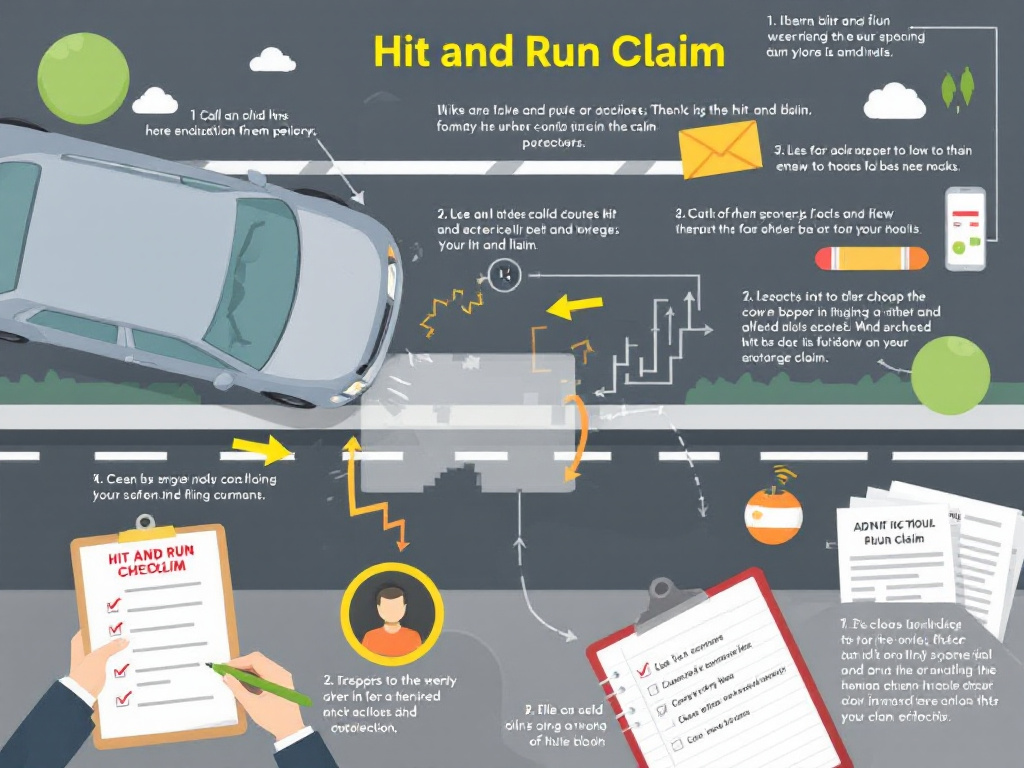
Experiencing a hit-and-run collision can leave you feeling overwhelmed and uncertain about your next steps. When you face a hit and run claim what to do next may feel confusing, but taking prompt, organized action is essential for protecting your health, preserving critical evidence, and maximizing your chance of fair compensation. Every 43 seconds, a driver flees the scene of a crash in the U.S. [1], and nearly 75 hit-and-run incidents are reported nationwide each hour [2]. By following a clear plan—from assessing safety at the scene to negotiating with insurers—you can reduce stress and keep your claim on track.
Assess scene safety
After a collision, your immediate priority is to protect yourself and others from further harm. A calm, systematic response will help you focus on the steps ahead.
Check for injuries
- Look for visible wounds, bleeding, or signs of concussion such as dizziness or blurry vision
- Ask passengers and bystanders if they are hurt
- If anyone is seriously injured, call 911 right away
Move to safety
- If your vehicle is operable, pull it to the shoulder or a nearby parking area
- Avoid standing between vehicles or in active traffic lanes
- Keep a safe distance from the roadway until help arrives
Turn on hazard lights
- Activate your hazard lights to warn approaching drivers
- Use reflective triangles or flares if you have them
- Encourage bystanders to stay clear of traffic
Report hit and run
Filing an official report with law enforcement establishes a record of the incident and is critical for your insurance claim.
Call 911 and police
- Provide the dispatcher with your location, description of the other vehicle, and any details about the driver’s behavior
- Stay on the line until responders arrive to secure the scene
File official police report
- Give the responding officer your account of what happened
- Ask for the incident or report number and the officer’s name and badge number
- Request a copy of the completed report for your records and your insurer
State-specific requirements
Depending on where the crash occurred, state laws may impose additional duties:
| State | Reporting window | Key requirements |
|---|---|---|
| South Carolina | Immediately at scene | Stop in a safe spot, provide ID and insurance, assist injured [3] |
| California | As soon as practical | Report all hit-and-runs under Vehicle Code §20002 |
| New York | Within 24 hours | File police report and notify DMV to avoid penalties |
Document critical evidence
Early documentation preserves details that can strengthen your claim and help law enforcement identify the fleeing driver.
Gather witness details
- Ask witnesses for names, phone numbers, and email addresses
- Note any observations about the other vehicle’s make, model, color, or partial license plate
Capture photos and video
- Take clear images of damage to your vehicle, skid marks, debris, and surrounding road conditions
- Record video of the scene, focusing on traffic cameras or nearby businesses that may have security footage
Preserve physical evidence
- Collect paint chips, broken parts, or glass fragments when safe to do so
- Store items in plastic bags to prevent loss or contamination
- Cite the importance of physical clues in investigations [4]
Seek medical attention
Your health comes first. Even if you feel fine, some injuries show symptoms only later.
Check for hidden injuries
- Be alert for signs of concussion, internal bleeding, whiplash, or soft tissue damage [2]
- Shock can mask pain and delay symptom onset
Follow up treatment
- Visit a primary care doctor or urgent care within 24–48 hours
- Follow all diagnostic and therapy recommendations, such as imaging or physical therapy
Keep medical records
- Save all emergency room and doctor’s office notes, invoices, and treatment plans
- These documents form the backbone of your injury claim
Notify your insurer
Most policies require prompt notification of any accident, including hit-and-runs. Delays can jeopardize your coverage.
Contact within 24 hours
- Call your insurance agent or company hotline as soon as possible
- Provide only the basic facts—avoid speculation about fault
Provide police report
- Give your insurer the report number and a copy of the police report
- This supports your version of events
Explore uninsured motorist coverage
- Many policies include uninsured motorist (UM) benefits to cover hit-and-runs when the other driver is unknown [5]
- UM coverage can pay for medical bills, lost wages, and pain and suffering
Understand insurance coverage
Knowing your policy’s limits and exclusions helps you make informed choices and avoid surprises.
Compare coverage types
- Personal injury protection (PIP), medical payments (Medpay), and liability coverage serve different purposes [6]
- PIP covers your medical and sometimes lost wages, Medpay handles medical costs only, liability protects third parties
What if driver is uninsured
- If the at-fault driver cannot be found, UM or underinsured motorist coverage steps in [7]
- Verify your policy’s UM limits and any deductible
No-fault vs fault states
- Some states require your own coverage to pay regardless of fault, while others let you pursue the at-fault party directly
- Check state rules before filing
Determine fault and liability
Establishing who caused the crash affects how much you can recover and from whom.
Use evidence to prove fault
- Photographs, video, witness statements, and debris analysis help demonstrate negligence [8]
Understand comparative negligence
- In many states, your recovery can be reduced if you share fault [9]
- Even a small percentage of fault can cut your compensation
Impact on compensation
- The clearer the liability picture, the stronger your negotiating position
Build compensation claim
Your claim should account for all economic and non-economic losses tied to the hit-and-run.
Calculate economic damages
- Lost wages, both current and projected [10]
- Vehicle repairs or replacement (see property damage vs bodily injury claim difference)
Estimate non-economic damages
- Pain and suffering, emotional distress, and loss of enjoyment of life [11]
Include future expenses
- Anticipated medical costs, therapy, and assistive devices [12]
- Document prognosis and treatment plans thoroughly
Navigate claim timelines
Staying aware of deadlines and response windows prevents forfeiting your right to sue or recover.
Statute of limitations
- Most states set a filing deadline, typically two to three years after the crash [13]
Demand letters and responses
- A formal written demand outlines your claim and requests compensation [14]
- Insurers usually have 30–60 days to respond
Typical settlement timeframe
- Many claims resolve within 6–12 months; complex or litigated cases can take longer [15]
Consider legal representation
A knowledgeable attorney can guide you through complexities and advocate on your behalf.
When to hire a lawyer
- If liability is unclear, injuries are severe, or the insurer denies your claim [16]
- Early involvement improves evidence preservation
Benefits of personal injury counsel
- Legal expertise on fault and damages
- Negotiation leverage with insurance adjusters
- Access to investigators and medical experts
Prepare for settlement negotiation
Approaching discussions strategically helps protect your claim value.
Tips for negotiating with adjusters
- Remain polite but firm, stick to documented facts [17]
- Avoid giving recorded statements without your attorney’s advice
Mediation vs trial
- Many claims settle through mediation, a less formal process [18]
- Prepare for trial if negotiations stall
Protect your claim value
- Don’t accept the first lowball offer, and keep your treatment ongoing until released by a doctor
Answer frequently asked questions
Clear answers to common concerns can ease your uncertainty and help you plan.
How long does the process take?
From filing to final settlement, most claims close in under a year, but complex cases may stretch beyond 18 months [15]
Should I give a recorded statement?
Insurance companies often request recorded statements but you can decline or postpone until you consult an attorney [19]
What happens next?
- Your insurer investigates and may offer a settlement
- If negotiations fail, you can file suit or proceed to mediation/trial
Ready to protect your rights and secure full compensation? Request a free case review today and get personalized guidance on your hit-and-run claim.
References
- (Morelli Law)
- (West Law Firm SC)
- (The Clardy Law Firm)
- (OEB Law)
- (uninsured motorist claim process)
- (pip vs medpay vs liability coverage explained)
- (what happens if other driver has no insurance)
- (how-to-prove-fault-in-a-car-accident)
- (comparative negligence car accident explained)
- (lost wages claim after car accident)
- (pain and suffering car accident calculation)
- (future medical expenses in car accident claims)
- (car accident statute of limitations)
- (car accident demand letter example)
- (how long does a car accident lawsuit take)
- (do i need a lawyer after a car accident)
- (how to negotiate with an insurance adjuster car accident)
- (mediation vs trial in car accident lawsuits)
- (recorded statement to insurance should i give one)