
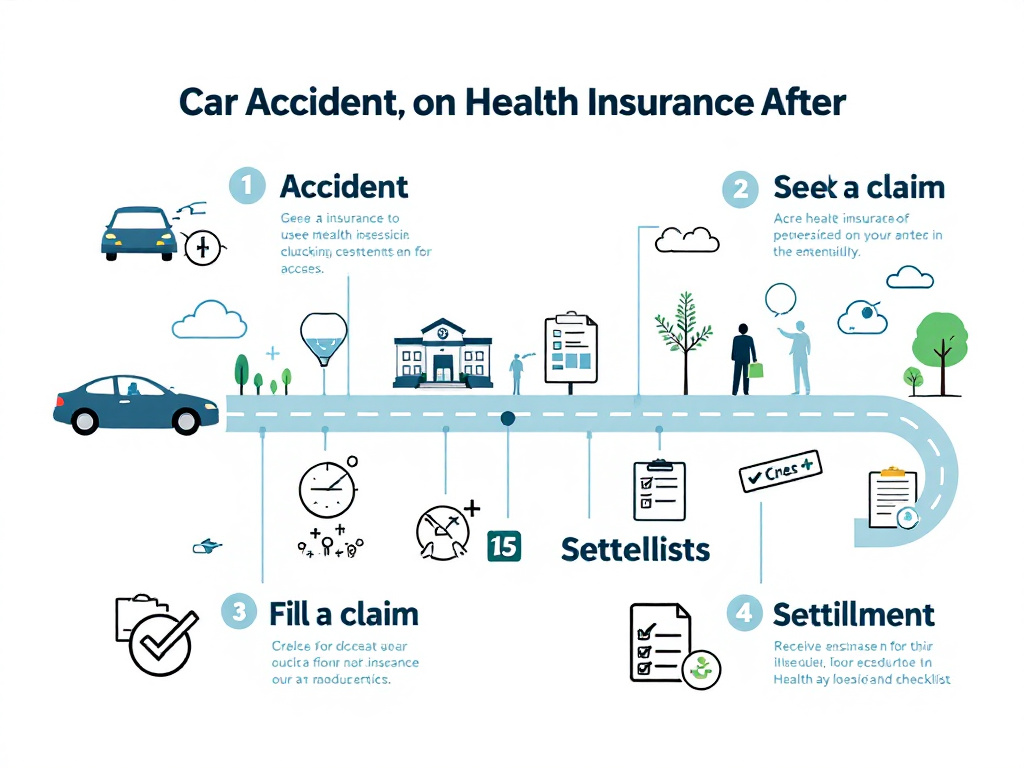
After a collision, using health insurance after a car accident can help you cover medical treatments and protect your finances. Navigating health coverage alongside auto insurance benefits may feel complex, but understanding each step will streamline the process and prevent unexpected bills. In this guide, you’ll learn how to obtain prompt care, coordinate payments between insurers, handle billing disputes and prepare for any legal claim.
You will discover how to:
- Seek immediate medical attention and document injuries
- Notify both your auto insurer and your health benefits provider
- Compare health, personal injury protection and liability coverages
- Coordinate primary and secondary payments to avoid delays
- Appeal denied claims and manage out-of-pocket costs
- Link medical treatment to any personal injury action
By following this clear process, you can focus on recovery while ensuring that care providers and insurance companies work together to cover your medical expenses. Let’s walk through each essential phase so you know what to do next.
Start medical care
Once you’re safe, prioritize your health. Seeking prompt treatment not only protects your well-being but also creates a documented record of injuries crucial for billing and any future claim.
Seek prompt treatment
- Call emergency services if you have life-threatening injuries
- Visit an emergency department for head trauma, severe pain or deep wounds
- Consider urgent care for minor injuries—many centers treat soft tissue injuries and whiplash [1]
- Follow up with your primary care physician or specialist as recommended
Waiting can worsen injuries and raise suspicions of non-accident-related conditions.
Document injuries
- Ask providers to note “injury due to motor vehicle accident” in your medical records
- Take photos of bruises, swelling and any visible wounds
- Keep a treatment journal recording symptoms, appointment dates and prescribed therapies
- Retain all invoices, itemized bills and receipts
Medical providers typically request both health insurance and auto insurance information if you seek care for accident-related injuries [2]. Providing both up front helps streamline billing.
Notify insurance providers
Informing insurers early accelerates payments and clarifies responsibility. You’ll need to contact both your auto insurer and your health benefits administrator.
Report to your auto insurer
- Call your auto insurance carrier right away to start a claim
- Provide basic accident details, police report number and medical provider contacts
- Ask about medical-payments (MedPay) or personal injury protection (PIP) benefits
- Work with the adjuster to submit all bills, records and treatment summaries [2]
Inform your health insurance
- Call the member services number on your health insurance card
- Explain that you have injuries from a car crash and share any claim or policy numbers
- Ask whether your policy requires prior authorization for treatments related to an accident
- Confirm your co-pay, deductible and coverage limits
Knowing “who pays medical bills after a car accident” helps you plan for co-pays and deductibles [3].
Compare coverage options
Understanding each policy’s role avoids gaps. You likely have at least two relevant policies—auto insurance and health insurance—and possibly PIP or MedPay.
| Coverage type | Who pays first | Coverage limits | Deductible or co-pay |
|---|---|---|---|
| Personal injury protection | Primary for medical expenses | Varies by state, often $2,500–$50,000 | None or minimal |
| MedPay (medical payments) | Primary for you and passengers | Typically $1,000–$10,000 per person | None |
| Auto liability (at-fault) | Pays injured party after PIP | Up to liability limits (e.g., $25,000/$50,000) | May not apply |
| Health insurance | Secondary after auto benefits | Plan-specific (hospitalization, rehab, rehab) | Standard co-pays and deductible |
- PIP and MedPay cover your accident-related medical costs regardless of fault [4]
- Auto liability steps in only if you prove the other driver’s fault
- Health insurance often pays only after auto benefits are exhausted, then may seek reimbursement through subrogation
Compare your plan documents or talk with an agent to confirm exact limits and order of payment.
Coordinate benefit payments
When multiple policies apply, one is primary and the other is secondary. Coordinating benefits ensures you avoid billing surprises and protect your credit.
Determine primary payer
- In no-fault states, PIP or MedPay typically pays first for medical bills
- If the at-fault driver is clear, their liability insurer may become primary after PIP
- Health insurance often serves as secondary, covering deductibles or costs above auto policy limits [5]
Understand subrogation
When your health insurer covers an expense that auto insurance should have paid, they can demand repayment from your accident settlement. This right is called subrogation [6]. To avoid surprises:
- Keep track of all medical bills paid by your health plan
- Notify your health insurer about any settlement or lawsuit
- Reserve part of your recovery to satisfy subrogation claims
For details on health carrier repayment rights, see medical lien after car accident explained.
Manage medical billing
Even with insurance, you may face co-pays, deductibles or uncovered services. Planning ahead helps you stay on top of outstanding balances.
Handle out-of-pocket costs
- Review each explanation of benefits (EOB) carefully
- Note the deductible applied and co-pay amounts owed
- Set aside funds or use a health savings account (HSA) if available
- Track unpaid balances and due dates
Explore payment options
If you lack coverage or can’t afford bills:
- Ask providers about interest-free payment plans or sliding-scale fees [7]
- Negotiate lower rates for self-pay or work out a deposit agreement
- Check whether local clinics or charity programs offer accident-relief assistance
Addressing bills promptly prevents collection actions and credit damage.
Appeal denied claims
Insurance companies may deny or delay claims for various reasons. A structured appeal can reverse unjust denials and secure coverage.
File an appeal
- Review the denial letter to identify the reason
- Gather supporting documents: medical records, doctor’s notes, X-rays
- Write an appeal letter referencing policy language and attach evidence
- Submit within the insurer’s deadline, typically 30–60 days
Seek dispute resolution
- If internal appeal fails, request an external review by your state insurance department
- Consider mediation or arbitration before litigation
- Consult a personal injury attorney to explore further legal options [8]
Insurers often scrutinize claims and require extensive documentation—proper records dramatically improve your appeal success [9].
Prepare legal actions
If your medical expenses exceed insurance coverage or liability is disputed, you may pursue a personal injury claim to recover unpaid costs and damages.
Medical liens and settlements
When your health or auto insurer pays bills, they may place a lien against your settlement. A lien ensures they get reimbursed from any award or verdict. Key steps:
- Identify any liens early and negotiate their amounts
- Factor lien repayment into your settlement demand
- Request a lien waiver or reduction when possible
Learn more about lien mechanics at medical lien after car accident explained.
Impact of treatment gaps
Failing to follow prescribed care or delaying treatment can weaken your injury claim by raising doubts about causation or severity. To protect your case:
- Attend all recommended appointments
- Document reasons for any gaps, such as insurance delays
- Keep a pain journal to detail ongoing symptoms [10]
For a full walkthrough of the claim timeline, see car accident claim process explained.
Use best practices
Following proven strategies saves time and reduces stress. Here are key tips for managing health insurance after a crash:
- Keep an accident file with all medical records, bills and correspondence
- Track every dollar paid and owed to simplify subrogation discussions
- Respond promptly to insurer requests to avoid denials
- Review your policy for PIP, MedPay and deductible details
- Consult a qualified attorney early, especially if liability or coverage is disputed
- Learn negotiation tactics before speaking with adjusters [11]
- Monitor important deadlines such as your state’s statute of limitations
By maintaining organized records and clear communication, you’ll navigate both medical coverage and any legal claim more confidently.
Recovering from a car accident involves more than healing your body—you must also manage complex insurance processes and potential legal actions. By following each step in this guide, you can make sure treatment providers, health insurers and auto carriers work together to cover your medical expenses. If you need further assistance or want to explore your rights after an accident, consider requesting a free case review with an experienced personal injury attorney.
References
- (should i go to urgent care after a car accident)
- (Progressive)
- (who pays medical bills after a car accident)
- (The Zebra)
- (Accident Doctor)
- (Brown and Crouppen)
- (Nolo)
- (do i need a lawyer after a car accident)
- (Quantum Pain & Spine Injury Clinic; Accident Doctor)
- (gap in treatment effect on injury claim)
- (how to negotiate with an insurance adjuster car accident)