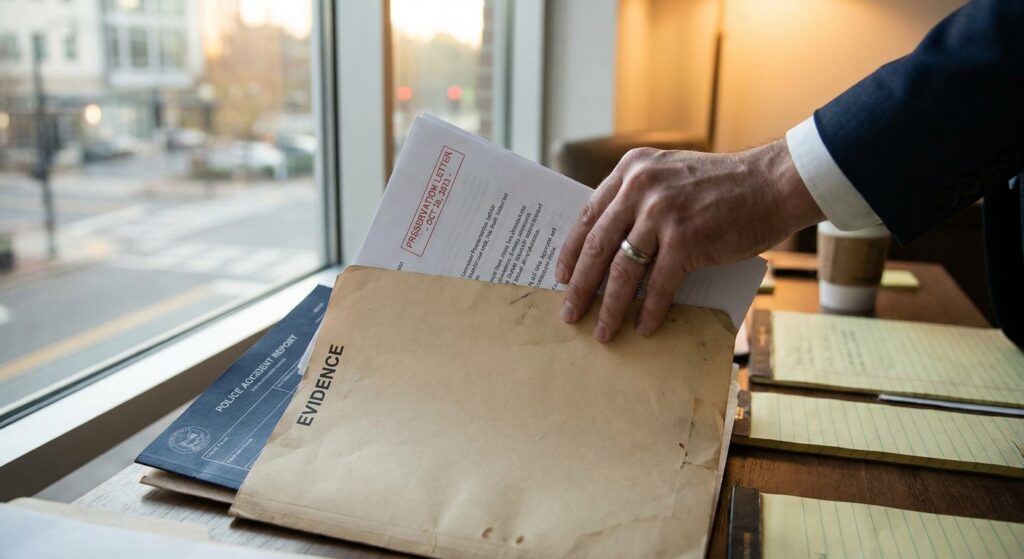
After an accident, you may know exactly what happened, but an injury claim is not built on what you know, it’s built on what you can prove. Evidence matters in every case, but it matters even more in North Carolina.
Under North Carolina’s contributory negligence rule, if the insurance company can prove you were even partly at fault, your claim can be completely denied. Early proof can decide whether the insurer has room to blame you. Photos, videos, police reports, witness information, medical records, cell phone data, and other documentation can all help show what happened, who caused it, and how the injury changed your life.
Why Evidence Matters in a North Carolina Injury Claim
A strong injury claim has to prove more than one thing. It has to show how the accident happened, who was responsible, and what the injury actually cost you.
The insurance company may challenge any part of that story. It may argue that its driver did nothing wrong, that you were partly at fault, or that your injuries were minor or unrelated to the accident. Evidence is what pushes back against those arguments.
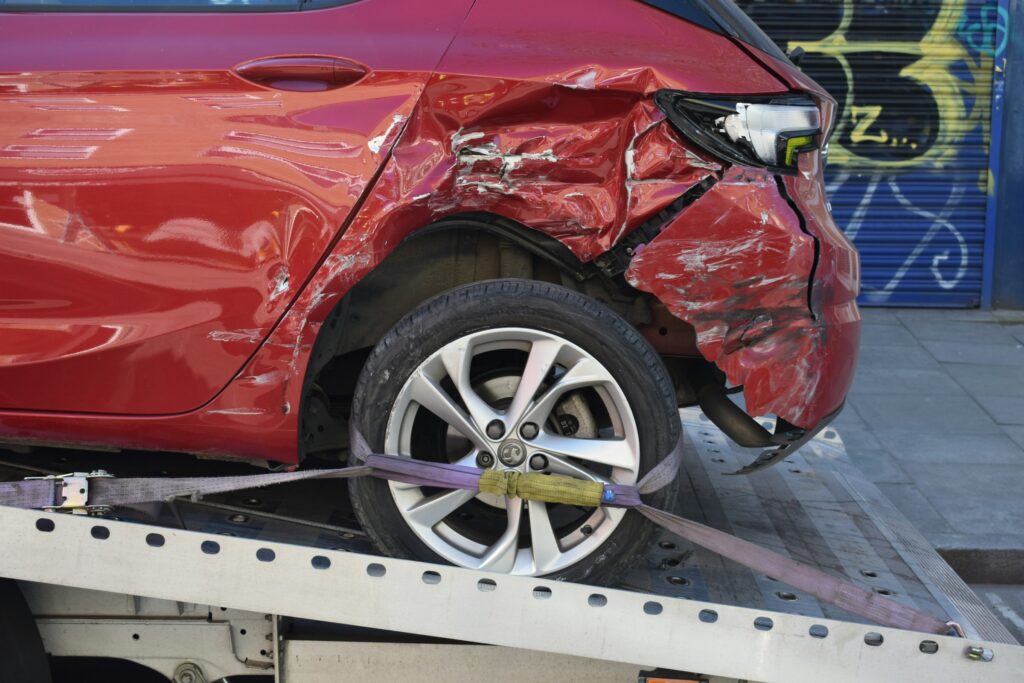
After a crash on I-77 in Charlotte, photos of the vehicle damage, the crash scene, the police report, and witness information may help show how the collision happened. Medical records, work notes, treatment history, and documentation of daily limitations can help show how the crash has changed your life.
Evidence shows who caused the accident and what the injury took from your life.
What Evidence Helps Prove Fault?
Some evidence helps prove who caused the accident. In a car accident case, that may include vehicle damage photos, crash scene photos, traffic camera footage, dash camera footage, witness names, the police report, repair estimates, and details about road, weather, or lighting conditions.
In a slip and fall case, that could include photos of the hazard, surveillance video, an incident report, witness names, maintenance records, cleaning logs, prior complaints, or proof that the property owner knew about the danger and failed to fix it.
This evidence matters because the insurer may try to shift blame. In a crash, it may claim you were speeding, distracted, following too closely, or failed to avoid the collision. In a fall case, it may argue the hazard was obvious and you should have seen it.
Collect and preserve this proof early, before the insurer’s version becomes harder to challenge.
What Evidence Helps Prove Your Injuries and Losses?
Showing who is at fault is only half the battle. You also must show what the injury cost you. That means medical records are extremely important because they connect the injury to the accident. They show injuries, symptoms, what treatment you received, whether you improved, and whether you have ongoing problems.
Useful damages evidence can include:
- Emergency room records
- Medical bills
- Imaging results
- Specialist records
- Physical therapy notes
- Prescription records
- Work restrictions
- Pay stubs or proof of missed income
- Photos of visible injuries
- Notes about pain, sleep problems, driving anxiety, or daily limits
- Statements from family members, friends, coworkers, or supervisors
Consistency when receiving treatment is also important because gaps in care can create problems. If you stop treatment for weeks or months, the insurance company may argue that you were not badly hurt, that you recovered, or that something else caused your symptoms.
Sometimes there is a good reason for a gap. Maybe you had no transportation, or the provider couldn’t schedule you sooner. In either case, those facts should be documented too.
Pain and suffering resulting from the accident also needs supporting proof. It is not enough to say the injury changed your life. You need evidence to show how it’s been affected. That may mean documenting missed family activities, sleep disruption, limits on exercise, anxiety while driving, trouble working, depression or needing help with normal tasks.
The more specific the evidence, the harder it is for the insurer to dismiss the injury as vague or exaggerated.
What Can Hurt Your Claim Before Evidence Disappears?
It’s not uncommon for surveillance footage to be overwritten or dash camera footage to be deleted. Vehicles may be repaired or sold. A spill may be quickly cleaned up and a broken step easily fixed. Witnesses may forget details or become hard to reach.
Waiting can hurt the claim long before the filing deadline arrives. Evidence can disappear before you know it, leaving you with a weaker case.
The insurance company may use missing photos, delayed treatment, lost witness information, or unclear records to argue that the accident did not happen the way you say it did, or that your injuries are not as serious as you claim.
Common mistakes include:
- Waiting too long to take photos
- Failing to get witness names
- Delaying medical care
- Leaving treatment gaps unexplained
- Giving a recorded statement too early
- Posting about the injury online
- Repairing a vehicle before taking damage photos
- Throwing away damaged property
- Signing a release before you know the full injury
The insurance company is already building its file. You should be protecting your case by acting quickly to secure your proof of damages.
What Should You Save After an Accident?
Save anything that helps show what happened, who was involved, what was damaged, what hurt, and how the injury affected your life.
That may include photos, videos, crash reports, incident reports, medical records, bills, prescriptions, discharge papers, insurance letters, emails, text messages, repair estimates, receipts, work notes, and witness contact information.
If you are not sure whether something matters, save it. If you are unsure if something should be documented, document it.
Keep a journal of calls, doctor appointments, pain and symptoms, and anything else that may be important. It is better to have that information than not, should it become important down the road. A text about missing work may help prove lost income, and a short note about pain after a medical visit may help show how your symptoms developed over time.
You do not need to organize the whole case yourself. But you should avoid losing the pieces that may matter.
Talk to a North Carolina Personal Injury Attorney Before Evidence Disappears
Evidence matters from the start. The longer you wait, the easier it is for proof to disappear and for the insurance company to build its own version of what happened.
If you were hurt in Charlotte or elsewhere in North Carolina, request a free case evaluation before giving a recorded statement or assuming the insurer has everything it needs. Nick can identify what proof should be protected before photos, video, records, or witness details are lost.