
One day, you’re driving along I-40, minding your own business, running errands, or just trying to get home. Then someone made a bad decision, and now you’re dealing with vehicle damage, medical appointments, missed work, insurance calls, and pain that wasn’t there before.
What felt routine just hours ago now feels uncertain and overwhelming. You may not know who is paying for the car, whether your pain will get worse, or what you are supposed to say when the adjuster calls.
On top of that, you may be trying to make sense of what comes next. Who pays for the damage? Do you need medical records right away? Should you speak to the insurance company? You might even be wondering whether you have a personal injury claim at all.
North Carolina law can be challenging and complex. Details like timing, documentation, and insurance coverage can have a real impact on how a claim is handled. North Carolina injury claims turn on fault, evidence, deadlines, insurance coverage, and the way the injury changes your life.
What Counts as a Personal Injury Claim in North Carolina?
A personal injury claim starts when someone is hurt because of another’s careless, reckless, or wrongful conduct. The claims are usually based on negligence, which means someone failed to use reasonable care under the circumstances.
Personal injury claims in North Carolina can involve many different types of accidents, including:
- Car accidents
- Truck accidents
- Motorcycle accidents
- Pedestrian accidents
- Premises liability
- Dog bites
- Wrongful death
Most personal injury claims are pretty straightforward. Others, however, can certainly be more complicated. That happens when multiple people share responsibility, or when the insurance company argues that the injured person was at least partly at fault for the accident.
Fault matters more in North Carolina than most people expect because the state follows contributory negligence. That means if an injured person is found even 1% responsible for causing the accident, they cannot recover compensation. That makes early evidence collection and case preparation especially important.
How Do You Prove a North Carolina Injury Claim?
Personal injury claims require the plaintiff to prove four elements. The person making the claim must check all four boxes in order to have a case. If one element is missing, the claim has a problem.
First, the injured person must show that the other party owed a duty of care. Drivers, for example, have a duty to follow traffic laws and drive reasonably safely. Property owners may have duties to address unsafe conditions on their property. Businesses have duties to inspect their property, warn customers about hazards, and fix dangerous conditions.
Second, the injured person must show that the other party breached that duty of care. A breach might be something like speeding, texting while driving, failing to stop at a stop sign, or following too closely. Other examples could include ignoring dangerous floor conditions or not leashing a dangerous dog.
Third, the breach of care must have caused the injury. It is not enough to show that someone acted carelessly. Their conduct must be connected to the injury. In a simple case, that might mean showing the driver ran the stop sign and caused the crash, or that an unleashed dog caused the bite. Oftentimes, however, making the connection can be difficult, so it is important to preserve evidence and other documentation.
Fourth, the injured person must prove damages. Damages are the losses caused by the injury, such as medical bills, lost income, pain and suffering, physical limitations, emotional distress, property damage, and long-term care needs.
Here’s an example to wrap it all together:
Mary is driving home from work. Another driver runs a stop sign and T-bones her car.
The other driver had a duty to follow the rules of the road. His failure to stop at the sign was a breach of that duty. Because he did not stop, he caused the crash. Finally, Mary’s car was damaged, she had to go to the doctor, and she missed work while recovering. Those expenses are the damages resulting from the driver’s breach.
That’s a straightforward example, but as we already discussed, things can get complicated fast. That’s why it’s important to document everything and preserve evidence.
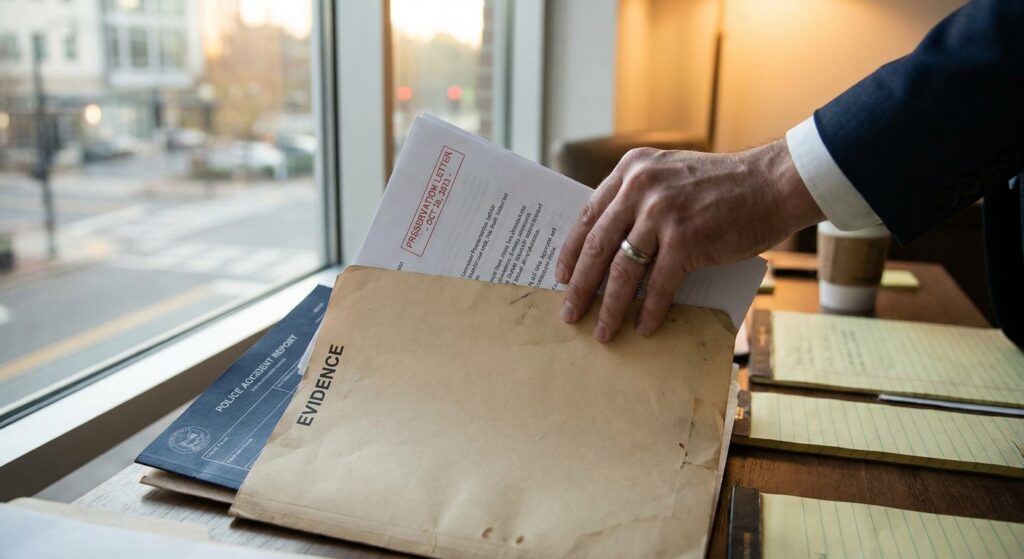
Evidence can make or break a North Carolina injury claim. Depending on the case, important evidence may include:
- Photos and videos from the scene
- Police reports or crash reports
- Medical records and bills
- Witness names and statements
- Surveillance footage
Because North Carolina’s contributory negligence rule can create significant hurdles, evidence is not only used to prove what the other party did wrong. It may also be needed to respond to arguments that the injured person caused or contributed to the accident.
What Damages Can You Recover After an Injury?
The value of a personal injury claim depends on the severity of the injury, the medical treatment required, the effect on the person’s work and daily life, and the strength of the evidence.
Here are the most common areas of damages in North Carolina:
Medical Expenses
Medical bills are often one of the largest parts of an injury claim. That is why it is so important to get medical care early and to continue treatment as recommended by your doctor. Make sure to keep records like visit summaries, imaging results, referral notes, work restrictions, and prescription records. Any gaps in treatment can give the insurance company an argument that the injury was not serious or was not related to the accident.
Lost Income and Reduced Earning Capacity
If an injury keeps you out of work, you may be able to recover that lost income. And if the injury affects your ability to work in the future, you may be able to claim reduced earning capacity.
Pain and Suffering
Pain and suffering damages address the physical pain, stress, frustration, and daily disruption caused by the injury. That can include physical pain, emotional distress, sleep problems, anxiety, loss of enjoyment of life, scarring, disability, and the frustration of not being able to do normal daily activities.
Insurance companies typically dispute pain and suffering because it can’t necessarily be measured and doesn’t come with an invoice. This is another reason why strong medical records, personal documentation, witness statements, and clear descriptions of how the injury has changed daily life are so important to the claim.
Property Damage
In vehicle accident cases, property damage may include repair costs, any loss of value, towing and storage, or rental car expenses. Property damage is often handled separately from the bodily injury claim, but it can also provide evidence of the severity of the crash.
Wrongful Death Damages
If an accident results in someone’s death, the claim differs from a standard injury case. A wrongful death claim may include medical and funeral expenses, the deceased’s pain and suffering, and lost income. It can also cover loss of care, companionship, guidance, and support to surviving family members.
How Long Do You Have to File a Personal Injury Lawsuit in North Carolina?
Deadlines are one of the most important parts of any injury claim. In North Carolina personal injury cases, the general deadline to file a lawsuit is three years from the date of injury, while wrongful death claims have a shorter two-year deadline.
That said, some cases may have different deadlines, and that’s why it is important to get legal advice before assuming how much time you have.
What Happens When the Insurance Company Gets Involved?
After a vehicle accident, an insurance adjuster may contact you quickly. Adjusters are often helpful and easy to deal with, but remember, their job is to protect the insurance company’s interests. If the insurance company begins asking you questions, refer them to an attorney, or contact one for help.
Because of North Carolina’s contributory negligence rule, an insurance company will try to find any basis to say the injured person contributed to the accident.
If you’re offered a settlement, it is important to understand what the settlement covers, because once a release is signed, you usually cannot go back and ask for more money. If your injury gets worse or you need additional treatment, you may be on your own.
A strong injury claim usually requires a complete picture of:
- The accident facts
- Liability evidence
- Medical diagnosis and treatment
- Future medical needs
- Lost income
- Pain and suffering
- Permanent limitations
- Available insurance coverage
- Possible defenses
- The cost and risk of litigation
Settlement vs. Litigation in a North Carolina Injury Case
Most personal injury cases settle without going to trial. A settlement can not only save a lot of time but also save the injured person from the stress and uncertainty of a trial.
In either case, once the claim reaches a point where the full impact of the injury is clear, a demand package is usually sent to the insurance company. This package includes evidence of the defendant’s fault, medical records, bills, wage loss information, photos, and a settlement demand.
The insurance company will accept, deny, or counter the settlement demand. From here, negotiations may continue for weeks or months. If the insurer refuses to make a fair offer, filing a lawsuit may be necessary.
Do You Need a Personal Injury Lawyer?
Not every minor accident requires a lawyer. If there are no injuries, no missed work, no dispute about fault, and only minimal property damage, you may be able to handle the issue directly with insurance.
Talk to a lawyer if:
- You suffered a serious injury
- You needed emergency care, surgery, injections, or ongoing treatment
- You missed work or cannot return to your usual job
- The insurance company is blaming you
- The insurer denied the claim
- The settlement offer seems too low
- Multiple vehicles or parties were involved
- A commercial truck was involved
- A pedestrian, motorcyclist, or bicyclist was injured
- The accident caused permanent impairment or scarring
- A loved one died because of the injury
A lawyer can help you gather the facts, protect important evidence, deal with the insurance company, figure out the full extent of your losses, push back when the insurer tries to blame you, and file a lawsuit if that becomes necessary.
That matters a great deal in North Carolina because even a small mistake can give the insurance company room to say the injury was partly your fault.
Common Types of North Carolina Personal Injury Claims
Car Accidents
Car accident claims can involve rear-end crashes, intersection collisions, distracted driving, speeding, failure to yield, impaired driving, unsafe lane changes, and highway crashes.
Truck Accidents
Truck accident cases can be very complex. They usually involve not only the trucking companies and commercial insurance policies, but driver logs, maintenance records, cargo loading, and federal safety rules. These cases often require quick action to preserve evidence.
Motorcycle Accidents
Motorcyclists are vulnerable to severe injuries, and insurance companies may rely on unfair assumptions about riders. Evidence from the scene, helmet use, vehicle positioning, road conditions, and witness statements can be critical.
Pedestrian Accidents
Pedestrian injury claims may involve someone struck by a vehicle in a crosswalk, school zone, parking lot, or intersection. These cases usually involve a distracted driver, failure to yield, or other bad driving behavior.
Premises Liability
Premises liability claims involve unsafe property conditions, such as wet floors, broken stairs, poor lighting, unsafe walkways, inadequate security, or hidden hazards. These claims often depend on whether the property owner knew or should have known about the danger.
Dog Bites
North Carolina dog bite cases can involve negligence, leash law violations, dangerous dog issues, and serious physical or emotional trauma. Children are often especially vulnerable in dog attack cases.
Wrongful Death
A wrongful death claim requires careful attention to damages, deadlines, beneficiaries, and estate-related issues. These cases can be complex and time-consuming, so it is best to get legal help as soon as possible.
Talk to a North Carolina Personal Injury Attorney
If you were hurt in Charlotte or elsewhere in North Carolina, request a free case evaluation before evidence disappears, deadlines get close, or the insurer’s version of events becomes the only written record.
Get the claim reviewed before evidence disappears, deadlines get close, or the insurer’s version of events becomes the only written record.