
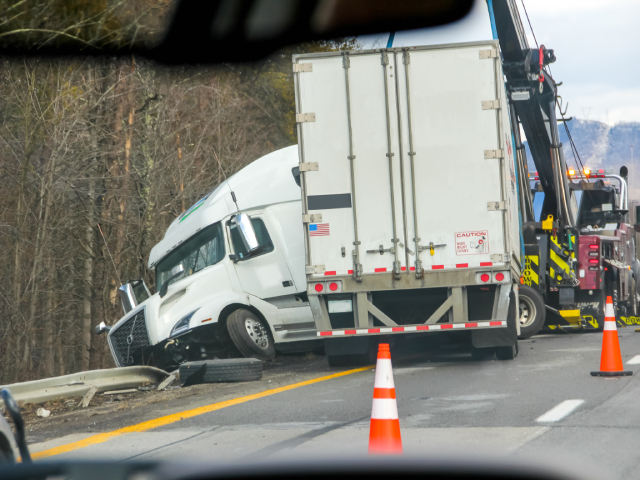
TRUCK ACCIDENT CLAIMS

Truck Accident Lawyers

A tractor-trailer crash is a carrier investigation, evidence-preservation problem, and injury claim at the same time.

Truck crashes can involve drivers, motor carriers, equipment owners, maintenance providers, shippers, loaders, brokers, and insurers. The claim should move quickly to preserve electronic, safety, maintenance, dispatch, and cargo evidence while the medical and damages record is being built.
✓ Carrier records preserved
✓ Safety evidence mapped
✓ Corporate responsibility traced
WHY TRUCK CLAIMS ARE DIFFERENT

The driver is only one part of the trucking operation that may need to be investigated.

Semitruck and tractor-trailer cases can add company systems, motor-carrier duties, electronic records, equipment condition, loading practices, and layers of commercial coverage that do not exist in an ordinary passenger-vehicle claim.

Motor-carrier operations

Driver qualification, supervision, dispatch, safety management, and carrier practices can matter alongside the conduct visible at the crash scene.

Hours, logs, and electronic records

Electronic logging, duty-status, GPS, telematics, dispatch, and related records may help reconstruct fatigue, timing, route, and operating decisions when relevant.

Maintenance, equipment, and cargo

Brake and tire condition, inspections, repairs, weight, securement, trailer condition, and loading can become separate liability questions.

Multiple companies and insurers

The tractor, trailer, driver, carrier, cargo, maintenance, or logistics relationships may involve different companies, contracts, and insurance layers.
TRUCKING EVIDENCE & PRESERVATION

Preservation should begin before electronic and operational records are overwritten or discarded in the ordinary course of business.

The investigation should identify which company holds each record and connect the operational evidence to the crash mechanics rather than collecting trucking documents without a liability theory.

Records that may matter

  • ELD and hours-of-service records when applicable
  • GPS, telematics, dispatch, route, and communication records
  • Driver qualification, hiring, training, and supervision materials
  • Inspection, repair, maintenance, tire, brake, and equipment records
  • Cargo, loading, weight, securement, and shipping materials when relevant

Why early preservation matters

Trucking companies and insurers may begin their investigation quickly, while electronic data, video, maintenance records, and operational documents can change or disappear over time. Targeted preservation keeps the claim anchored to the evidence that can prove why the crash happened and who controlled the relevant decisions.

HOW THE CLAIM IS BUILT

We build the truck claim from carrier operations outward.

We handle the legwork of separating driver conduct, company systems, equipment, cargo, and third-party roles before building the full damages and coverage picture.

01

Map the trucking operation

Identify the driver, carrier, tractor and trailer ownership, dispatch relationships, cargo interests, maintenance providers, and other entities connected to the trip.
02

Preserve operational and electronic proof

Target ELD, telematics, dispatch, qualification, maintenance, cargo, video, and physical evidence tied to the suspected cause of the collision.
03

Develop causation and damages

Connect the crash mechanics to the injuries, treatment, future care, wage loss, and other supported losses.
04

Pressure the responsible companies and insurers

Present a claim that explains not only what the driver did, but how carrier systems, equipment, or other company decisions contributed when the evidence supports it.
DAMAGES, COVERAGE & NEXT STEPS

Truck claims often combine serious injury damages with layered commercial insurance and multiple defendants.

The recovery analysis should identify the supported losses and every potentially applicable policy without assuming that a larger vehicle automatically means a particular policy limit or recovery.

Losses that may need documentation

  • Emergency care, surgery, hospitalization, rehabilitation, and future treatment
  • Lost income and reduced earning capacity
  • Pain, disability, disfigurement, and loss of normal activities
  • Property losses and, in fatal cases, legally recoverable wrongful-death or estate losses
WHAT TO DO NOW

Do not treat a truck crash like a bigger car accident.

Preserve the carrier and electronic evidence early, document the vehicles before repair or disposal when appropriate, and avoid signing releases before the potentially responsible companies and coverage layers have been identified.
ATTORNEY-LED GUIDANCE

Truck claims need carrier-specific evidence work without losing sight of the injured person.

Carma Legal approaches truck matters by preserving operational records, tracing company responsibility, and developing the crash, medical, damages, and insurance evidence as one litigation-ready file. The exact regulatory and liability framework depends on the operation, jurisdiction, and facts.
Direct attorney involvement
Clear next steps and communication
Case strategy built for negotiation and litigation
TRUCK ACCIDENT QUESTIONS

Questions that often arise after a semitruck or tractor-trailer crash

Depending on the facts, the case may involve ELD and duty-status records, driver qualification files, carrier safety materials, telematics, dispatch communications, maintenance and inspection records, cargo documents, and evidence about the relationships among the companies involved.
Potentially. A carrier, equipment owner, maintenance provider, shipper, loader, or other company may become relevant when its conduct contributed to the crash. Responsibility depends on the evidence and governing law.
No. Delivery vans, company cars, utility vehicles, shuttles, and other fleet vehicles often fit better within a Commercial Vehicle Accident analysis. The Truck page is intended for semitruck, tractor-trailer, motor-carrier, and trucking-specific operational issues.
PRESERVE THE TRUCKING RECORD

Tell us what carrier and vehicles were involved before the operational evidence gets harder to recover.

Share the crash report, carrier or company name, vehicle information, photos, injuries, treatment, insurance communications, and anything known about cargo, dispatch, driver activity, or vehicle condition.