
A driver called Carma Legal yesterday morning from an urgent care on Central Avenue, three days after being T-boned on her driver’s side at a green light. She wanted to know why her shoulder pain was getting worse instead of better, and whether she had already missed her chance to protect her claim by not taking photos at the scene. That call captures almost everything you need to understand about a t-bone accident injury: the harm often grows in the days after the crash, and the evidence that proves who caused it starts vanishing the moment you leave the intersection. If you were just hit in the side, you are not too late, but you are on a clock. Here is what a side-impact crash can do to the body, what may prove fault, and the concrete steps that may help you work with an insurance company while you heal.
What a T-Bone Accident Injury Is and Why the Harm Differs from Other Crashes
A T-bone accident happens when the front of one vehicle strikes the side of another, forming the shape of the letter T, usually at an intersection when someone runs a light or turns across your path. The harm is different from a rear-end or head-on crash for one simple reason: the side of a car has almost nothing between you and the striking vehicle. There is no engine block, no trunk, and no crumple zone doing its job. The door and a few inches of steel are all that stand between the impact and your body.
That mechanism produces a predictable injury pattern. The National Highway Traffic Safety Administration reports that side-impact collisions frequently cause rib contusions and fractures, shoulder and clavicle trauma, neck and head injuries from the lateral whip your head takes when the car is shoved sideways, and internal organ damage. The part that surprises most people is the timing. Many of these injuries do not show their full severity until 48 to 72 hours after the crash. You feel sore at the scene, you tell the officer you think you are fine, and then two or three days later your shoulder locks up or your side sharpens with every breath.
That delay matters enormously to your claim. The caller to Carma Legal from Central Avenue thought her worsening pain meant she had done something wrong, but she had not. Side-impact injuries commonly behave this way. Understanding the pattern is the first step to protecting yourself, because the insurance company understands it too, and they know how to use it against you.
What Evidence Disappears First After an Intersection Crash
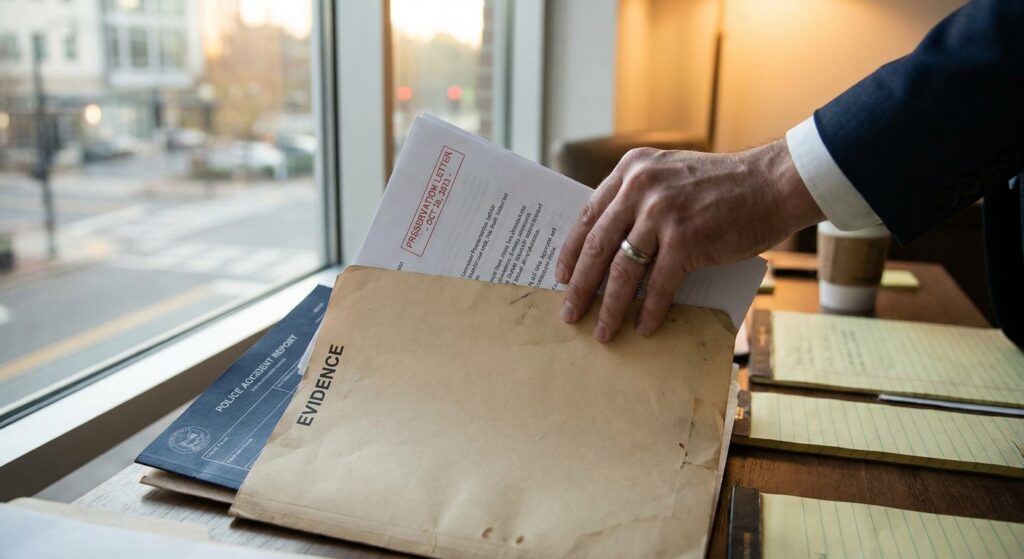
The evidence that may support a t-bone accident injury claim disappears within days, not years, so the real work starts immediately. In these cases at Carma Legal the first priority is the objective evidence that can vanish fast: the police report and 911 records, the witnesses, satellite images of the intersection, and surveillance or traffic-camera footage from nearby businesses, homes, or other vehicles.
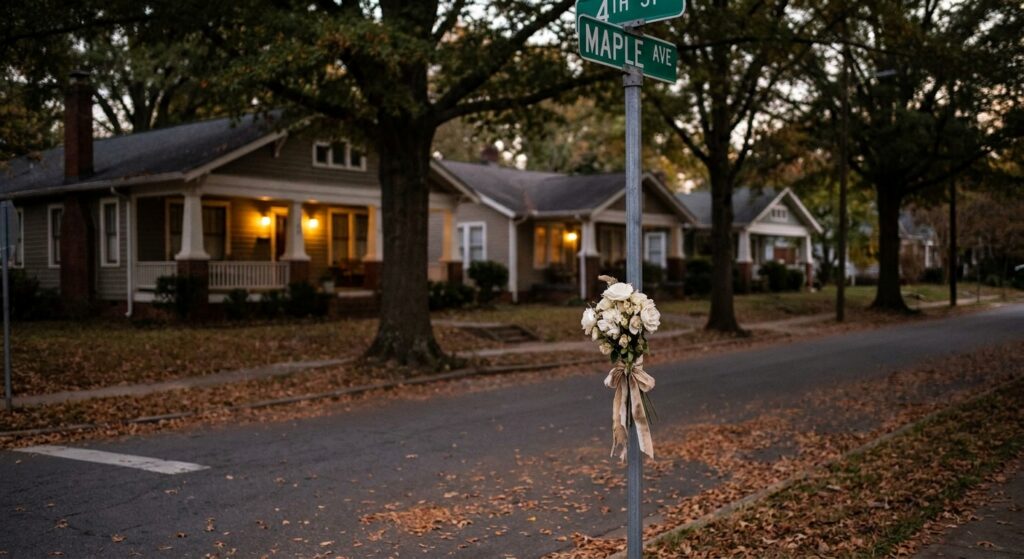
Charlotte has intersections where these crashes happen again and again, places like South Boulevard and Woodlawn, Independence and Sharon Amity, and Central Avenue in Plaza Midwood. What most drivers do not realize is that the footage that could support their case is often sitting on a hard drive inside a nearby restaurant or retail store, and that footage is typically overwritten within 30 to 90 days. Nobody is holding it for you. If no one asks for it in writing, it is gone, and with it goes the clearest proof of who had the light.
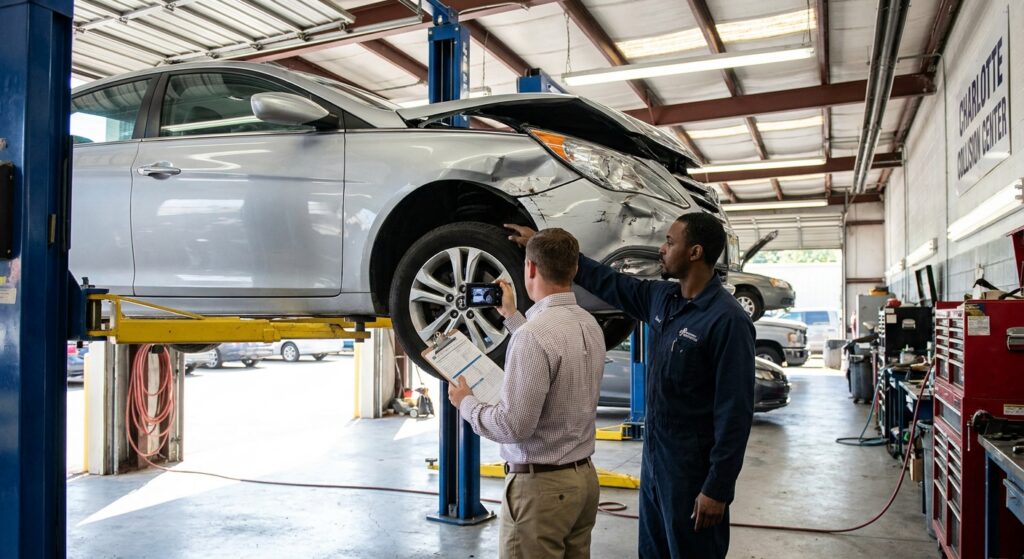
When I take a T-bone case at Carma Legal, I check whether the police report assigns fault or lists a citation, because that single detail changes how I approach the adjuster. Then I examine the physical evidence: the vehicle damage, the exact impact locations, the debris, the skid marks, the roadway markings, the sight lines, and the traffic signals themselves. Each of these tells part of the story of who may have had the right of way. The point and angle of impact often reveals which car entered the intersection first. Debris fields show where the collision actually occurred. I preserve first, investigate second, and escalate when necessary. That order is deliberate, because you cannot investigate evidence that has already been recorded over.
How Insurers Argue Over Who Had the Green Light
When both drivers claim they had the green, the insurer resolves it by comparing each account against the physical evidence, and so do I at Carma Legal. I do not simply accept an insurance company’s characterization of what happened. That refusal is the whole difference between a claim that gets pushed around and one that holds up.
Here is what I actually look at when there is a fight over the light: who may have had the right of way, the timing and location of the impact, whether the turning driver had a clear view of approaching traffic or whether a truck, a sign, or a curve blocked the sight line, whether any witness saw the vehicles or the signal and where that witness was standing, and whether video or physical evidence backs up my client’s account. I line up the client’s story against the point and angle of impact, the roadway markings, the traffic-control devices, the photographs, the debris, the skid marks, and any body or dash-camera footage that exists.
Say the other driver insists your light was red. If the debris and impact point show the collision happened deep in the intersection, and your damage is at the front-driver’s door while theirs is at the front bumper, the physical story may not match their words at all. When there is a genuine dispute over fault or speed, Carma Legal escalates to the electronic crash data stored in the vehicles and brings in an accident-reconstruction expert. Here are comparable cases, here are the similarities and differences, and here is what the evidence physically supports. That is a far stronger position than one driver’s word against another’s.
Why Side-Impact Injuries Worsen Over Days and How That Affects Settlement Timing
Side-impact injuries commonly worsen over the first several days, and that timeline is exactly why early settlement offers in T-bone cases tend to be lowball offers. The adjuster knows most claimants have not retained counsel yet, have not finished treatment, and do not know what jury verdicts and settlements look like for similar injuries in the same county. So the offer arrives fast, while you are still hurting and still worried about bills, and it is built to close the file before your rib fracture or internal injury fully reveals itself.
If you settle before your symptoms surface, you cannot go back. Once you sign, the claim is closed, even if you are in surgery a month later. That is why settling before you have seen a doctor and understand the full picture usually leaves you covering later treatment out of your own pocket. Time delay favors the insurer here, not you.
One patient I worked with at Carma Legal received exactly this kind of lowball offer. Instead of simply demanding more money, I pushed back with legal research and data-driven evidence, including jury verdicts and settlements from comparable cases in the same county, and that raised the offer. But I refused to compromise on what I believed the claim was worth, because the number still did not fairly reflect what this person went through, so we kept pushing and got the insurer to mediation, where the final settlement was higher than the earlier offers. Using comparable-case data changes the conversation from an arbitrary argument over numbers into a real discussion about what the insurer could face in front of a jury.
What Direct Attorney Access Means for Protecting Your Claim
Direct attorney access from day one means the evidence in your case is preserved immediately, not weeks later after your file has been handed off to someone who may not recognize which intersection details matter. When you call Carma Legal, you reach the attorney handling your case by email, text, or phone, not a rotating cast of paralegals.
This matters more in T-bone cases than almost any other type, because the window to save footage is measured in weeks. When clients become file numbers, the request for that surveillance video goes out slowly, or not at all, and by the time anyone looks, the restaurant across from the intersection has already recorded over the day of your crash. I keep Carma Legal small on purpose so that does not happen. We are very intentional about the cases we take, because I want to be able to tell my client’s story to an adjuster or a jury, and I can only do that because I actually know their story.
There is one more reason this access matters. I am licensed in both Nevada and North Carolina, I have represented thousands of clients over roughly 12 years, and I previously worked for the insurance companies, defending claims on their behalf. I know how adjusters value a side-impact file and where they look to discount it, because I used to sit on that side of the table. That inside knowledge may help you if the person who has it is the one actually preserving your evidence and returning your calls, which is the entire point of building the firm this way.
The Three-Year Statute and the Real Deadline for Your Evidence
You have three years to file a personal injury claim in North Carolina under N.C. Gen. Stat. § 1-52, but the deadline that actually protects your claim is far shorter. Those are two different clocks, and confusing them is one of the most common and costly mistakes I see after a t-bone accident injury.
The three-year statute governs when you must file a lawsuit. It does nothing to preserve the evidence your case depends on. Surveillance footage from nearby businesses is typically overwritten within 30 to 90 days. Witnesses who gave a clear account at the scene move, change numbers, and forget the details as months pass. Skid marks fade and debris is swept away within hours. So the practical deadline for preserving what may prove fault is measured in weeks, not years. Relying on the statute to protect you is like counting on a fire extinguisher after the building has already burned.
This is true across the areas Carma Legal serves. The same evidence-preservation principles govern Mesa intersections on Main Street, Baseline, and Southern just as they do the busy Charlotte corners where these crashes cluster. The law and the retention periods differ by location, but the underlying reality does not: the footage that may support your claim disappears long before the filing deadline arrives. Acting in the first days after your crash is not about being aggressive. It is about not losing evidence you can never get back.
Common Questions About T-Bone Accident Injury Claims
How long do I have to file a t-bone accident injury claim in North Carolina?
North Carolina gives you three years to file a personal injury claim under N.C. Gen. Stat. § 1-52. The catch is that critical video and witness evidence disappears within weeks, so the practical deadline for protecting your case is much sooner than the legal one.
What injuries are most common in T-bone collisions?
The most common are rib contusions and fractures, shoulder and clavicle trauma, neck injuries from the lateral whip your head takes, and internal organ damage. Many of these do not show their full severity until 48 to 72 hours after the crash.
What should I do immediately after being T-boned at an intersection?
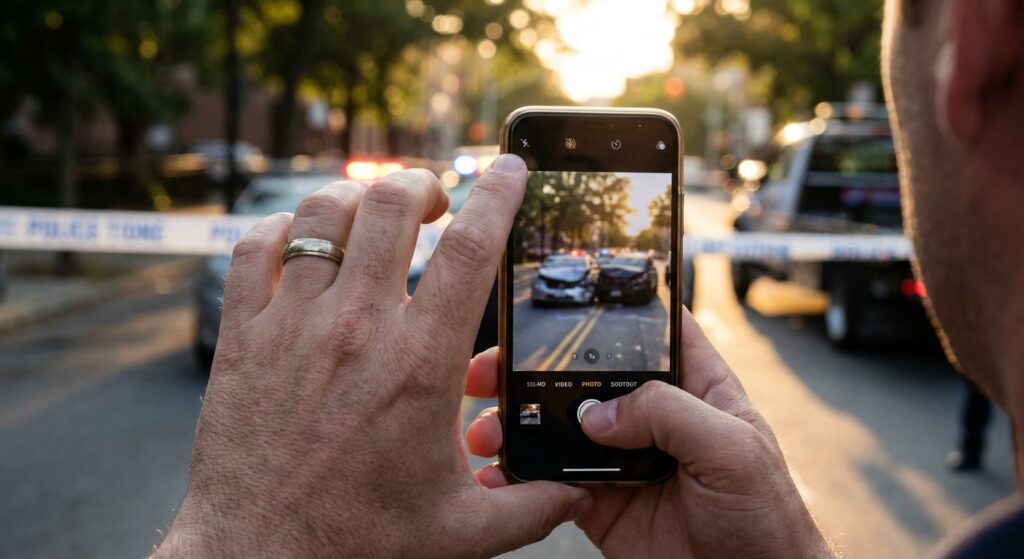
Document the scene with photos, get the contact information for any witnesses, request a copy of the police report, and identify any dash-camera or business surveillance footage before it is overwritten. Then see a doctor, even if you feel only sore, so your symptoms are recorded from the start.
How do insurers decide who is at fault when both drivers claim a green light?
They compare each driver’s account against the physical evidence: the point and angle of impact, the skid marks, the debris, the roadway markings, the sight lines, the traffic-control devices, the witness statements, and any video footage. When those physical facts contradict a driver’s story, they carry more weight than the words.
Can I settle my T-bone injury claim before seeing a doctor?
You can, but it may not be wise. Side-impact injuries often worsen over days, and settling before your symptoms fully appear typically locks you into a lowball offer that may not cover the treatment you end up needing. Once you sign, the claim is closed.
Does Carma Legal charge upfront fees for T-bone accident cases?
No. Carma Legal works on contingency, which means there is no fee unless your case recovers compensation, and the first consultation is free. You can get honest guidance about your claim without paying anything out of pocket to start.
Call Carma Legal today at 702-934-2228 for a free consultation to preserve intersection evidence, document your T-bone injury symptoms, and work to protect the value of your claim before critical video footage disappears. The single most useful thing you can do before that call is write down the names of every business within sight of the intersection where you were hit, because their cameras may hold the proof of who had the light, and that footage will not wait.
Let the Evidence Work for You
T-bone collisions leave physical injuries and questions about fault that deserve careful attention. If you’re weighing whether to handle your claim alone or with representation, consider that insurance adjusters begin building their case immediately. Carma Legal helps clients in Charlotte and Mesa document their injuries, establish liability, and pursue fair compensation while they focus on recovery.
Every case is different, and outcomes depend on the individual facts and circumstances. No attorney can guarantee a particular result.