
A Carma Legal client called me two days after her crash asking if it was too late to take photos of her injuries. The bruising across her chest from the seatbelt had already started to fade, and the at-fault driver’s insurance company had already called her twice asking for a recorded statement. She had not preserved a single piece of evidence, and the adjuster was already using her two-day gap in seeing a doctor to argue her injuries were minor. If you are searching for an auto accident attorney near me in Charlotte right now, you are in the same window she was, and what you do in the next 48 hours will shape what an insurance company can and cannot do to your claim.
I am licensed in North Carolina and Nevada, and after representing injured people over more than 12 years, I have watched adjusters run the same playbook in many cases. I spent the first half of my career in big law firms in Las Vegas before moving to boutique practice in North Carolina, and that contrast is exactly why I built Carma Legal the way I did. This guide walks you through the steps that may help protect you, in the order they matter, and it tells you the truth about the mistakes people make before they ever reach a lawyer. I would rather be candid with you now than watch you learn these lessons the hard way.
Why Do the First 48 Hours Decide What Your Claim Is Worth?
The first 48 hours can affect the strength of your claim because the insurance company is building its denial or lowball strategy in the exact same window you are deciding what to do. While you are in pain and trying to figure out next steps, an adjuster is opening a file, logging your statements, and looking for any gap to use against you.
North Carolina law does give you time. Under N.C. Gen. Stat. § 1-52(16), you generally have three years from the date of the crash to file a personal injury lawsuit. That sounds like plenty, but it is not the point. Evidence can disappear long before the statute of limitations runs. Skid marks wash away, surveillance video from a nearby business may get overwritten soon, sometimes within days or weeks, witnesses can forget details or become impossible to find, and your own bruises heal.
Motor vehicle crashes are one of the leading causes of injury in the United States, a fact the Centers for Disease Control and Prevention tracks year after year, so adjusters handle these files by the thousands and know exactly where claims can fall apart. In Charlotte cases I take at Carma Legal, I see similar tactics: a friendly early phone call, a request for a recorded statement, a form that needs your signature “just to process things.” Understanding their timeline is the first step to protecting yourself. The five steps that follow are the ones I want my clients doing before I even have their signature.
Step 1: Document Everything Before It Changes or Disappears
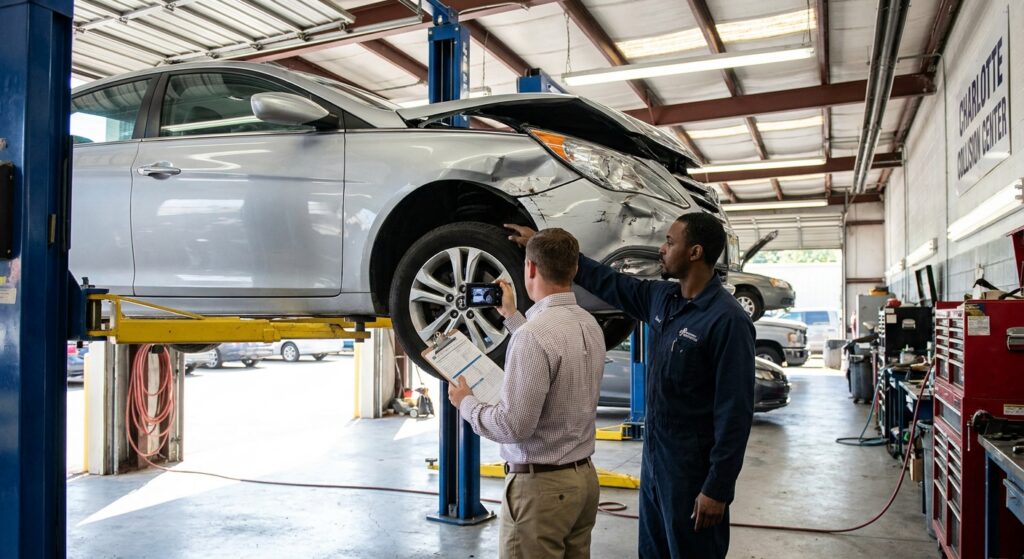
Take photos right now of your vehicle damage, your visible injuries, and the accident scene, because any delay may give the adjuster a reason to argue your injuries are not serious or were caused by something else. This is one of the first things I tell a Carma Legal client to preserve when they call me: photos of the damage to their vehicle and photos of their injuries. If you can still safely photograph the scene, do it before anything is moved or repaired.
Photograph all angles of the damage to your vehicle, not just the worst spot. Get close-ups of injuries like bruising, swelling, and cuts, and keep taking new photos over the following days as bruises darken and change. Capture the scene itself: skid marks, broken glass, the position of the cars, damaged guardrails, traffic signals, and road conditions like rain or poor lighting. If another driver’s property or a fixed object was hit, photograph that too.
Charlotte scenes clear fast. At high-traffic spots tow trucks and traffic move the evidence within hours, and by the next morning there may be nothing left to show what happened. I once had a client whose seatbelt bruising was already fading by the time she called me two days after her crash, and that is not a small thing. Visible injury photos can be persuasive evidence you can bring to a negotiation, and they cannot be recreated later.
If you did not take any photos, do not panic. An auto accident attorney can still build your case from the police report, medical records, and other sources. It just may become harder to prove, and harder is a gift you do not want to give the other side.
Step 2: See a Doctor Within 48 Hours Even If You Feel Fine
See a doctor within 48 hours even if you feel okay, because delayed treatment may give the insurance company a documented reason to claim your injuries were never caused by the crash. Adrenaline is a powerful painkiller, and it can hide serious injuries for hours or days after impact.
Whiplash, concussions, and soft tissue damage often do not hurt until the adrenaline wears off. I have worked with clients who walked away from a wreck feeling shaken but fine, then woke up two days later barely able to turn their neck. That delay is exactly what an adjuster looks for. When a person delays seeking medical attention, insurance companies may use that gap to devalue the claim, arguing that something else caused the pain, or that it was never that bad. I advise Carma Legal clients to seek medical attention within that first 48-hour window for this reason. It protects your health first, and it can help protect the causation link between the crash and your injuries.
If you already waited, the answer is still simple: go now, and be honest with the provider about when your symptoms started and why you delayed. Explaining the delayed onset in your medical history may be better than letting the gap grow longer. Keep every record, every bill, and every referral, because those documents are how the true impact of your injuries gets proven later.
Step 3: Do Not Give a Recorded Statement to the At-Fault Driver’s Insurance Company
Do not give a recorded statement to the other driver’s insurance company in the first 48 hours, because everything you say while you are in pain and overwhelmed can be used weeks later to reduce or deny your claim. The adjuster who calls sounding helpful is not on your side.
These calls come fast, often within hours of the crash. The adjuster is friendly, says they just want to get your car fixed and understand what happened, and asks if it is okay to record. Every word is transcribed and reviewed by people trained to find inconsistencies and admissions. Say “I’m feeling okay” out of politeness, and that can become proof you were not hurt. Guess at a detail you are not sure about, and any small error may become a reason to question your whole account. One of the first instructions I give a Carma Legal client is not to speak to the insurance company themselves, because those statements often come back to haunt the claim.
You do have obligations to your own insurance company under your policy, and you should cooperate with them. But you are not required to give a recorded statement to the at-fault driver’s insurer. You have the right to tell them, simply and politely, that you are represented and that all communication should go through your attorney. That one sentence shuts the fishing expedition down.
Step 4: Do Not Sign Any Documents Without an Attorney Review
Do not sign anything from an insurance company in the first 48 hours without having a lawyer read it first, because release forms and medical authorizations can waive your right to full compensation or open your entire medical history to the adjuster. What looks like routine paperwork may be a trap.
Adjusters may send forms quickly, framed as necessary to “process your claim” or “get your car handled.” Two documents do the most damage. A release can settle your entire claim for a small early check, and once you sign, you cannot come back for the surgery you learn about next month. A broad medical authorization lets the insurer pull years of unrelated records so they can argue a pre-existing condition caused your pain, not the crash. I tell Carma Legal clients the same thing from the first call: do not sign any documents until I have reviewed them.
If you already signed something, do not assume it is over. An attorney can assess whether a document is enforceable or whether it can be challenged. But prevention is far easier than correction, and this is one of those places where being intentional early may help the case.
Step 5: Call an Auto Accident Attorney Near Me in Charlotte Within 48 Hours
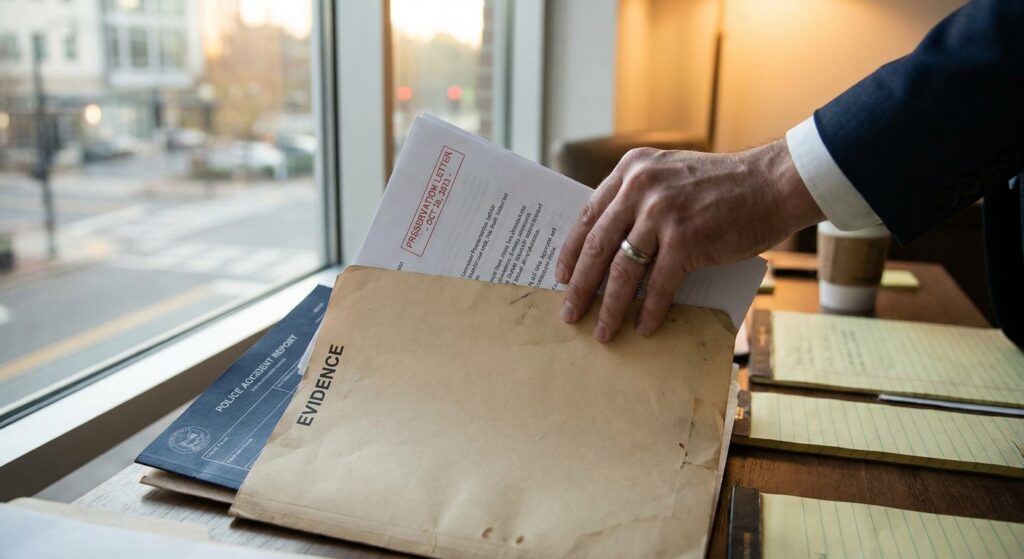
Call an auto accident attorney near me in Charlotte within 48 hours so someone can immediately contact the at-fault insurer, obtain the police report, and send preservation letters for evidence like black box data or store video before it is overwritten. Speed here is not about pressure. It is about locking down proof while it still exists.
Here is what happens in my first 48 hours with a new Carma Legal client. First, we consult so I can determine whether you have a case. I intentionally choose the cases I work on so I can handle every client with the care and attention the matter deserves, and I will tell you straight if I do not think you need me. If we move forward, you sign the representation agreement. Then I reach out to the at-fault insurance company and start working on getting them to accept liability, meaning accept fault for the crash. I work on obtaining the police report and the property damage photos, and if the case calls for it, I send preservation letters.
I cannot tell you in advance exactly what any single investigation will require, because every case is factually different. What I can tell you is when the deeper tools come out. When there is a potential dispute about liability or causation, event data recorder information, often called black box data, may tell us how fast a car was going, whether the brakes were applied, and more. Video from a nearby business can settle the whole question of fault. In other types of cases, it might be preserving the condition of the area where a person fell. After more than a decade in this field, my experience tells me which cases may need that data, and when they do, the preservation letter goes out immediately, because both black box data and video can vanish soon after a crash.
The difference you may feel from day one is direct access to the Carma Legal attorney. At the big firms where I spent the first half of my career, work is routed through case managers and paralegals by design. I prefer to be available throughout the entire experience, and the smaller setting of my firm lets me do that. When you have questions about the property damage process, or about how the case looks and how long it takes, you reach me and my staff directly. I have the time to walk through every question in detail, and I usually ask clients to call me again the next day to go over everything a second time, because I know this is traumatic and brand new to you. Throughout your case, you can email, text, or call me. You get honest guidance and clear communication, and a case that is prepared from the beginning rather than patched together before mediation.
You also do not pay anything upfront. I work on a contingency fee basis at Carma Legal, which means our interests are aligned: I am paid only if you recover compensation. Beyond aligned interests, I carry an ethical duty of loyalty and zealous advocacy to do what is in your best interests. If money is your worry right now, resources like I Need Legal Help can point you to legal aid, but a contingency arrangement is exactly why many injured people can afford a private injury lawyer.
What Happens If You Wait Longer Than 48 Hours?
Waiting past 48 hours does not destroy your claim, because North Carolina still gives you three years to file under N.C. Gen. Stat. § 1-52(16). But waiting may make the claim harder to prove and can give the insurance company more ammunition to deny or devalue it.
Keep the real timeline in mind. The insurer builds its denial strategy in the first two days, not in the final week before the statute runs. Every day you wait is a day evidence fades and the adjuster’s file may get stronger while yours gets weaker. The three-year deadline protects your right to sue, but it does nothing to protect the video that gets deleted on day ten or the witness who moves away.
So if you are reading this a few days or a few weeks after your crash, you have not missed your chance, but you should act soon. I can still investigate, still pursue the evidence, still push back on a lowball offer. I have handled major impacts requiring surgeries and years of recovery, and minor impacts that barely showed damage to a vehicle, and I treat every one with the same detail and attention. But the sooner you act, the stronger your position may be. Being willing to keep pushing matters, and it can work better when we start early.
What Do Charlotte Accident Victims Ask Most in the First 48 Hours?
What if I already gave a recorded statement to the insurance company?
You cannot undo a recorded statement, but an attorney can review exactly what you said and assess how it may affect your claim. The most important thing is to stop the bleeding now, before you say anything else. Call a lawyer, and let all further communication run through them.
Do I have to pay an auto accident attorney upfront in Charlotte?
No. Most personal injury attorneys, including me at Carma Legal, work on a contingency fee basis. That means no upfront cost and no hourly bills. My fee comes out of the recovery only if I obtain compensation for you, so our interests stay aligned and we succeed together or not at all.
How long do I have to file a car accident lawsuit in North Carolina?
North Carolina generally gives you three years from the date of the accident to file a personal injury lawsuit, under N.C. Gen. Stat. § 1-52(16). Do not let that deadline lull you. Evidence and witness memory may degrade in weeks, so acting early is what can help protect the claim.
What if my injuries did not show up until a few days after the crash?
Delayed symptoms are common with soft tissue injuries and concussions, because adrenaline masks pain. See a doctor immediately and tell them clearly when your symptoms began and why you waited. Explaining the delayed onset in your medical record may help close the door on the argument that your injuries were unrelated.
Can I handle the claim myself and call an attorney later if the insurer does not pay?
You can, but the risk is real. Anything you say or sign in the first 48 hours can be used to deny or reduce your claim, and evidence like video footage or black box data may already be gone by the time you decide to hire someone. It is much easier to protect a claim early than to repair one late.
What does an auto accident attorney do in the first 48 hours after I hire them?
I consult with you to confirm you have a case, have you sign the representation agreement, contact the at-fault insurer, work on getting them to accept liability, obtain the police report and property damage photos, and send preservation letters to protect evidence like event data recorder data and nearby video where the case calls for it. You get answers to your questions directly from me at Carma Legal, not a paralegal.
Talk to a Charlotte Auto Accident Attorney Before the Next 48 Hours Slip By
Carma Legal operates in Charlotte and Mesa, and this guide applies North Carolina legal standards and the local insurance practices I see in Charlotte crash cases. If you were injured in a wreck that was not your fault, you do not have to figure out the adjuster’s next move on your own.
The Carma Legal consultation is free, there is no obligation, and you pay nothing unless I recover compensation for you. From your first call through every step that follows, you talk directly to the attorney handling your case, not a rotating cast of case managers, and never a paralegal during the critical first 48 hours. When you search for an auto accident attorney near me in Charlotte, what you are really looking for is someone who answers and prepares your case from day one, and that is exactly how I work. Call Carma Legal today at 702-934-2228 for a free consultation to review your car accident case and learn exactly what steps may help protect your claim in the hours and days ahead.
Let’s Talk About What Happened
If you’re reading this within 48 hours of an accident in Charlotte or Mesa, you’re already doing the right thing by gathering information. The confusion and pressure you’re feeling right now is exactly why having someone in your corner matters. Carma Legal works with accident victims through these critical early hours when decisions carry the most weight, and a conversation costs you nothing but a few minutes of your time.
Individual results vary and past results do not predict future outcomes; this article provides general information and not legal advice for any specific matter.