Understand your claim timeline
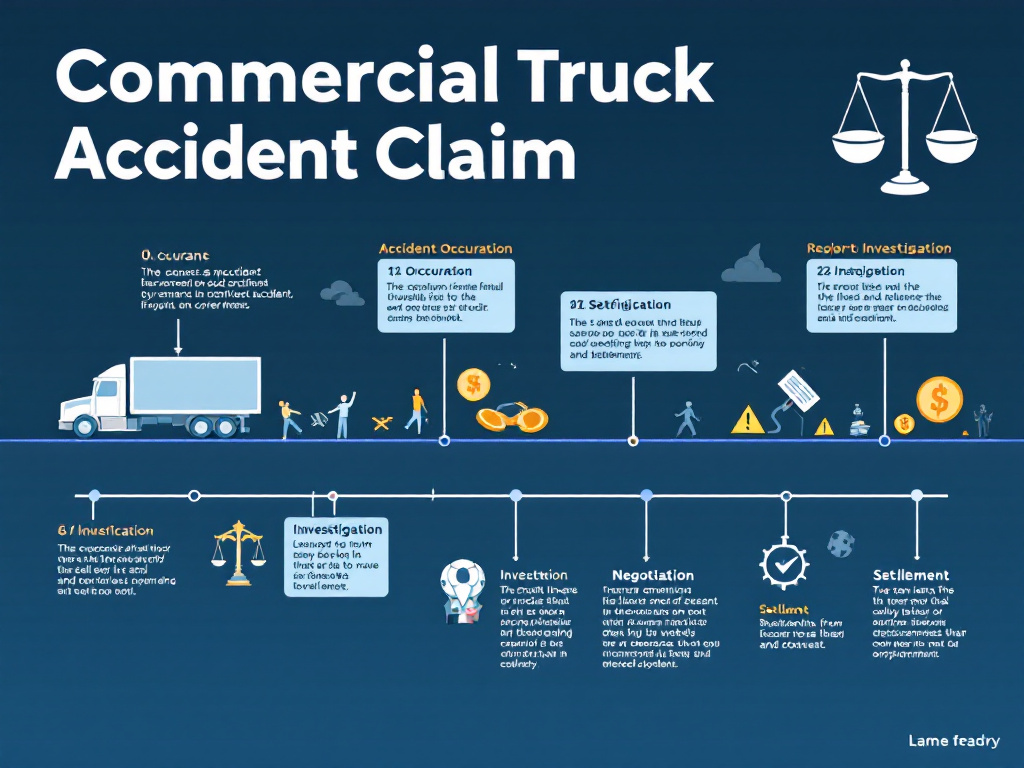
When you file a commercial truck accident claim, knowing what to expect in your commercial truck accident claim timeline can help you plan and reduce stress. Your case typically moves through several distinct phases, each with its own timeframe and tasks. By understanding these stages—from immediate post-crash steps to potential litigation—you can take proactive steps that may accelerate your recovery and strengthen your claim.
Key phases include:
- Immediate actions after the accident
- Initial investigation (1–3 months)
- Medical treatment and documentation (varies)
- Claim filing and negotiation (3–6 months)
- Possible litigation and trial (6–18 months or more)
Below is a quick checklist to guide your first steps.
Checklist: Immediate post-crash steps
- Call 911 and report injuries and property damage
- Exchange insurance and contact information with all parties
- Document the scene: photos, videos, witness names
- Seek medical attention and keep all records
- Notify your insurance company promptly
- Consult an experienced truck accident attorney
For more on navigating the early claim process for motor vehicle accidents, see car accident claim process explained.
Take immediate post-crash actions
What you do in the hours and days after a commercial truck collision can influence the speed and outcome of your claim. Begin with these essential steps:
-
Report the crash
• Call law enforcement so they can document the scene
• File a report with your insurer -
Gather evidence
• Photograph vehicle damage, skid marks, road conditions
• Note truck details: company name, plate number, DOT information -
Get medical treatment
• Visit the emergency room or urgent care
• Follow up with specialists until you reach maximum medical improvement (MMI) -
Track expenses
• Keep bills for medical care, prescriptions, and out-of-pocket costs
• Record lost wages, mileage, and other accident-related losses
Immediate evidence gathering—including black box data and driver logbooks—can prove driver fatigue or regulatory violations. For insights on using electronic data in your case, explore black box data in car accident cases.
Complete initial investigation
Once you report your claim, your attorney and the insurance companies conduct an initial investigation. This phase often lasts 1–3 months and involves:
- Reviewing police and accident reports
- Obtaining medical records and treatment plans
- Interviewing witnesses and reconstructing the collision
- Identifying all liable parties: truck driver, trucking company, cargo handlers, manufacturers [1]
Complex cases with multiple defendants or disputed liability may extend this period. Disputes over fault, common in truck accident claims, can introduce delays. If you want to understand how fault affects your compensation, see comparative negligence car accident explained.
Document your medical treatment
Your medical journey often dictates much of the claim timeline. Insurers prefer to wait until you’ve reached Maximum Medical Improvement (MMI) before settling. Typical durations include:
- Minor injuries: a few weeks to months
- Moderate injuries requiring physical therapy: 3–6 months
- Severe injuries, surgeries, or long-term care: 1 year or more
Ensure you:
- Attend all prescribed appointments
- Follow rehabilitation plans
- Document every treatment, expense, and symptom
Failing to complete treatment can stall negotiations. Learn how gaps in treatment can affect your claim in gap in treatment effect on injury claim.
File your claim and negotiate
After medical treatment begins, your lawyer will calculate damages and file a demand package, which includes:
- Detailed medical records and bills
- Proof of lost wages and future medical costs [2]
- Pain and suffering calculations [3]
- Evidence of liability
Insurers typically respond within:
- California: 15 days to acknowledge, 40 days to decide [4]
- Other states: varies, but often 30–60 days
Negotiation can take 3–6 months. Expect multiple rounds of offers and counteroffers. If you need tips on effective negotiation, see car accident settlement negotiation tips. If negotiations stall, you might consider mediation or arbitration to avoid trial.
Prepare for possible litigation
If insurers refuse a fair settlement, your attorney may file a lawsuit. The litigation timeline typically breaks down as follows [5]:
| Stage | Duration |
|---|---|
| Pre-suit investigation | 1–6 months |
| Filing complaint and discovery | 3–12 months |
| Pre-trial motions and negotiations | 3–6 months |
| Trial | Days to weeks |
| Post-trial motions/appeals | Variable |
On average, represented victims settle in 1–2 years, while unrepresented claimants may wait 2–3 years. Cases that proceed to trial often exceed 3 years [6].
Manage litigation costs
Truck accident lawsuits can incur:
- Court fees
- Expert witness fees
- Investigation costs
- Contingency fees (typically 33–40% of settlement)
Discuss fee structures upfront with your attorney to avoid surprises.
Recognize factors affecting timing
Several variables influence how quickly your case resolves:
- Injury severity and treatment duration [4]
- Number of at-fault parties and liability disputes [7]
- Insurer cooperation or delaying tactics [8]
- Complexity of the accident scene evidence
- State laws on statutes of limitations [9]
- Geographic challenges when parties reside in different states [6]
Partial fault under comparative negligence rules can reduce your settlement and trigger further delays. Find out how to prove fault in your case at how to prove fault in a car accident.
Tips to expedite your claim
While you cannot control every factor, you can take actions that often speed up your claim:
- Seek prompt and consistent medical care
- Keep thorough records of all treatments and expenses
- Cooperate fully with your attorney’s document requests
- Respond quickly to insurer communications
- Avoid giving recorded statements without legal guidance [10]
- Implement pain journals to support non-economic damages [11]
Early legal representation can discourage insurers from lowball offers and reduce the risk of missed deadlines.
Navigate your settlement offer
When you receive a settlement proposal:
- Review coverage limits and defense strategies
- Compare the offer to your calculated damages
- Consult your attorney about the pros and cons of acceptance
- If the offer falls short, prepare a counteroffer or pursue litigation
Once you accept an offer, execution and disbursement may take 30–90 days. Ensure release documents do not waive future claims.
What to do after settlement
After resolving your claim:
- Ensure all medical liens and subrogation claims are satisfied [12]
- Use funds to cover outstanding bills and future care
- Update your health insurance and vehicle coverage if necessary
If circumstances change—such as delayed injury symptoms—you may need to revisit your options with legal counsel.
Take the next step
Understanding your commercial truck accident claim timeline empowers you to make informed decisions at each stage. While complex cases can extend over years, proactive measures and experienced advocacy often lead to faster, fairer results.
If you have questions about your case or want a free review of your claim, reach out to our team of seasoned truck accident attorneys. We can help you navigate the process, meet deadlines, and pursue the compensation you deserve.
References
- (Silkman Law Firm)
- (future medical expenses in car accident claims)
- (pain and suffering car accident calculation)
- (Omega Law Group)
- (Finch McCranie LLP)
- (Karns & Karns)
- (Super Lawyers)
- (Sabbeth Law)
- (car accident statute of limitations)
- (recorded statement to insurance should i give one)
- (pain journal for car accident evidence)
- (medical lien after car accident explained)