Understand settlement factors
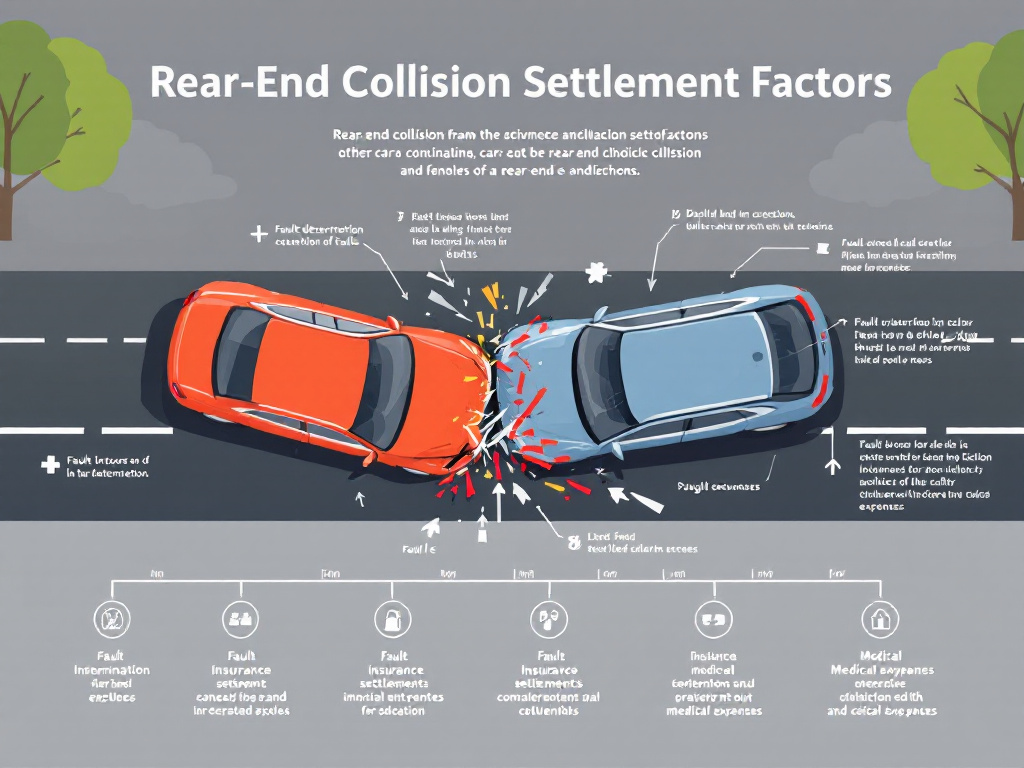
Rear end collision settlement factors can vary widely, influencing the compensation you receive after a crash. To maximize your claim, you need to appreciate how multiple elements interact—from injury severity to insurance policy limits. By understanding these factors, you can gather appropriate evidence, present a strong case and negotiate more effectively.
Injury severity spectrum
The seriousness of your injuries is often the single biggest driver of settlement value. Insurers evaluate factors such as fractures, soft-tissue damage and traumatic brain injuries to estimate medical costs and long-term care needs [1]. Typical settlement ranges include:
| Severity | Description | Typical settlement |
|---|---|---|
| Minor | Sprains, bruises, short recovery | $10,000 – $50,000 |
| Moderate | Herniated discs, concussions, fractures | $50,000 – $100,000 |
| Severe | Spinal cord injuries, severe TBIs, multiple surgeries | Over $100,000 |
These figures reflect averages and can shift based on your state’s legal framework and insurance coverage limits [2].
Liability and fault
Fault determines who pays and how much. In most rear-end crashes, the driver in the back is presumed responsible, but exceptions exist if the lead driver acted erratically or brake lights failed [3]. Your claim value depends on:
- Clear evidence that the other driver breached their duty of care
- Any shared fault under comparative negligence rules [4]
- State-specific doctrines, such as pure contributory negligence or pure comparative negligence
Mitigation of damages
Actions you take after the crash can boost or diminish your settlement. Insurers may reduce compensation if you pause treatment or ignore medical advice. In Pennsylvania, failing to follow prescribed therapy can lead to lower valuations [5]. To protect your claim:
- Seek prompt medical attention and follow all recommendations
- Keep consistent treatment records
- Avoid long gaps in care [6]
Document your injuries
Thorough documentation builds credibility and demonstrates the true impact of your collision. From initial treatment to follow-up therapy, well-organized records strengthen your negotiating position.
Medical records importance
Your medical chart is the central piece of evidence linking the crash to your injuries. Include:
- Emergency room notes and diagnostic imaging
- Physician’s diagnosis and treatment plans
- Prescriptions and therapy schedules
Comprehensive records help establish causation and allow insurers to calculate future care costs accurately.
Ongoing treatment records
Continuity of care underscores the seriousness of your injuries. Keep a file of:
- Physical therapy and chiropractic visits
- Mental health counseling for emotional trauma
- Medications and refill schedules
Ongoing treatment documents justify higher settlement figures, especially for chronic conditions or surgical follow-ups.
Gap in treatment impact
If you miss appointments or stop therapy prematurely, insurers may argue your injuries were minor. To avoid this:
- Schedule and attend all recommended sessions
- Document any unavoidable delays, such as transportation issues
- Explain treatment lapses to your attorney for proper case strategy
Establish fault and liability
Proving fault is key to recovering full compensation. Your approach to gathering evidence and interpreting state laws will shape the strength of your claim.
Presumption in rear-end cases
Many jurisdictions start with the assumption that a rear driver caused the accident. For example:
- California law presumes the striking driver at fault, reinforcing safe-distance duties [3].
- Georgia also generally holds the rear driver liable for damages [7].
- In Missouri, the rear-end doctrine applies unless the lead vehicle’s sudden stop was unanticipated or signals malfunctioned [8].
Comparative negligence rules
If you share fault, your recovery may be reduced proportionally. Depending on your state:
- Pure comparative negligence lets you recover damages minus your fault percentage
- Modified comparative systems bar recovery if your fault exceeds a set threshold (often 50 or 51 percent)
- Contributory negligence states may bar any recovery if you bear any fault
Learn more about shared responsibility at comparative negligence car accident explained.
Evidence collection
Strong fault proof relies on:
- A detailed police report [9]
- Photos and video from the scene or dashcam [10]
- Eyewitness statements and expert reconstruction
Promptly secure evidence to avoid loss or degradation and support your claim effectively.
Calculate economic damages
Economic damages cover measurable financial losses. Documenting each category persuasively helps ensure you are fully compensated.
Medical expenses
Include all accident-related costs:
- Emergency care and hospital stays
- Diagnostic tests and imaging
- Medications, surgeries and physical therapy
Insurance companies often request medical liens and itemized bills. Consider linking your health insurer’s subrogation rights via using health insurance after a car accident.
Lost wages calculation
If injuries force you out of work, you can recover:
- Past lost income based on pay stubs or tax returns
- Future lost earning capacity if you cannot return to your prior role
Supporting documentation such as employer statements or vocational expert reports can strengthen this portion of your claim.
Future care costs
For ongoing or lifelong needs, calculate:
- Long-term rehabilitation and assistive devices
- Home modifications and attendant care
- Psychological counseling for trauma
An expert life-care plan can justify these projections and convey their necessity to insurers or juries.
Assess non-economic losses
Non-economic damages address intangible harms, which can be more subjective but significant in value.
Pain and suffering valuation
Pain and suffering compensates for physical discomfort and reduced quality of life. Methods include:
- Multiplier method (multiplying economic damages by a factor)
- Per diem method (assigning a daily rate for pain and distress)
Refer to pain and suffering car accident calculation for detailed examples.
Emotional and psychological impact
Accidents can trigger anxiety, depression or PTSD. Document:
- Therapist or psychiatrist treatment notes
- Recommendations for ongoing mental health support
- Personal journals recording mood and daily challenges [11]
Loss of consortium
If injuries affect relationships with spouses or family, you may claim:
- Loss of companionship
- Impaired household support
These damages vary by state but can add substantial value to your settlement.
Account policy limits
Insurance policy caps often dictate the ceiling for compensation. Understanding these limits helps you explore alternative recovery paths.
Insurance policy caps
Your claim cannot exceed the at-fault driver’s liability policy. Policy types include:
- Bodily injury liability limits per person and per accident
- Property damage liability for vehicle repairs or replacement
If policy limits fall short, you may need to consider other sources.
Underinsured and uninsured coverage
If the at-fault driver’s insurance is insufficient or absent, explore:
- Your uninsured motorist coverage [12]
- Underinsured motorist benefits
- Health insurance and medical payments coverage [13]
Exploring additional sources
When liability limits are exhausted, you might pursue:
- Personal assets or umbrella policies of the at-fault party
- Third-party claims (for example, vehicle manufacturers)
- Workers’ compensation if the accident occurred on the job
Manage claim timelines
Staying on schedule protects your right to compensation and keeps negotiations on track.
Statute of limitations
Each state imposes a deadline for filing a lawsuit. Missing this date usually forfeits your right to sue [14]. Typically you have two to three years from the crash date.
Case timeline overview
Your claim follows stages:
- Initial medical treatment and diagnosis
- Evidence gathering and demand letter [15]
- Insurance negotiations
- Potential mediation or litigation
- Settlement or trial
For a deeper look at timelines, see how long does a car accident lawsuit take.
Demand letter and negotiation
Your attorney will draft a demand letter detailing injuries, losses and requested compensation. Negotiation tips include:
- Presenting clear evidence
- Citing medical records and bills
- Being prepared to counter lowball offers [16]
Engage legal assistance
An experienced attorney can guide you through complexities, safeguard your rights and help secure maximum compensation.
When to consult an attorney
You should consider legal help if:
- You have severe or permanent injuries
- The insurer disputes fault or undervalues your claim
- You face policy limits that don’t cover total losses
- You need to understand do i need a lawyer after a car accident
Negotiating with adjusters
Insurance adjusters aim to minimize payouts. Your attorney can:
- Review recorded statements before you give one [17]
- Handle demands and counteroffers
- Present compelling medical and financial evidence
Litigation vs mediation
If negotiations stall, you may proceed to mediation or trial. Compare your options at mediation vs trial in car accident lawsuits. An attorney can:
- File pleadings and manage discovery
- Engage experts to testify on your behalf
- Advocate for punitive damages if negligence was gross [18]
By following these steps—understanding rear end collision settlement factors, documenting injuries, proving fault, and collaborating with legal counsel—you position yourself for the strongest possible claim. Review your coverage, gather thorough evidence and act promptly. If you have questions or need assistance, reach out to a qualified personal injury attorney to discuss your case and protect your rights.
References
- (Jeff Martin Law)
- (Novian & Novian)
- (Visionary Law Group)
- (comparative negligence car accident explained)
- (Carpey Law)
- (gap in treatment effect on injury claim)
- (The Jewkes Firm)
- (Devkota Law Firm)
- (how to read a police report after an accident)
- (dashcam footage as evidence in car accident)
- (pain journal for car accident evidence)
- (uninsured motorist claim process)
- (pip vs medpay vs liability coverage explained)
- (car accident statute of limitations)
- (car accident demand letter example)
- (car accident settlement negotiation tips)
- (recorded statement to insurance should i give one)
- (Gatti Law Firm)