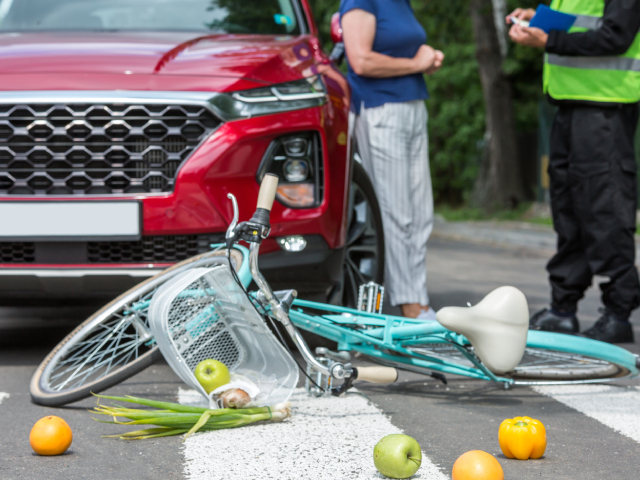
BICYCLE ACCIDENT CLAIMS

Bicycle Accident Lawyers

A cyclist’s lane position or visibility should be measured against the evidence—not used as a shortcut to blame.

Bicycle collisions can involve unsafe passing, turning conflicts, dooring, driveways, intersections, and hit-and-run drivers. Because the bicycle offers little protection, a low-speed traffic event can still cause significant injuries and complicated insurance questions.
✓ Bike evidence preserved
✓ Road position analyzed
✓ Coverage sources mapped
WHY BICYCLE CLAIMS NEED THEIR OWN ANALYSIS

The crash often turns on passing distance, turning paths, door zones, visibility, and roadway positioning.

Cyclists share roadways with larger vehicles but have different physical exposure and movement patterns. The claim should reconstruct the specific conflict instead of treating it as an ordinary two-car collision.

Turning conflicts

Right hooks, left crosses, driveway entries, and intersection turns can create sudden conflicts between a vehicle path and bicycle travel.

Dooring and curbside hazards

Parked-car doors, loading areas, curbside activity, debris, or roadway defects can create hazards that require careful scene documentation.

Unsafe passing

Side-swipe impacts and close passes may depend on lane position, available roadway width, driver speed, and the governing passing rules.

Hit-and-run and coverage issues

When the driver leaves or lacks adequate insurance, first-party coverage and household policies may become important parts of the recovery analysis.
EVIDENCE & PRESERVATION

Preserve the bicycle, vehicle, roadway, and video evidence before the crash scene is cleaned up.

Bike damage, helmet damage, vehicle contact points, debris, road markings, and camera footage can help establish how the collision unfolded.

Evidence that may matter

  • Bicycle, helmet, gear, and vehicle damage photographs or inspections
  • Scene photos showing lanes, shoulders, bike facilities, parking, signs, and sight lines
  • Surveillance, dash camera, doorbell, or traffic-camera video where available
  • Witnesses, police records, and driver statements
  • Electronic or phone data when distraction or speed is disputed

Why the bicycle itself matters

Damage location and deformation can help explain contact direction and crash mechanics. Preserve the bicycle and helmet when practical rather than repairing or discarding them before the liability issues are understood.

HOW THE CLAIM IS BUILT

Build the bicycle claim from road position and vehicle movement through medical and coverage proof.

The claim should show how the conflict developed, why the driver or another responsible party should have prevented it, and what the collision changed for the cyclist.
01

Map the traffic conflict

Identify lane positions, passing distance, turning movements, doors, driveways, controls, and the sequence immediately before impact.
02

Preserve bike, scene, and video evidence

Secure the bicycle, photographs, available camera footage, witnesses, and vehicle data before key proof disappears.
03

Document injuries and cycling-specific losses

Track treatment and work loss along with damaged bicycle, helmet, equipment, transportation changes, and loss of activity.
04

Develop coverage and resolution strategy

Identify liability and first-party coverage, build a supported demand, and litigate disputed fault or value when necessary.

DAMAGES, COVERAGE & NEXT STEPS

The claim should account for both the physical injuries and the practical losses that follow a bicycle crash.

Medical and wage losses are only part of the picture. Bicycle, equipment, mobility, future-care, and first-party coverage issues may also need to be documented.

Losses that may need documentation

  • Emergency care, orthopedic treatment, rehabilitation, and future care
  • Lost income and reduced earning ability
  • Pain, disability, scarring, and loss of normal activities
  • Bicycle, helmet, gear, transportation, and other property losses
WHAT TO DO NOW

Do not discard the bicycle or helmet before the crash mechanics are understood.

Keep the damaged equipment when practical, preserve photos and receipts, and follow medical recommendations. Lane-use, passing, helmet, and fault rules vary by jurisdiction and should be analyzed under the governing law.
ATTORNEY-LED GUIDANCE

Bicycle cases should be built around the actual roadway conflict—not assumptions about cyclists.

Carma Legal develops bicycle injury matters through physical evidence, roadway analysis, medical documentation, and coverage review, with preparation for negotiation or litigation when needed. Representation is jurisdiction-dependent.
Direct attorney involvement
Clear next steps and communication
Case strategy built for negotiation and litigation
BICYCLE ACCIDENT QUESTIONS

Questions that often arise after a bicycle collision

A bike lane is not the only factor in the liability analysis. The governing roadway rules, lane position, vehicle movement, passing distance, visibility, and available space all need to be considered.
That claim can be tested against sight lines, timing, roadway geometry, lighting, witnesses, video, and the driver’s speed and attention. Objective evidence is more useful than a post-crash characterization.
Uninsured motorist coverage may be relevant depending on the cyclist’s own policy, household coverage, state law, and facts. Prompt investigation also matters because camera footage and witness leads can disappear.
BUILD THE BICYCLE CLAIM

Preserve the bicycle, roadway evidence, and available video before the record changes.

Share the crash location, bicycle and vehicle damage, injuries, treatment, witnesses, photos, and insurance information so the claim can be evaluated.