This article provides general legal information, not legal advice. Reading it does not create an attorney-client relationship.
A car accident can leave you trying to process several things at once: whether anyone is hurt, whether the vehicles are safe to move, what the other driver is saying, and what you need to do next.
Start with safety. Once everyone is out of immediate danger, work through the practical steps that can protect you and preserve information you may need later.
Here are seven things to do after a car accident in North Carolina.
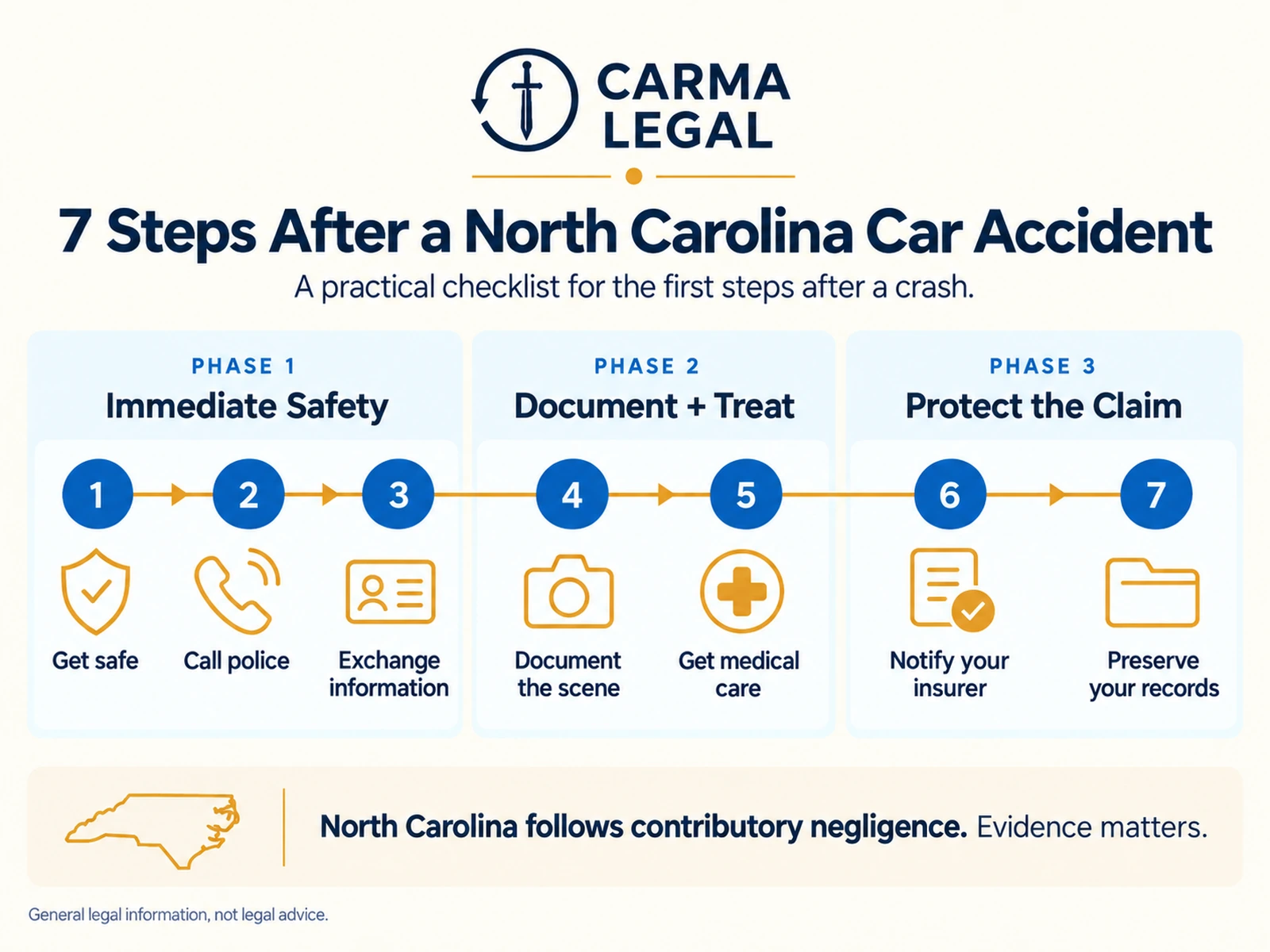
1. Check for Injuries and Get Out of Danger
Check yourself and your passengers first. Call 911 if anyone is injured, unconscious, disoriented, or needs emergency medical attention.
If the crash happened in a travel lane, don’t remain in moving traffic just to preserve the scene. When no one appears injured and the vehicles can be driven normally, North Carolina law requires drivers to move them to the shoulder or another safe location.
If someone may be injured or a vehicle can’t be moved safely, leave it where it is and wait for emergency responders. Turn on your hazard lights and get away from traffic if you can do so safely.
Don’t put yourself at risk by staying in the roadway to inspect the damage, take pictures, or talk with the other driver. You should do that once you are out of harm’s way.
2. Call the Police
In North Carolina, a crash must be reported when someone is injured or killed or when the total property damage appears to be at least $1,000. While not required for crashes that don’t fall within this category, call the police anyway to properly document the crash.
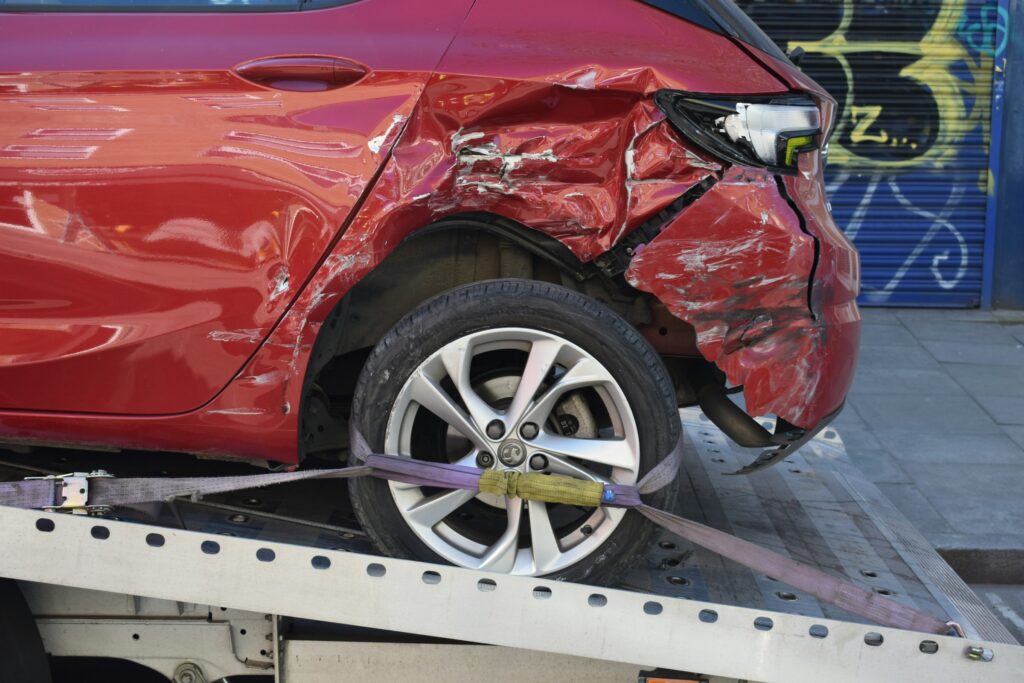
That amount can be reached quickly. A damaged bumper, headlight, sensor, wheel, or body panel may cost well over $1,000 to repair. If you’re unsure about the extent of the damage, call the police.
Inside a city or town, the local police department will usually respond. Outside municipal limits, the North Carolina State Highway Patrol or a county sheriff’s office may handle the crash. The reporting requirements are found in N.C. Gen. Stat. § 20-166.1.
A police report doesn’t automatically decide who was at fault; however, it does create a record of the drivers, vehicles, witnesses, road conditions, and the responding officer’s observations.
Before leaving the scene, ask for the report number and instructions for getting a copy. Crash reports are available through the North Carolina Division of Motor Vehicles. If the accident happened in Charlotte, you may also be able to request the report through the Charlotte-Mecklenburg Police Department.
3. Exchange Information With the Other Driver
Get the other driver’s name, address, phone number, driver’s license number, license plate number, and insurance information. If the driver doesn’t own the vehicle, get the registered owner’s information as well.
Taking pictures of the insurance card and license plate is faster and more reliable than writing everything down. If the crash involved a company vehicle, delivery van, rideshare vehicle, work truck, or other commercial vehicle, note the business name and whether the driver was working at the time.
Keep the conversation brief and factual. The side of the road is not the place to debate fault.
Don’t guess about what happened or make statements you aren’t sure about. Even a casual apology can later be taken out of context.
When you speak with the responding officer, explain what you remember. If you don’t know or can’t recall something, say that instead of filling in the gaps.
4. Photograph the Scene and Look for Witnesses
If it’s safe, take pictures before the vehicles are moved. If traffic conditions make that unsafe, move to a safer location first and document what you can afterward.
Photograph more than the damage to your own vehicle. Capture the position of the vehicles, damage to each one, license plates, debris, tire marks, lane markings, traffic lights, signs, construction zones, and surrounding road conditions.
Take both wide shots and close-ups. Close pictures show the damage in detail. Wider pictures can help show where the vehicles were positioned and how the collision occurred.
If anyone witnessed the crash, ask for a name and phone number. Don’t assume the responding officer will identify every witness.
Make a note of any nearby businesses, homes, traffic cameras, doorbell cameras, or vehicles that may have recorded the collision. You don’t need to obtain the footage at the scene, but recordings can be deleted or overwritten quickly.
This evidence is especially important in North Carolina because the state follows a contributory-negligence rule. If you are found partly responsible for causing the crash, you may be barred from recovering compensation. Photographs, video, and independent witnesses can make a major difference when fault is disputed.
For more on preserving evidence, see evidence that can make or break a North Carolina injury claim.
5. Get Medical Care if You Need It
Some injuries are immediately obvious. Others become noticeable only after the initial shock and adrenaline wear off.
If emergency responders recommend a medical evaluation, take that recommendation seriously. If you leave the scene and later develop pain, dizziness, confusion, numbness, weakness, or another concerning symptom, seek medical attention.
Tell the provider you were in a car accident. Explain what symptoms you’re experiencing and when they began. Don’t exaggerate, but don’t minimize what you’re feeling either.
Follow the treatment instructions you receive and attend follow-up appointments. If transportation, scheduling, cost, or another problem causes you to miss an appointment, keep a note of the reason.
Save your discharge paperwork, prescriptions, bills, work restrictions, and appointment records. They can help show what treatment you received and how the accident affected you.
6. Notify Your Insurance Company
Report the accident to your insurance company promptly. Start with the basic facts: when and where the crash happened, which vehicles were involved, which law-enforcement agency responded, and the report number if you have it.
You don’t have to guess about fault or predict the extent of your injuries. Those questions may not be clear right after the crash.
Be careful when an insurer asks you to give a recorded statement, sign a medical authorization, or sign a release. Your policy may require you to cooperate with your own insurance company, but you should still understand what you’re being asked to provide. The other driver’s insurance company represents its insured, not you. It’s best practice to speak with an attorney before speaking to the insurance company.
Don’t rush to accept an early settlement offer. Once a claim is resolved and a final release is signed, you typically can’t reopen it because your symptoms lasted longer than expected or you needed more treatment.
The other driver’s liability policy may not be the only insurance that applies. Uninsured- or underinsured-motorist coverage may become important when the at-fault driver has no insurance or not enough to cover the claim.
For North Carolina policies issued or renewed on or after July 1, 2025, minimum liability limits rose to $50,000 per person and $100,000 per accident for bodily injury, plus $50,000 in property-damage coverage. Underinsured-motorist coverage is also included in new and renewed policies. The North Carolina Department of Insurance has more information about those changes.
Even the higher limits may fall short after a serious injury or a crash involving several injured people. Before settling a claim, make sure all available insurance coverage has been identified.
7. Save Your Records and Know When to Get Legal Help
Keep your accident-related records together. That includes the original photographs and videos, police report, medical records and bills, repair estimates, insurance correspondence, towing bills, rental-car receipts, and proof of missed work.
A folder on your computer, a cloud folder, or a physical file works fine. What matters is that nothing important gets lost.
It can also help to keep short notes about how your injuries affect your daily life. Include missed work, interrupted sleep, difficulty driving, medical appointments, and activities that have become painful or difficult. Keep the notes factual.
Be cautious about posting the accident, your injuries, or your recovery on social media. Pictures and comments can be taken out of context. At the same time, don’t delete or alter existing posts because you’re worried they might affect a claim.
North Carolina gives an injured person three years to file most car-accident lawsuits, although different rules can apply when a case involves a death, a minor, or a government entity. Insurance negotiations don’t stop that deadline, and discussing a claim with an insurer is not the same as filing a lawsuit.
For more information, see Carma Legal’s guide to the North Carolina personal injury statute of limitations.
Three years may sound like a long time, but evidence can disappear much sooner. Vehicles get repaired, surveillance video gets overwritten, and witnesses become harder to find. If you were injured and have questions about your rights, an early review can help determine what evidence and insurance coverage are available.
Talk With a North Carolina Car Accident Attorney
You don’t need to collect every document or decide for yourself whether you have a case before speaking with an attorney. An attorney can look at how the accident happened, what evidence is available, which insurance policies may apply, and whether there are deadlines or other problems that need attention.
If you were injured in Charlotte or elsewhere in North Carolina, Carma Legal can review what happened and help you understand your options. Request a free personal injury case evaluation.
Representation depends on the facts of the case, jurisdiction, attorney licensure, conflicts of interest, and acceptance of the matter.