UBER & LYFT ACCIDENT CLAIMS

Rideshare Accident Lawyers

The driver’s app status can change the coverage analysis. Preserve it early.

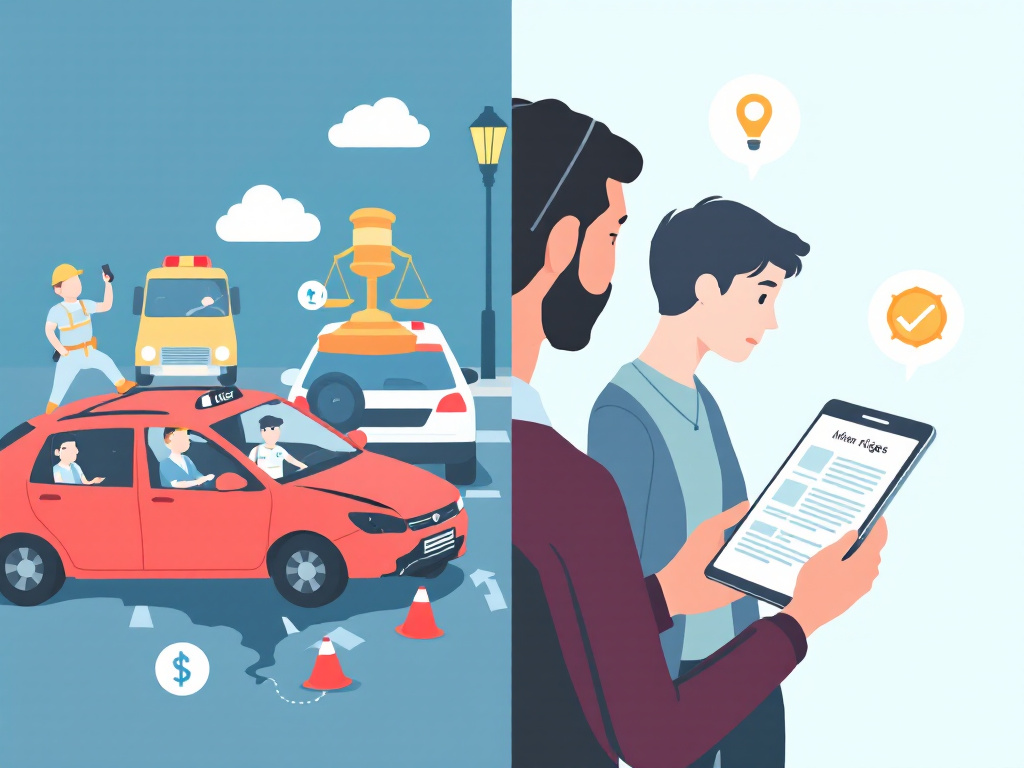
Uber and Lyft crashes can involve the rideshare driver, another driver, passengers, pedestrians, cyclists, personal auto coverage, and platform-related insurance. The claim should confirm the driver’s status and preserve app and trip data before coverage positions harden.
✓ App status confirmed
✓ Platform data preserved
✓ Coverage layers mapped
WHY RIDESHARE CLAIMS ARE DIFFERENT

The crash facts may look familiar, but the insurance structure can change with the driver’s app activity.

Rideshare claims require the same liability and injury proof as other crashes plus an additional question: what was the driver doing within the platform when the collision happened?

Driver offline

When the rideshare app is not active, the driver’s personal coverage may be the primary starting point, subject to the policy and state law.

Available for a request

A driver logged in but waiting for a request can create a different coverage layer than a driver who is completely offline.

Ride accepted or in progress

An accepted trip, pickup route, or passenger trip can trigger different platform-related coverage and record sources.

Multiple claimants or drivers

Passengers, another motorist, pedestrians, cyclists, and several insurers may all be involved in the same event.
APP DATA, EVIDENCE & COVERAGE

Preserve the trip timeline before the claim becomes a debate about which policy applies.

The core evidence should establish both how the crash happened and what the rideshare driver’s platform status was at the relevant time.

Records that may matter

  • Trip receipts, app screenshots, driver profile, pickup and drop-off information
  • Acceptance, dispatch, login, and activity timestamps
  • GPS route and location information when available
  • Police records, witnesses, dash camera, surveillance, and vehicle evidence
  • Personal and platform insurance correspondence

Why app status matters

Coverage can depend on whether the driver was offline, available, en route to a pickup, or transporting a passenger. Exact policy terms and state requirements vary, so the relevant records and insurance contracts need to be reviewed rather than relying on a generic coverage assumption.

HOW THE CLAIM IS BUILT

Build the rideshare claim around a verified trip timeline, liability proof, and coordinated coverage notice.

The process should keep the app-status issue from distracting from the equally important questions of fault, causation, injuries, and damages.
01

Confirm the platform timeline

Identify login status, ride acceptance, passenger status, trip records, and the people and vehicles involved.
02

Preserve digital and crash evidence

Secure screenshots, trip data, video, witnesses, scene materials, vehicle evidence, and communications before they disappear.
03

Notify and map the relevant insurers

Identify the personal, platform-related, other-driver, and first-party policies that may need notice or evaluation.
04

Develop liability, damages, and resolution

Build the underlying crash claim, document the injuries and losses, and resolve coverage and valuation disputes through negotiation or litigation as needed.

DAMAGES, COVERAGE & NEXT STEPS

Rideshare coverage is only useful if the claim also proves fault, injury, and loss.

The damages model should be built like any serious injury claim while the coverage analysis runs in parallel across the policies that may apply.

What the claim may need to document

  • Medical treatment, future care, and rehabilitation
  • Lost wages, reduced earning ability, and out-of-pocket costs
  • Pain, physical limitations, and loss of normal activities
  • Vehicle or property losses and applicable first-party benefits
WHAT TO DO NOW

Do not rely on the app receipt alone to answer the insurance question.

Save the trip details and screenshots, but also preserve the crash evidence and all insurance correspondence. Coverage depends on policy terms, app status, jurisdiction, and the facts—not just the name of the rideshare company.
ATTORNEY-LED GUIDANCE

Rideshare cases need the crash claim and the coverage claim built together.

Carma Legal evaluates rideshare matters by preserving platform and collision evidence, identifying potentially applicable policies, and developing medical and damages proof. Representation depends on jurisdiction, licensure, and case facts.
Direct attorney involvement
Clear next steps and communication
Case strategy built for negotiation and litigation
RIDESHARE ACCIDENT QUESTIONS

Questions that often arise after an Uber or Lyft crash

It depends on fault, the rideshare driver’s app status, the people involved, policy language, and state law. More than one insurer may need to be notified while the applicable coverage is confirmed.
Save screenshots of the trip, driver and vehicle details, timestamps, pickup or destination information, receipts, and any crash-report communications. Do not rely on the information remaining available indefinitely.
Passenger claims can still involve disputes about which driver was responsible and which policies apply. The liability investigation and coverage analysis should proceed together even when the passenger was not driving.
PRESERVE THE RIDESHARE RECORD

Tell us what happened while the trip data and insurance trail are easier to reconstruct.

Share your app screenshots, ride details, crash information, injuries, treatment, and any insurer communications so the liability and coverage paths can be evaluated.