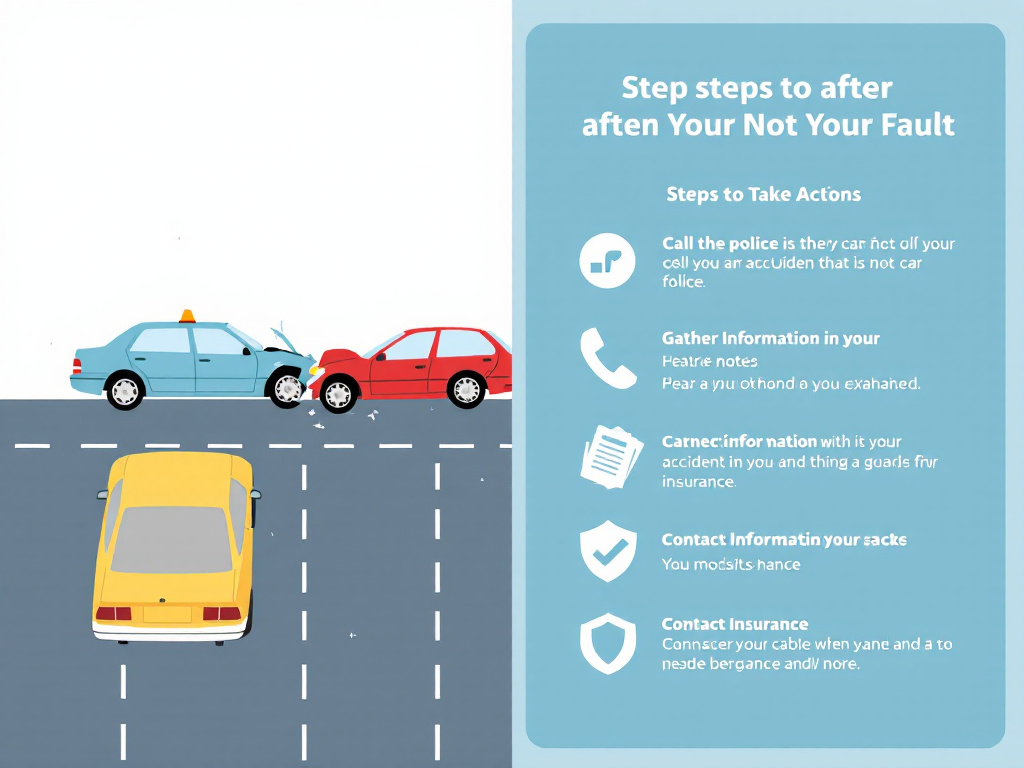
Being involved in a collision that was not your fault can feel overwhelming. Yet taking the right steps immediately after the crash can safeguard your health, protect your legal rights, and strengthen any future insurance or legal claim. In this guide on what to do after a car accident not your fault, you’ll find clear, step-by-step advice—from ensuring safety at the scene to navigating the claims process and preserving vital evidence. Following these key tips will help streamline recovery and increase your chances of fair compensation.
Ensure everyone’s safety
Your first priority after a crash is to protect lives and prevent further harm.
Check for injuries
- Assess yourself, passengers, and occupants of other vehicles.
- If anyone is hurt or unconscious, call 911 immediately.
Move vehicles to safety
If all parties are mobile and injuries are minor, shift vehicles to the shoulder or a nearby parking area. This reduces risk of secondary collisions and keeps traffic flowing. In New York, for example, you may move operable vehicles off the travel lanes before exchanging information [1].
Exchange essential information
Collecting accurate details at the scene sets a solid foundation for any insurance claim or legal action.
Driver and vehicle details
Gather the following from each driver [2]:
| Information to exchange | Why it matters |
|---|---|
| Driver’s name and contact | Identifies parties for claims |
| Home address | Verifies residency and jurisdiction |
| Phone number | For follow-up and statements |
| Driver’s license number | Confirms identity and license status |
| Insurance company and policy | Enables claims processing |
| Vehicle make, model, year | Documents damage for valuation |
| License plate number | Ties vehicle to owner and registration |
In states like California, you must also share the vehicle identification number (VIN) and the registered owner’s address under Vehicle Code 16025 [3].
Avoid fault statements
- Do not admit fault or apologize, even if you believe you might be partially responsible.
- Focus on exchanging facts rather than debating blame [4].
Document accident scene
Clear, comprehensive documentation can prevent disputes about liability and help insurers assess damages accurately.
Take photos and videos
- Capture all vehicles from multiple angles, including close-ups of dents, scratches, and broken glass.
- Photograph road conditions, skid marks, nearby traffic signs, and weather.
- If possible, shoot short videos walking around the scene for context [5].
Gather witness statements
- Politely ask bystanders or other drivers what they saw.
- Record each witness’s name, phone number, mailing address, and email [6].
- Write down brief notes on their observations while details are fresh.
Notify police and insurer
Timely reporting ensures compliance with legal requirements and speeds up the claims process.
When to call police
- Dial emergency responders if there are injuries or deaths.
- In New York, call police if property damage exceeds $1,000 or if anyone is hurt; otherwise you may simply exchange information but still file a DMV report within 10 days [7].
- Even in minor collisions, consider calling police if you plan to file an insurance claim or lawsuit.
Report to your insurer
- Contact your insurance company as soon as possible, ideally within 24 hours.
- Use your insurer’s mobile app to upload photos, complete forms, and track your claim [5].
- Be ready to share basic crash details, photos, and witness information.
Seek medical evaluation
Prioritizing health not only protects you but also strengthens your claim for injury-related damages.
Immediate care
- Even if you feel fine, undergo a medical exam to detect hidden injuries like concussions or soft-tissue trauma. Older drivers over 70 are urged to seek prompt care due to higher risk of serious injury [5].
- Follow all provider recommendations, including imaging and specialist referrals.
Follow-up and documentation
- Keep detailed records of every doctor visit, therapy session, diagnostic test, and medication.
- Delays or gaps in treatment may be used by insurers to challenge your claim; document reasons for any interruptions [8].
- Consider urgent care for non-life-threatening issues and emergency departments for severe symptoms [9].
Understand claim process
Familiarity with how claims work helps you set realistic expectations and avoid common pitfalls.
Claim process overview
- File a claim with your insurer or the at-fault driver’s insurer
- Provide documentation: police report, photos, medical records
- Insurer assigns an adjuster to investigate and estimate damages
- Review settlement offers; negotiate if initial offer is low
- Accept settlement or pursue a lawsuit for unpaid losses
For a deeper dive, see our car accident claim process explained.
No-fault state rules
In no-fault states like Massachusetts, Personal Injury Protection (PIP) pays your medical bills and lost wages up to a set limit, regardless of fault. PIP coverage may provide up to $8,000 in benefits [10]. You generally cannot sue the at-fault driver unless your medical expenses exceed a serious injury threshold or specific criteria are met. Learn more about coverage differences in our pip vs medpay vs liability coverage explained.
Claim value components
| Component | Description | Link |
|---|---|---|
| Medical expenses | Hospital bills, therapy, future treatment | Who pays medical bills after a car accident |
| Lost wages | Income lost during recovery and follow-up appointments | Lost wages claim after car accident |
| Pain and suffering | Compensation for physical pain and emotional distress | Pain and suffering car accident calculation |
| Property damage | Repair or replacement cost of your vehicle | total loss car payout process |
Evaluate legal support
Understanding when to seek professional guidance can save time and improve outcomes.
Do you need an attorney?
Consider hiring a lawyer if you face:
- Significant injuries or complex medical needs
- Disputed liability or multiple at-fault parties
- Coverage gaps, uninsured motorists, or low settlement offers
Our guide on do i need a lawyer after a car accident can help you decide.
Free case evaluation
Many firms, including Kraft & Associates, P.C., offer free consultations to review your crash details and advise on next steps [4]. Seeking legal advice early can ensure you meet deadlines and preserve critical evidence.
Preserve key evidence
Securing documentation and proof strengthens your position in claims or court.
Secure medical records
- Request complete treatment summaries, diagnostic reports, and billing statements.
- Understand potential medical liens on your settlement and review pros and cons of releasing records [11].
- If you used health insurance, track deductibles and co-pays [12].
Obtain police report
- Order an official copy of the crash report from the responding agency.
- Review it for accuracy and correct any errors.
- Learn how to interpret key sections in how to read a police report after an accident.
Manage insurance communications
How you handle conversations with insurers can affect settlement value and speed.
Giving recorded statements
- You are not required to provide a recorded statement; in many cases it is best to decline until you have legal advice [13].
- If you do speak, stick to facts and avoid speculation.
Negotiating with adjuster
- Review the insurer’s initial offer carefully; it often reflects a low-ball starting point.
- Provide documented evidence of medical bills, lost wages, and pain impact.
- Use negotiation strategies in our guide on how to negotiate with an insurance adjuster car accident.
Track important deadlines
Missing a key date can jeopardize your right to compensation.
Statute of limitations
Every state sets a time limit for filing a lawsuit after a crash. Ensure you file before the deadline; otherwise you risk forfeiting your claim. See your state’s timeline in car accident statute of limitations.
Lawsuit timeline
If you proceed to court, lawsuits typically take 12 to 24 months from filing to resolution, depending on case complexity and court congestion [14].
Take next steps
Following these tips will strengthen your position and help you focus on recovery.
- Review notes, photos, and reports to ensure completeness
- Submit any remaining documents to insurers promptly
- Track medical appointments and maintain a pain journal [15]
- Consult a qualified attorney for a free case review
- Monitor your claim’s progress and adhere to deadlines
By taking these actions after a collision that wasn’t your fault, you protect your health, reinforce your legal rights, and maximize the potential for fair compensation. If you have questions or need assistance, consider requesting a free case evaluation to discuss your options with experienced counsel.
References
- (NYC.gov)
- (Smith & Hassler)
- (Law Offices of Amanda Liao)
- (Kraft Law Firm)
- (AARP)
- (McIntyre Law)
- (NYC.gov, Schroeder, Nylaw)
- (internal link)
- (should i go to urgent care after car accident)
- (C&S Insurance)
- (medical lien after car accident explained)
- (using health insurance after a car accident)
- (recorded statement to insurance should i give one)
- (internal link)
- (pain journal for car accident evidence)