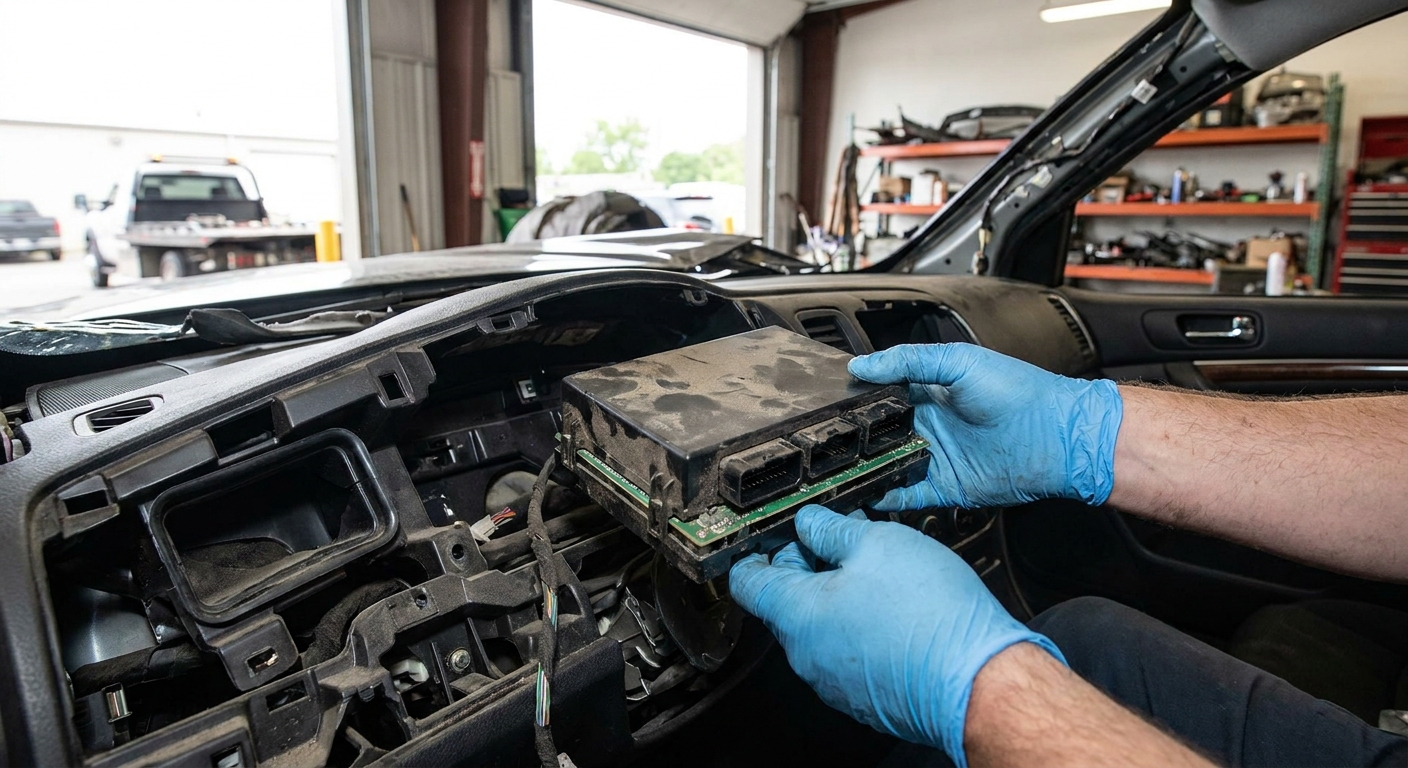

A widow called me at Carma Legal three days after her husband was killed when a forklift tipped at a Charlotte warehouse, asking if the $10,000 funeral benefit the workers’ comp adjuster mentioned was all she would receive. She had two children under ten, a mortgage, and no idea that a separate wrongful death claim might exist if someone other than the employer caused the accident.
That call is the reason a family may benefit from speaking with a fatal workplace accident attorney early, not months later. When someone dies on the job, two very different systems open at the same time, and they pay for very different things. One is workers’ compensation, which pays a fixed benefit no matter who was at fault. The other is a wrongful death claim against a third party, which can address what your family actually lost. Many families only ever hear about the first one, because the only person explaining it to them works for the employer’s insurer. I have been on both sides of these cases. I spent years defending insurance companies before I started representing families at Carma Legal, so I know exactly how narrow the picture looks when the adjuster is the one holding the brush.
Why Workers’ Compensation Death Benefits Are Often Not Enough
Workers’ compensation pays death benefits on a fixed statutory schedule, regardless of who caused the accident, and that formula often does not reflect what a family truly lost. In North Carolina, those benefits are governed by N.C. Gen. Stat. § 97-38, which sets a weekly payment tied to the deceased worker’s average wage and a burial allowance, paid to dependents. The trade is built into the system: the family gets a guaranteed benefit without having to prove fault, and in exchange the employer is shielded from being sued.
Here is what that formula leaves out. It does not account for pain and suffering. It does not account for the loss of companionship your family carries every day. It does not account for the full earning potential of a person who was supposed to work for another twenty or thirty years, raise children, and pay off a home. The statute converts a human life into a capped number, and that number can be a fraction of the real economic and emotional loss.
I want families to understand this without illusions. I would rather be candid with someone than let them assume the workers’ comp check is the finish line. For a young worker with small children and decades of earnings ahead, the statutory benefit can fall far short of what the household needs to stay stable. That gap is not a reason to give up. It is the reason to ask a second question: did anyone other than the employer contribute to this death?
The Two Systems: Workers’ Comp Death Benefits and Wrongful Death Claims
You may be entitled to both a workers’ comp death benefit and a wrongful death claim at the same time, because they run on separate tracks. Workers’ comp handles the relationship between the worker and the employer. A wrongful death claim handles the relationship between the worker and a third party who is not the employer and does not enjoy that immunity.
My first job at Carma Legal in a case like this is to investigate whether a third party contributed to the death, because that is the door to a claim outside the workers’ comp system. A workplace death rarely happens in a sealed room with only the worker and the employer present. There can be a subcontractor on the site, a piece of equipment that failed, a property owner who ignored a hazard, or a driver who struck a worker on a road crew. Any of those parties can be pursued in a wrongful death action, and that action can seek the full damages workers’ comp cannot touch: loss of companionship, the deceased’s future earnings, and the real value of what your family was denied.
The two systems do not cancel each other out. When a third party is at fault, the wrongful death claim moves forward while the workers’ comp death benefit continues as its own separate entitlement. That is the piece many families never hear. Consider a warehouse worker killed by a forklift that a maintenance company failed to service. Workers’ comp still pays its schedule, but the maintenance company sits outside the immunity, and its conduct becomes the center of a wrongful death claim. Two paths, two sources of recovery, one investigation that has to find both.
What the Workers’ Comp Adjuster Will Not Tell You
The workers’ comp adjuster will not tell you that you might have a wrongful death claim against a third party, because that adjuster works for the employer’s insurer and has no duty to inform you. Their job is to administer a statutory benefit and close the file. Your right to pursue someone else is not on their to-do list, and expecting them to raise it is like asking the other team’s coach to help you score.
I know how this works because I spent years inside it. Before I represented families at Carma Legal, I worked for insurance companies defending these exact claims. I have seen tactics used to narrow the scope of what a family believes it can recover: the quick recorded statement taken while people are still in shock, the framing that makes the statutory benefit sound like the only option, and the gentle push to settle before anyone has time to investigate. None of it is illegal. All of it is designed to keep the conversation inside the one system that limits what you can collect.
This is why an independent attorney can matter. When you call me at Carma Legal, you speak to me, the attorney, not a rotating cast of staff. I read the accident reports, I ask who else was on that site, and I look for the equipment maker, the subcontractor, the driver, and the property owner. The adjuster is never going to volunteer that a maintenance company or a hired hauler contributed to the death. That connection only surfaces when someone with no loyalty to the employer’s insurer goes looking for it.
Why the First Week After a Workplace Death Matters
The first week after a workplace death matters because evidence can disappear fast and the people responsible lawyer up immediately. Wrongful death cases are built on forensic accident reconstruction, OSHA inspection findings, equipment maintenance records, and witness statements, and none of those will be handed to you voluntarily.
Here is the reality on the ground. The scene gets cleaned. Damaged equipment gets repaired or scrapped. Surveillance footage gets overwritten on a thirty-day loop. Co-workers who saw what happened move on, and memories fade or get shaped by conversations with a supervisor. Meanwhile, the employer and any third party often have counsel and insurers working the incident within hours, protecting their position while your family is still planning a funeral. If you wait, you are not starting from zero. You are starting from behind.
At Carma Legal, I begin the investigation within 48 hours of signing the representation agreement when possible. I reach out to the at-fault parties and their insurers while the evidence is still fresh, and I start building the record before it can quietly vanish. That is what “prepared from the beginning” means in a death case. It is not a slogan. It is the difference between having maintenance logs that might prove a company ignored a known defect and having nothing but a repaired machine and a story no one can back up. Workers under federal safety law have protections and rights after a serious incident, and preserving what those protections generate, like an inspection record, depends on someone moving quickly to secure it.
The Two-Year Statute of Limitations and What It Really Means
You have two years from the date of death to file a wrongful death claim in North Carolina under N.C. Gen. Stat. § 28A-18-2, and the estate generally has the same two-year window to pursue workers’ comp death benefits. Two years sounds like plenty of time. In a death case it often is not.
The deadline is only the outer wall. The real work has to happen long before it. If you wait eighteen months to speak with an attorney, the evidence that would have proven a third party’s fault can be gone, and no amount of time left on the statute brings back a repaired forklift, an overwritten camera feed, or a witness who has since left the state. A claim you technically still have the right to file can become a claim you can no longer win, because the proof that supported it decayed while the clock ran.
Delay can forfeit your family’s rights in a quieter way too. Families who wait sometimes never identify the third party at all, so they never learn a wrongful death claim was possible. They accept the statutory benefit, the file closes, and the deadline passes on a claim they did not know they had. That is the outcome I work to prevent at Carma Legal by starting fast. The statute gives you two years to file. It gives you far less time to preserve what makes filing worthwhile.
What to Expect When You Call a Fatal Workplace Accident Attorney
When you call a fatal workplace accident attorney at Carma Legal, you reach me directly, and within 48 hours we sit down to determine whether your family may have a case. If we do, you sign the representation agreement and I begin reaching out to the at-fault parties and their insurers right away.
I know what families are carrying when they make that call. You have immediate questions about property, about how the household keeps running, about how long a case takes, and about whether you are even allowed to pursue anything beyond the workers’ comp check. I answer those, and then I do something most firms will not: I tell you to call me back the next day so we can go over all of it again. This is a traumatic, brand-new situation, and no one absorbs it in a single conversation. There is no charge for that first consult at Carma Legal, and I work on contingency, which means no fee unless your family recovers.
Throughout the case, you can email me, text me, or call me directly. You are not going to be handed off to a paralegal and never hear the attorney’s voice again. I have practiced for roughly twelve years, licensed in North Carolina and Nevada, representing thousands of clients across boutique and large firms, and I still manage every part of my clients’ cases at Carma Legal myself. Bar ethics rules do not let me call myself an “expert,” and I would not want to lean on a label anyway. What I can tell you is that I know both the Industrial Commission process and the civil wrongful death system, I know how the other side thinks because I used to work for them, and I will walk you through every step so you understand exactly where your family stands.
Frequently Asked Questions
Can I sue my spouse’s employer if they were killed at work?
Usually not. Workers’ compensation gives most employers immunity from lawsuits in exchange for paying statutory death benefits without a fault fight. You may still be able to sue a third party, such as a subcontractor, an equipment manufacturer, a property owner, or a driver, if they contributed to the death.
What is the difference between workers’ comp death benefits and a wrongful death claim?
Workers’ comp pays a fixed benefit set by statute, regardless of fault, but it caps what your family can recover and ignores pain, suffering, and companionship. A wrongful death claim, available when a third party is at fault, can pursue full damages including loss of companionship and the deceased’s future earnings.
How long do I have to file a wrongful death claim in North Carolina?
Two years from the date of death, under N.C. Gen. Stat. § 28A-18-2. That is the filing deadline, not the investigation deadline. Evidence can disappear quickly, so the real work of preserving proof should begin in the first week when possible.
Will the workers’ comp adjuster tell me if I have a wrongful death claim?
No. The adjuster works for the employer’s insurer and has no duty to tell you about a potential third-party claim. That is exactly why you may benefit from speaking with an independent attorney to investigate who else may have contributed to the death.
Do I have to pay a fatal workplace accident attorney upfront?
No. Carma Legal works on contingency, so there is no fee unless your family recovers compensation, and the initial consultation is free. You do not pay out of pocket to have your case investigated.
What evidence do I need to bring to the first consultation?
Bring any accident reports, workers’ comp correspondence, and contact information for anyone who witnessed what happened. If you do not have all of it, that is fine. I will guide you through what is needed at Carma Legal and begin the investigation immediately.
Talk to Carma Legal Before the Trail Goes Cold
If your family is facing this, do not let the workers’ comp check be the only conversation you have. Call Carma Legal at 702-934-2228 for a free consultation to understand your rights, investigate whether a third party contributed to your loved one’s death, and begin the process of pursuing compensation for your family. Serving families in Charlotte, NC and Mesa, AZ, I answer your call myself, and I start protecting the evidence within 48 hours of signing when possible, because in a death case the first week can be critical to what is still there to prove.
Let an Experienced Team Handle Your Case
Losing a loved one in a workplace accident is devastating, and the legal complexity that follows can feel overwhelming when you’re already grieving. Carma Legal works with families in Charlotte and Mesa to pursue wrongful death claims and secure the compensation needed to move forward. If you’re uncertain whether you have a case or simply need someone to explain your options, a confidential conversation can provide the clarity you need right now.
Case outcomes depend on individual facts and circumstances, and no attorney can guarantee a particular result in any legal matter.