Personal Injury Attorney Near Me in Charlotte: What Direct Access Really Means for Your Case
A caller asked me last week why the first firm she contacted put her through intake twice, had her repeat her story to three different people, and still had not let her speak to an attorney five days later. She wanted to know if that was normal or if she should keep looking. Here is what I told her: when you search for a personal injury attorney near me after a crash you did not cause, you are not shopping for a call center. You are looking for the person who will actually negotiate your claim, and you deserve to know, before you sign anything, whether you will ever speak to that person directly.
That single question, “will I talk to the lawyer or not,” sits underneath almost every other worry you have right now. Your car is in a shop. The bills are starting to arrive. The other driver’s insurer already called. You need clarity, and you need to feel like someone is protecting you while you heal. So let me be candid about what direct access actually means day to day, and why the answer changes depending on which firm you call.
What Direct Access Means When You Search for a Personal Injury Attorney Near Me
Direct access means the attorney who will negotiate your settlement answers your questions during the first consultation, before you sign a retainer, and stays reachable by email, text, or phone through the life of your case. You are not routed through paralegals, case managers, or a rotating cast of team members while the lawyer works hundreds of other files somewhere behind them.
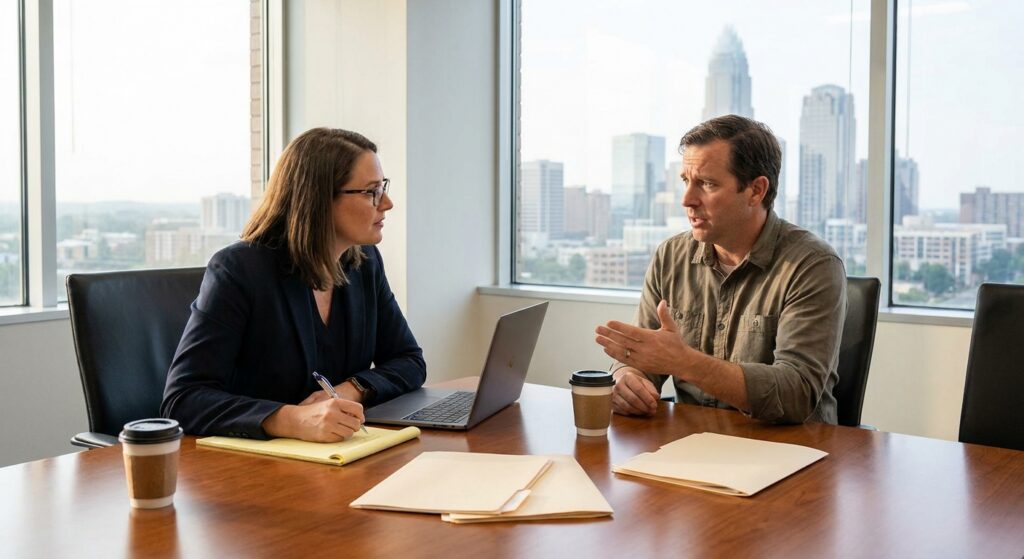
I run a smaller firm on purpose, and that is the whole point. I want to be boots on the ground and available throughout, not managing your case through case managers and paralegals the way big firms do and reading a summary someone else wrote. From the first call, you get me, not a paralegal: I analyze what happened, investigate, and walk through honestly whether you have a case worth pursuing. Within the first 48 hours we hold a consult where I answer the questions you are actually losing sleep over: how the property damage process works, what your case looks like, how attorney’s fees are structured, and how long the whole thing usually takes. Then I tell you to call me back the next day, because a crash is traumatic and brand new, and you should not have to absorb all of it in one sitting.
At larger, high-volume firms, size and volume create distance. That is not a criticism of every big firm, it is a structural fact. When one attorney carries hundreds of open files, clients become file numbers, and you end up spending most of your case talking to assistants, case managers, and different team members instead of the person whose name is on the letterhead. We are very intentional about the cases we take, precisely so that does not happen. I want to be able to tell your story because I actually know your story.
The First 48 Hours: Evidence Preservation That Happens Before You Sign
The most important early work is preserving objective evidence before it disappears, and it often starts before you have signed anything. Video gets overwritten. Witnesses move or stop answering the phone. If no one acts fast, proof that could have carried your case is simply gone.
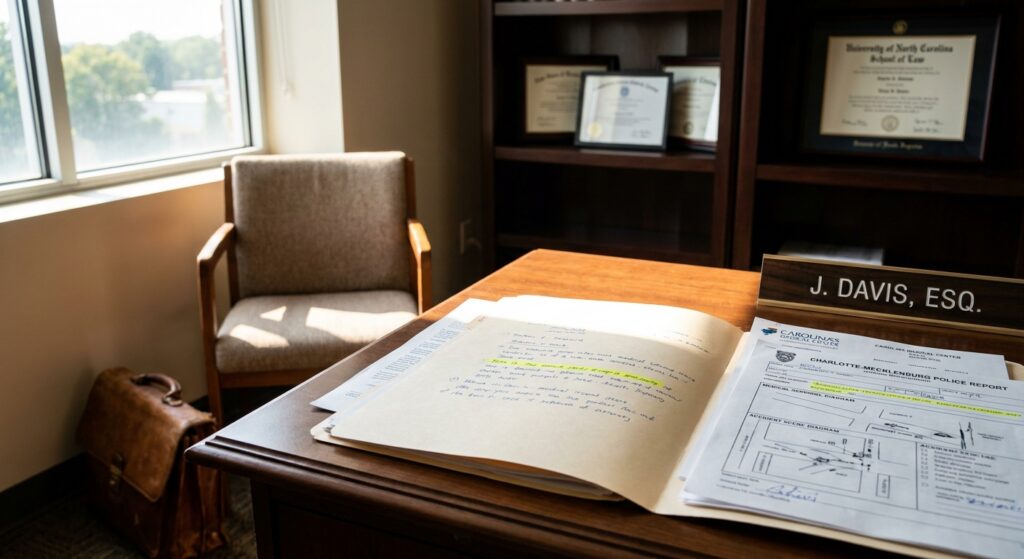
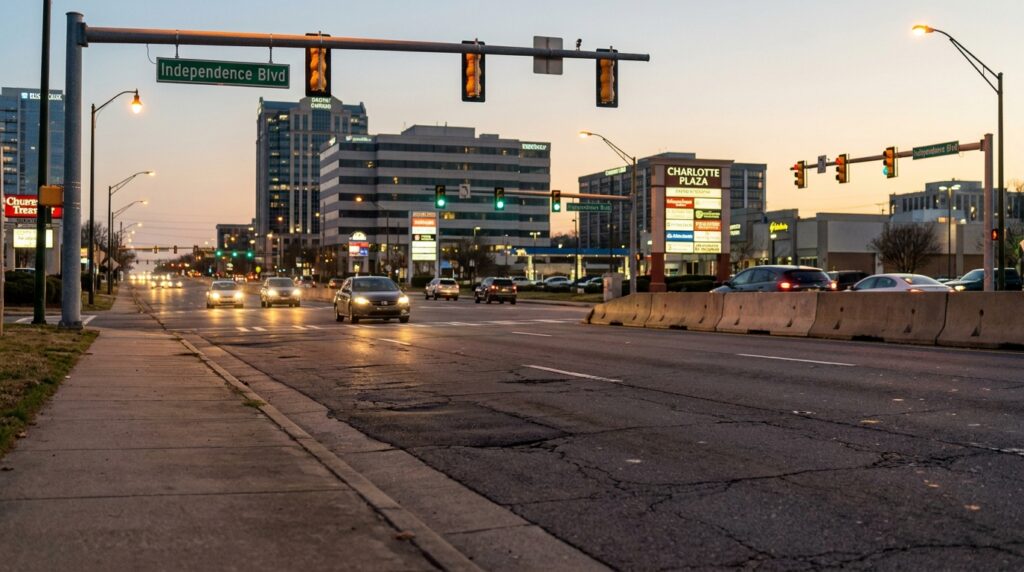
For the T-bone and left-turn crashes that are so common on Charlotte corridors like Independence Boulevard and South Boulevard, and on the high-traffic stretches around Mesa, I move quickly. I obtain the police report and the 911 records. I identify and contact witnesses while their memory is fresh and their number still works. I pull satellite images of the intersection to show sightlines and geometry. I look for surveillance or traffic-camera footage from nearby businesses, homes, and other vehicles, and when necessary I send preservation letters right away so that video or other evidence is not overwritten or destroyed within days or weeks.
Why does this matter so much later? Because it lets me build the liability case on independent evidence instead of relying only on two drivers giving competing accounts of who had the green. Insurance companies discount “he said, she said.” They respect a satellite image, a witness who has no stake in the outcome, and time-stamped footage of the collision. That same independent proof also shapes how I document causation and permanency, tying your injuries to the crash rather than leaving room for an adjuster to argue you were already hurt. Medical records and injury documentation sit right at the intersection of health and law, and building them correctly from day one is part of the preparation-focused approach I bring to every file.
When it comes time to negotiate with the insurance company, or if we ever have to stand in front of a jury, that early groundwork can make a significant difference in how your case is positioned.
Why Does Prior Insurance Defense Experience Change How Your Case Is Negotiated?
Because I spent part of my career on the other side of the table defending on behalf of insurance companies, I know how adjusters actually evaluate a file, what evidence moves them, and when a low number reflects a real weakness in a case versus routine posturing. That insider view shapes how I build your claim from the very first day.
Over roughly 12 years, I have represented thousands of clients, practiced in big law firms in Las Vegas and boutique practices in North Carolina, and I am admitted to the bar in two states, North Carolina and Nevada. Ethics rules keep me from calling myself an “expert,” and I would not want to overstate it anyway. But I will tell you plainly what that background does for you. When I assemble a demand, I am not guessing at what an adjuster wants to see. I am building the exact file I would have wanted to receive when I was defending, because I know which gaps they probe and which arguments they raise about liability, causation, and value.
That means I anticipate the objections before they come. If an adjuster is going to question the timeline of your treatment, we address it up front. If they are going to argue your injury was pre-existing, we document the difference. The goal is simple: give the insurer no easy reason to discount your claim, and take away the excuses they usually lean on to pay less.
How Does Data-Driven Pushback Respond to a Lowball Offer?
When an insurer makes a lowball offer, I do not just demand more money and hope they blink. I push back with legal research and data-driven evidence: jury verdicts and settlements from comparable cases in the same county, so the conversation shifts from an arbitrary argument over numbers to a realistic discussion of what the insurer could actually face before a jury.
Here is how that works in practice. Every offer an adjuster makes is really a bet on trial risk in your venue. Mecklenburg County has its own jury pool and its own history of verdicts, and so does the Las Vegas area. When I lay out the comparables, here are similar cases in the same county, here are the similarities and differences, here is what those juries actually awarded, the adjuster can no longer pretend your case is worth a fraction of what it is. That is data-driven evidence they cannot wave away.
In one client’s case, the insurance company made a lowball offer, and rather than simply demanding more, I pushed back with legal research and comparable jury verdicts and settlements from the same county. The offer went up. But I still did not believe it fairly compensated that client, so we kept pushing and got the insurer to mediation, where we secured an offer that exceeded my client’s expectations, though outcomes vary widely from one person’s case to another and depend on many factors unique to each situation.
That result came down to being willing to keep pushing, and being prepared enough that mediation was a credible threat rather than a bluff. Using comparable-case data changes the conversation from an arbitrary negotiation over numbers to a discussion about what the insurer could realistically face before a jury. I would rather be candid with a client and then fight to reach a fair number than take the first offer just to close a file quickly. That is not the firm I want Carma Legal to become.
What Should You Ask on the First Call With a Charlotte or Mesa Injury Attorney?
Ask who you will actually speak to after you sign, and whether the attorney personally handles the key decisions or delegates them. The answers tell you almost everything about whether you will have real access or become a file number.
Here are the questions I would want you to ask any firm, including mine:
- Who will I talk to after I sign, the attorney or a case manager?
- Does the lawyer personally review the surveillance footage, the police report, and my medical records, or does staff handle that?
- How many active cases does the firm currently carry?
- Will the attorney be the one negotiating with the adjuster and presenting my case at mediation or trial?
- Are you admitted where my case is, so you can handle it here in Charlotte or over in Mesa?
- How does the contingency fee work, and do I owe anything if the case does not recover compensation?
That last question matters more than most people realize when they are stressed about money. Personal injury cases run on a contingency fee: you pay attorney fees only if the case recovers a settlement or verdict, and the initial consultation is free. You should never feel like hiring an advocate is a financial risk on top of everything else you are carrying.
If a firm cannot give you a straight answer about who handles your file, treat that as your answer. The whole reason to hire counsel after a not-at-fault crash is to feel protected and in control while you heal, and you cannot feel that way if you never reach the person in charge. This is exactly why searching for a personal injury attorney near me should end with a real conversation, not a voicemail loop.
Questions Injured Callers Ask Me First
Will I speak to the attorney before I sign anything?
Yes. Direct access means the lawyer who will negotiate your case answers your questions during the initial consultation, before you sign a retainer. From the very first call you reach me directly, not a paralegal, and I walk you through whether you have a case. You should never be asked to commit to a firm you have only spoken to through intake staff.
How quickly does the attorney start investigating my car accident case?
Evidence preservation begins within the first 48 hours. That includes obtaining the police report and 911 records, contacting witnesses, pulling satellite images of the intersection, requesting surveillance or traffic-camera footage, and sending preservation letters, all before video is overwritten or witnesses become hard to reach.
What does it mean that the attorney worked for insurance companies before?
It means I previously defended on behalf of insurance companies and know how adjusters evaluate files from the inside. I anticipate their objections about liability and causation, and I structure demands around the evidence that actually moves an insurer rather than what merely sounds persuasive.
How do you respond when the insurance company makes a lowball offer?
I push back with legal research and data-driven evidence, including jury verdicts and settlements from comparable cases in the same county, and I escalate to mediation when the number still does not fairly compensate you, though every case unfolds differently based on its specific facts and circumstances.
Do I pay anything if my case does not recover compensation?
No. Injury cases run on a contingency fee, so you pay attorney fees only if the case recovers a settlement or verdict. The initial consultation is free.
Does the firm handle cases in both Charlotte and Mesa?
Yes. I am admitted to the bar in two states and work out of locations in Charlotte and Mesa, so I can handle your not-at-fault claim in either area.
Talk to the Attorney Who Will Actually Handle Your Case
If you have been searching for a personal injury attorney near me after a crash that was not your fault, call Carma Legal today for a free consultation with an attorney who will personally review your case, answer your questions, and begin preserving evidence within 48 hours. No intake maze, no waiting five days, no runaround. Reach us at 702-934-2228, and here is one concrete thing you can do before we even talk: write down the names and phone numbers of any witnesses, note any nearby businesses or homes that might have cameras, and do not give the other driver’s insurer a recorded statement until you have spoken to a lawyer.
Ready to Talk About Your Injury Claim?
If you’re weighing whether your situation warrants legal help, a straightforward conversation can bring clarity. The Carma Legal team in Charlotte and Mesa handles personal injury cases with the kind of direct attorney involvement that makes a real difference from day one. Reach out now to discuss your claim with someone who will actually be working on it.
Individual results vary widely based on the unique facts and circumstances of each case, and no outcome described here predicts or promises what will happen in yours.