
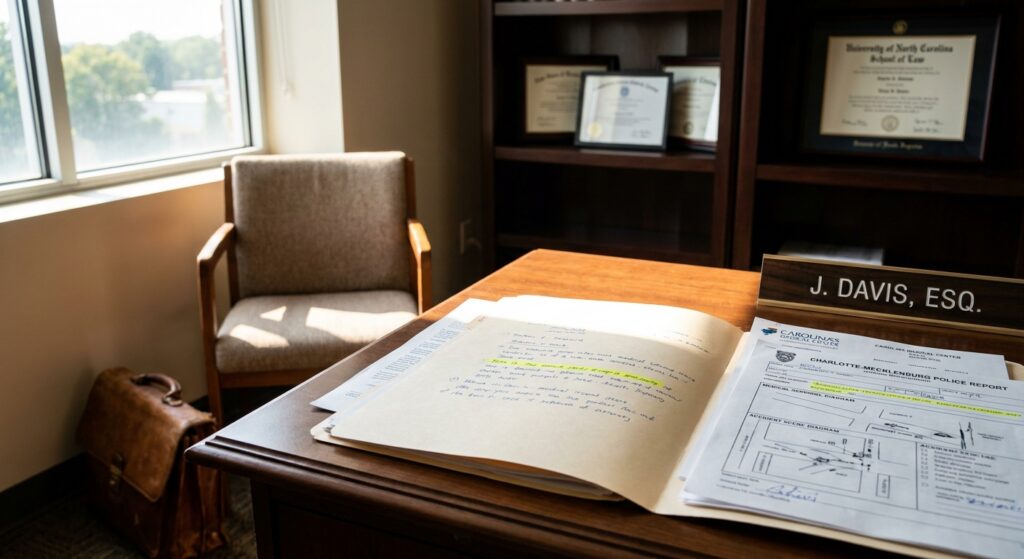
Switching Your Personal Injury Law Firm in Charlotte Mid-Case: Can You Do It Without Hurting Your Claim?
A client called me after signing with another Charlotte firm three weeks earlier because she had never once spoken to the attorney whose name was on the retainer, only case managers and paralegals, and when the insurance company made an offer that would not cover her outstanding medical bills, no one at that firm would pick up the phone to explain why they thought she should accept it. That is the moment a lot of injured people start asking whether they can move to a different personal injury law firm in Charlotte without wrecking their claim. The short answer is yes. You have the right to change lawyers at any point, and when the transition is handled with care, it typically does not reset your deadline, does not forfeit your case, and in some situations has put clients in a position they felt was stronger than the one they were in before, though experiences vary. Below are the real questions people ask me before they make the switch, answered plainly.
Will Switching Attorneys Mid-Case Restart My Statute of Limitations or Disrupt My Claim Timeline?
No. Switching lawyers does not restart your filing deadline. The clock starts on the date of your crash and keeps running no matter whose name is on the retainer, so changing firms neither adds time nor takes it away.
That is exactly why the first thing I check when someone wants to move their case to me is the statute of limitations. I ask when the crash happened, then I figure out how much time is actually left before the deadline runs. If there is plenty of runway, a clean transition may change very little about your timeline. The file comes over, I get up to speed on where the negotiation stands, and the case keeps moving.
If the deadline is too close, that is a different conversation, and I will be candid with you about it. Taking over a case with only a sliver of time left puts both of us in a bad spot, because I need room to review the file, confirm the injuries and treatment, and prepare the claim properly rather than rush something out the door. We are very intentional about the cases we take, and I would rather tell you the truth up front than accept a case I cannot do right. Your timeline may be protected when you act with time to spare, not at the last minute.
What Is the Formal Process for Firing My Current Attorney and Hiring a New One in North Carolina?
You must formally end the relationship with your current attorney, in writing, before a new firm can sign you or request your file. Until that happens, ethics rules stop me from discussing legal strategy with you at all.
Here is the sequence I follow. If someone who already has a plaintiff’s attorney calls me, I am careful not to answer legal questions for them, because they are represented by another lawyer. In fact, I usually encourage them to talk with their current attorney first to see if the problems can be worked out. The North Carolina State Bar Rule of Professional Conduct 4.2 governs communication with a represented person, and I take those lines seriously.
Once you have clearly fired your prior attorney and decided you want me to represent you, the steps are straightforward. You sign my intake documents, and I send a letter to the previous firm asking them to release your file. Your former lawyer is required to hand over the case materials that belong to you. The American Bar Association Model Rule 1.16 on terminating representation reflects the same principle followed across the country. It is your case, and it is your right to decide who carries it.
How Does a New Personal Injury Law Firm in Charlotte Review a Case Another Attorney Already Worked?
When I take over a file from another lawyer, I run through a specific checklist before anything else. I look at the statute of limitations, whether liability is clear, your injuries and medical treatment, your bills, and the current status of negotiations with the insurance company.
The order matters. First I confirm the case is still viable and there is time to make a claim or file suit. Then I look hard at liability, because North Carolina follows a contributory negligence rule that makes a clean liability story essential. Next I review the injuries, the treatment you received, and the medical bills, so I understand the full picture of what happened to you. Then I check where the negotiation actually stands: who the insurance carriers are, what offers have been made, and what the prior firm was arguing.
Just as important, I want to hear from you. I want to know where you feel the case went sideways, what you expected and did not get, and what your priorities are now. Too often at large firms, clients become file numbers, and no one ever sits down and asks. I want to be able to tell my client’s story because I actually know their story. That review is how I spot what may have been missed or mishandled before I take a case on.
Will the Transition Between Law Firms Cause Problems With the Insurance Company or the Courts?
Usually, no. A change of attorneys is a normal, professional event, and in my experience there is typically very little disruption when a case moves from one plaintiff’s firm to another.
I handle every transition as cleanly and non-contentiously as possible. In my experience, plaintiff’s attorneys in the Charlotte area work well with each other to pass along the information the new lawyer needs to keep representing the client. The prior firm sends the file, I review it, and the claim continues. Judges see representation changes regularly and do not hold them against you. Insurance adjusters see them too. A carrier is not going to raise or lower an offer simply because your letterhead changed. What may move an offer is the strength of the case and the willingness of your lawyer to keep pushing.
That last part is the real difference. An adjuster reads a file. If they sense the firm on the other side routes everything through case managers and rarely prepares to try a case, they price the claim accordingly. When they see an attorney who is prepared from the beginning and knows the facts cold, the calculation may change. The switch itself is quiet. What happens after the switch is what matters.
What Are the Red Flags That It Is Time to Switch Personal Injury Lawyers in Charlotte?
The clearest red flags are simple: you cannot reach an actual attorney, you get conflicting updates from different staff members, you feel pushed toward a settlement no one will explain, and no one has ever walked you through what your case involves.
Think back to the client I mentioned at the start. She had signed weeks earlier and never spoken with the lawyer named on her paperwork. When the insurance company put an offer on the table that would not even cover her outstanding medical bills, the firm went silent instead of explaining their reasoning. That is the pattern to watch for. Many injured people do not realize that a retainer names the firm, and large firms often route every phone call through paralegals and case managers, leaving the attorney invisible until trial, if the attorney ever gets involved at all.
You deserve honest guidance and clear communication, not a runaround. If your calls go unreturned, if the person handling your file cannot tell you why a number is fair, or if you feel pressured to sign and go away, those are signals worth taking seriously.
How Does Direct Attorney Access Affect the Handling of Your Claim?
Direct access to the attorney handling your case can affect the handling because the person negotiating for you actually knows your story, your priorities, and what the law does and does not provide. That is hard to replicate from behind a wall of intermediaries.
I had a case in North Carolina where the previous attorney and the client simply were not connecting. After that client fired the prior lawyer and hired me, I found that just by listening to their concerns and understanding what they cared about most, I could move things forward. We talked honestly about the possibilities: the different ranges we might pursue, and what a jury might consider given the injuries and how the crash happened. That candid conversation set the tone, and I was able to resolve the case in a way that worked for that person. That reflects one client’s experience, not a prediction of any particular outcome.
None of that happens when clients become file numbers. When you talk to the attorney directly, you can lay out comparable cases, the similarities and the differences, and make real decisions together. I would rather be candid with someone about what their case involves than hand them off and hope the file works itself out. That is not the firm I want Carma Legal to become.
What Happens If You Wait Too Long to Switch Lawyers Before the Statute of Limitations Runs Out?
If you wait too long, you can end up trapped, stuck with an offer you do not want, or facing a deadline so close that no careful attorney can properly take over the case in time. In North Carolina, the deadline for most car-crash injury claims is three years from the date of the crash under N.C. Gen. Stat. § 1-52.
Three years can sound like plenty of time, but it disappears faster than people expect, especially when months are lost to a firm that is not communicating. A responsible new attorney needs room to review the entire file, confirm liability, gather the medical records and bills, evaluate the negotiation, and, if needed, file suit before the clock runs. When you bring a case in with only weeks left, that room does not exist.
That is why I refuse to take transfer cases that sit right on top of the deadline. It is not that the case lacks merit. It is that I will not accept a file I cannot prepare properly, because doing so would put you at risk. If you already sense your case is being mishandled, the safest move is to act while there is still time to do it right, not after your options have narrowed.
Why Does North Carolina’s Contributory Negligence Rule Matter When Switching Personal Injury Law Firms?
North Carolina’s contributory negligence rule matters because it is unusually harsh: if a jury finds you were even slightly responsible for the crash, you can be barred from recovering anything at all. Before I take over anyone’s case, I have to confirm that liability is clear.
This is one of the reasons I am careful about the cases I accept. When fault is disputed, I counsel the client honestly about whether it makes sense to spend the time and money on litigation, because the law can shut the door entirely if the other side succeeds in shifting a share of blame onto you. We want a clear story and a solid understanding of what happened, so that legally you may be able to recover.
My background helps here. I have been licensed in North Carolina since 2018, handling car-crash claims in the Charlotte area since then, and I am also licensed in Nevada, where I have handled these claims since 2015. Early in my career I worked on the insurance-defense side, mostly in medical malpractice, and many of those tactics carry over: minimizing damages, raising prior injuries, and building liability arguments to reduce what you are owed. Having sat on that side of the table, I know the red flags to look for in a prior attorney’s file, and I know how insurers try to pin fault on injured people.
If your current personal injury attorney in Charlotte is not returning your calls, or has recommended a settlement that does not cover your medical bills, call Carma Legal at 702-934-2228 for a free consultation. I will review your case directly, confirm your deadline, and give you honest guidance on whether a transition may protect your claim. When you work with our personal injury law firm in Charlotte, you talk to the attorney, not a case manager, from the very first call.
Making the Switch: Your Rights When Changing Personal Injury Lawyers in Charlotte
Wondering whether you can change attorneys in the middle of your personal injury case is a question many people in Charlotte hesitate to ask. The short answer is yes, and understanding your options can be the difference between settling for representation that isn’t working and getting the advocacy you deserve.
Understanding Your Right to Change Lawyers
As a client, you have the fundamental right to change legal representation at any point during your case. This right exists whether you’re in Charlotte or Mesa, and it applies regardless of how far along your case has progressed. Your relationship with your attorney is built on trust and communication, and when those elements are missing, you’re not obligated to continue working together.
Many people worry that switching lawyers will damage their case or create complications, but the legal system recognizes that sometimes a change in representation is necessary for the best possible outcome. Courts and insurance companies are accustomed to seeing attorney substitutions, and when handled properly, the transition can actually strengthen your position rather than weaken it.
Common Reasons People Change Personal Injury Attorneys
Poor communication is one of the most frequent reasons clients seek new representation. When your attorney doesn’t return your calls, fails to keep you updated on case developments, or makes you feel like just another file number, it’s natural to question whether you’re getting the attention your case deserves.
Lack of experience with your specific type of injury case is another valid concern. Personal injury law covers everything from car accidents to slip and falls to medical malpractice, and not every attorney has equal expertise across all these areas. If you later discover your current lawyer has limited experience with cases like yours, seeking someone with more relevant background makes practical sense.
Disagreements about case strategy can also create friction. Perhaps your attorney wants to settle quickly while you believe your case deserves to go to trial, or maybe you feel the settlement amount being discussed doesn’t adequately compensate you for your injuries and losses. When you and your lawyer aren’t aligned on fundamental decisions about your case, the relationship may not be salvageable.
Sometimes the issue is simply a personality mismatch. Your attorney might be competent, but if you don’t feel comfortable communicating openly or you sense a lack of genuine concern for your situation, that disconnect can affect the working relationship and ultimately your case outcome.
The Legal Process of Switching Attorneys
Changing lawyers mid-case involves a straightforward legal process called substitution of counsel. Your new attorney will file a formal notice with the court informing them of the change in representation. This document removes your previous attorney from the case and establishes your new lawyer as your representative.
Before the switch becomes official, you’ll need to formally terminate your relationship with your current attorney. This typically involves sending a written letter stating your decision to end
Every case is unique, and results depend on the individual facts and circumstances. Prior outcomes do not predict or guarantee future results.