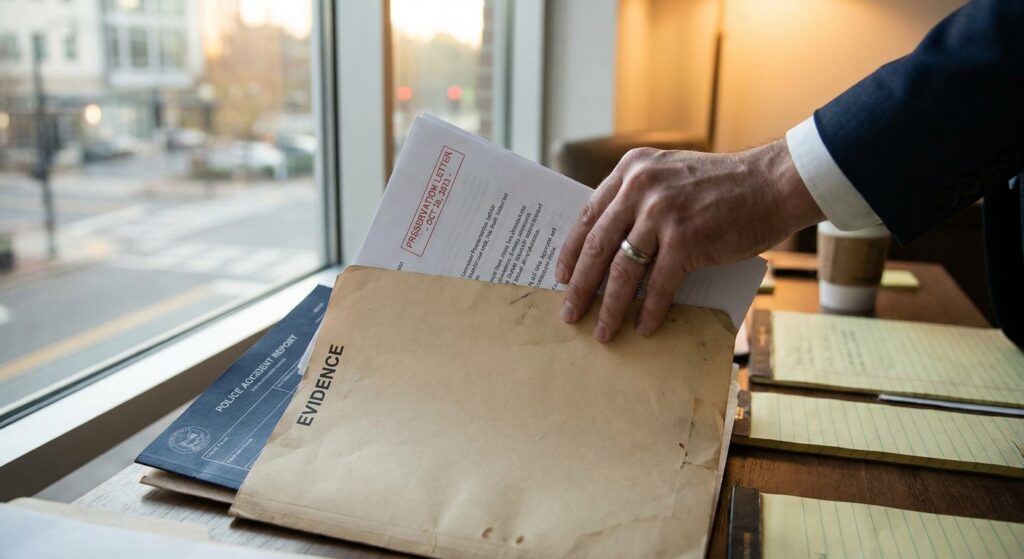
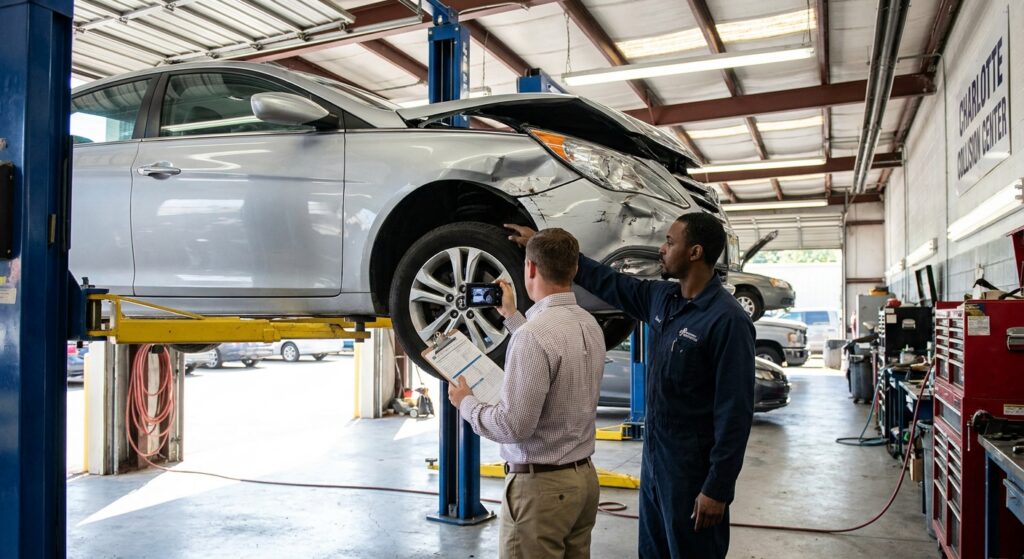
The other driver’s insurance company has decided how many days of rental car you get. It made that call while your car was still on a lift at the body shop, waiting for an adjuster to approve the repair supplement, and nobody told you who picked the number or why. You were not at fault, and you thought this part would be simple: they fix your car or they pay for it, and you get back to your life. Instead, you may be paying for a rental yourself, looking at a total loss number that will not buy a comparable car in Charlotte or Mesa, and asking whether a property damage claim lawyer is worth calling over a vehicle. This page from Carma Legal explains what you are owed, where these claims usually go wrong, and when bringing in an attorney may make financial sense.
People who call me at Carma Legal after a wreck usually start with the car: When can I get a rental? When will they pay for my total loss? Then the pain sets in, the medical bills start arriving, and the same insurance company handling the car starts asking about injuries. I work on those problems with my clients. The property side comes first and moves fast, and that speed is exactly why it deserves careful attention.
What Does a Property Damage Claim Actually Cover After a Not-at-Fault Wreck?
A property damage claim after a not-at-fault wreck covers three main things. The first is the cost to repair your vehicle, or its value if it is totaled. The second is a rental car or other loss of use while you are without it. The third is diminished value, which is the drop in resale value your car suffers once it has an accident history. Insurers rarely offer all three without being asked.
Start with repair versus total loss. If your car can be fixed for a reasonable cost, the at-fault driver’s insurer pays the repair bill, including supplements. A supplement is the extra damage the shop finds once it takes panels off. If repairs cost too much compared with the car’s value, the insurer declares a total loss. Insurers often make that calculation internally, weighing repair costs against vehicle value to decide whether rebuilding makes economic sense.
When a car is totaled, the insurer pays actual cash value. Actual cash value means roughly what your car was worth on the open market the moment before the crash, after depreciation. It is not the price of a new car. Think of it like a fire that destroys a five-year-old couch: the insurer pays for a five-year-old couch in that condition. That standard is fair only if the insurer gets the “condition” and “market” parts right, and that is where many disputes start.
Your claim also reaches past the car itself. Items damaged inside the vehicle count as property damage too, such as a laptop, a phone, work tools, or a child’s car seat. After a collision, replacing a car seat is smart even if it looks fine, since internal damage may not be visible. List that seat in your claim. Keep in mind that the at-fault driver’s policy limits cap what that insurer will pay. If your car is worth more than the other driver’s property damage coverage, you need to know that early, before you accept anything.
The Three Pressure Points Where Your Property Claim Is Most Likely to Break Down
Knowing what you are owed is only half of it, because most property claims break down at one of three points. The first is a total loss valuation built on the wrong comparables. The second is a rental cutoff before your car is fixed or replaced. The third is a release form that closes more than you think. All three tend to show up in the first few weeks, while you are still sore and still trying to get to work.
A rental cutoff often looks like this: the car has not left the shop, the supplement is still waiting on the adjuster’s approval, and the rental authorization simply ends. The adjuster’s explanation is usually that the policy covers a “reasonable” rental period. The problem is that “reasonable” has no fixed definition, so the adjuster decides it, and that decision is not always tied to the shop’s actual timeline or to the fact that you need a car to earn a living. If you commute on I-77 or I-85 every day, or you drive Loop 101 or US-60 in Mesa, going without a car is not a minor inconvenience. It can put your job at risk.
The rental dispute may be addressable with documentation. Ask the body shop for a written repair timeline, keep every email about the supplement and every delay on the insurer’s end, and then ask the adjuster, in writing, to explain how they arrived at the cutoff date. A delay the insurer caused is hard to blame on you, and seeing that paper trail laid out in a clear timeline sometimes changes the conversation.
The release form is the most dangerous of the three, and it is the one people see coming least. The timing mismatch is what catches clients off guard. A car can be repaired or paid off within weeks, but at Carma Legal I usually do not open injury negotiations until my client has learned how serious their injuries are, meaning they have either healed or reached maximum medical improvement. Many clients are surprised by how long that takes. Meanwhile, the property check often arrives with a release attached, and many releases are written to cover “all claims arising from” the accident, not just the car. Clients sometimes do not realize they signed away their injury claim until weeks later, when the pain has not gone away and the medical bills are stacking up.
Total Loss Offers: Why the First Number May Not Be Enough to Replace Your Vehicle
Of those three pressure points, the total loss offer is where the most confusion comes up. A first offer sometimes falls short because it comes from a valuation report that may pull comparables from cheaper markets and leave out what made your car worth more. You are allowed to challenge an offer you believe is inadequate, and much of the evidence you need is probably already in your glovebox and your email.
Here is how the process usually works. The insurer uses a valuation service that finds “comparable” vehicles for sale, adjusts them for mileage and condition, and averages them into a number. The weak point is where those comparables come from. A report can draw listings from a wide radius that includes smaller, lower-cost markets, and prices at dealers around Charlotte do not always match listings from rural counties hours away. The same issue can come up in Mesa if the comparables do not reflect what cars sell for in the East Valley. If the comparables do not match where you will actually shop, the number may not match what you will actually pay.
Valuation reports also tend to overlook the things that set your car apart: low mileage, a recent set of tires, a new battery, documented maintenance, a factory package or trim level coded incorrectly, and aftermarket equipment such as a towing package, upgraded wheels, or a work rack. Taxes and title fees for a replacement vehicle are another place to check. Ask the adjuster directly whether the offer accounts for them, and get the answer in writing.
Some drop from what you originally paid is expected because of depreciation, so a gap alone does not prove the offer is wrong. The real question is whether the offer will buy a car with the same year, trim, mileage, and condition within driving distance of your home. If it will not, the offer may not make you whole. When I challenge a valuation for a Carma Legal client, I bring evidence rather than frustration: matching vehicles, how they line up with yours, and where the insurer’s report went wrong. To test the offer yourself:
- Request the full valuation report, not just the final number.
- Check each comparable for trim, mileage, options, location, and whether it is still actually for sale.
- Gather your maintenance receipts and proof of any upgrades.
- Pull real local listings for vehicles that truly match yours.
- Get your loan payoff amount, so you know whether the offer even clears what you owe.
Diminished Value: The Recovery the Insurer Hopes You Never Ask About
Even when your car is repaired instead of totaled, there may be money left on the table. Diminished value is compensation for the resale value your car loses because it now has an accident on its record, even after a proper repair. North Carolina treats this loss as part of property damage. Insurers almost never include it in an initial offer, and they will dispute it unless you ask for it and back it up with evidence.
Picture two identical houses on the same street. One flooded last year and was fully restored, yet most buyers will still pay less for it, even if it looks exactly like its neighbor. Cars work the same way. Once a crash appears on a vehicle history report, dealers and private buyers often offer less. That loss is real money, and it came from a wreck you did not cause.
North Carolina courts have long measured damage to a vehicle as the difference between its fair market value right before the crash and its value right after. A repair bill alone does not always close that gap, because a repaired car with an accident history may still be worth less than it was before. That difference is what a diminished value claim goes after. The claim is typically made against the at-fault driver’s insurer, which is why you should raise it before you sign any release on the property side.
Proof is where these claims are won or lost, since adjusters will not accept “my car is worth less now” on its own. Support may include an independent diminished value appraisal, along with comparable sales data showing what similar cars with clean histories sell for compared with cars that have accident records. Diminished value matters most on newer vehicles, low-mileage vehicles, higher-value vehicles, and cars you still owe money on. If your car fits any of those descriptions and the insurer’s offer says nothing about diminished value, the offer may be incomplete.
When Does a Property Damage Claim Lawyer Become Necessary, and Worth the Cost?
A property damage claim lawyer may be worth it in three situations: the offer leaves you paying out of pocket, the adjuster stops negotiating, or you are being pushed to sign a release before you know how badly you were hurt. If the only dispute is a small gap on a simple repair, you may not need a lawyer, and I will tell you that at Carma Legal.
Honest guidance at Carma Legal means telling someone when hiring me would not leave them better off. Certain signs tell me a call is worth it: the rental has been cut off before your car is fixed or replaced, the total loss offer will not buy a comparable vehicle where you live, diminished value has been ignored, the adjuster has started hinting that you share some of the blame, or a release has landed in your inbox while you are still in treatment. Any one of these can cost you more than the property dispute itself, especially the release.
Here is what direct access to an attorney means in practice. You can call and ask whether an offer holds up before you sign it, instead of finding out three weeks later that you cannot afford a replacement and that the release also waived your injury claim. When you call Carma Legal, you hear my voice, the attorney, not a paralegal reading from a script. My face is on the website, and I handle every aspect of your case myself. I have been doing this for a long time, and walking clients through each step is how I work to lower their stress, help them pursue the care they need, and seek the justice they deserve.
I will not put a dollar figure on your claim during a phone call. My role is not to act like an insurance adjuster grading your case. My job is to gather the evidence, present it, and advocate for you, and to keep pushing when an adjuster would rather close the file.
What Happens When You Call Carma Legal About a Property Damage Dispute?
Once you decide to reach out, the process is straightforward. You get a consultation with the Carma Legal attorney, not an intake form. We go through your offer, your documents, and any injuries, and you leave knowing whether representation makes sense for you and what your next step should be.
It helps to bring whatever you have, and it does not need to be organized. Useful items include the repair estimate and any supplements, the total loss valuation report, your rental agreement and the cutoff notice, photos of the damage and the scene, maintenance and upgrade receipts, your loan payoff statement, any release or settlement letter the insurer sent, and your emails or texts with the adjuster. If you have seen a doctor, bring a list of those visits too. Your injury claim and your property claim come from the same crash, and I need to see both before anyone signs anything.
On the injury side, that list of visits is the starting point for a detailed review. At Carma Legal I go through the medical records closely, typically building a medical chronology and working through the ICD-10 diagnosis codes. I look at whether the injuries are permanent, what recovery required or still requires, how the injuries have affected daily life, and how much pain has been involved. For questions about permanency and future health, I rely on the assessments of the medical providers themselves. Medical bills are one factor in a demand, but only one, alongside permanency, pain, and future outlook. None of that picture is complete while you are still treating, which is one more reason not to sign a broad release early.
If cost is on your mind, that is a fair worry, especially while bills are piling up. We at Carma Legal will go over exactly how fees work during the consultation, before you commit to anything. Most property work is handled alongside the injury claim, so the property issues are resolved while the injury side is built properly. If your dispute involves only the car, we will talk honestly about whether hiring me makes financial sense for you. Timing matters here, too. Property settlements move quickly, and insurers count on that speed to get releases signed before injured people understand what they are giving up. An early review is how you may avoid that.
From the first day, I prepare every Carma Legal file as if it may go to mediation or in front of a jury. Being prepared from the beginning is what gives me credibility with an adjuster later, and it means I can tell my client’s story because I actually know it. Carma Legal serves clients from its office in Charlotte and its office in Mesa, telehealth consultations are available, and you can reach me directly at 702-934-2228. If an insurer is ignoring your complaint in North Carolina, you can also contact the North Carolina Department of Insurance, which regulates insurers doing business in the state.
Questions to Ask Before You Hire a Property Damage Claim Lawyer
Can I hire a lawyer just for the property damage claim, or do I have to hire them for the injury claim too?
You can hire a lawyer for property damage alone. Most property disputes, however, come from a crash that also caused an injury. Handling both claims together may work better, and it protects you from signing a property release that quietly closes your injury claim.
How much does a property damage claim lawyer cost if the dispute is only over a few thousand dollars?
At Carma Legal, we explain how fees work during your consultation, before you agree to anything. When the gap is only a few thousand dollars, I will tell you honestly whether hiring me would leave you ahead after fees.
What is diminished value and how do I prove it?
Diminished value is the drop in your car’s resale value caused by its accident history, even after proper repairs. You may prove it with an independent diminished value appraisal or comparable sales data showing that similar cars with clean histories sell for more than yours will.
Can the insurance company really cut off my rental car before my car is repaired?
The at-fault driver’s insurer owes rental costs for a reasonable period, but “reasonable” is not clearly defined. Adjusters often pick a number of days on their own, even when repairs are unfinished or a total loss replacement is still in progress. A written repair timeline and a clear paper trail are your tools to push back.
What happens if I already signed the property damage release but my injury claim is still open?
It depends on the release language. Many releases cover every claim arising from the accident, not just property damage, and once signed they are very difficult to undo. If you have signed one, have an attorney read it right away. If you have not signed yet, get it reviewed before you do.
How long do I have to file a property damage claim in North Carolina or Arizona?
In North Carolina, you generally have three years from the date of the crash to file suit for property damage. In Arizona, the deadline is two years. Rental coverage and insurer timelines move much faster than either deadline, so do not wait on those.
If the insurer has cut off your rental, offered less than it may cost to replace your car, or sent you a release form, call Carma Legal in Charlotte or Mesa for a consultation before you sign anything. You will speak directly with the attorney who will handle your case.
Before that call, take one step on your own. Open the release and look for the words “all claims,” “any and all,” or “bodily injury.” If you see any of them on a document that is supposed to be about your car, stop and have it reviewed, because that one sentence can decide whether your injury claim survives.
Let the Evidence Work for You
If the adjuster’s offer doesn’t reflect what it actually costs to restore your car or replace what was damaged, you’re not asking for too much by expecting fair compensation. A conversation with our team at Carma Legal can help you understand whether the insurer is meeting its obligation or whether representation would strengthen your position. We handle property damage claims in Charlotte and Mesa, and we’re ready to listen.
Results vary with every case; past results do not predict or guarantee future outcomes.