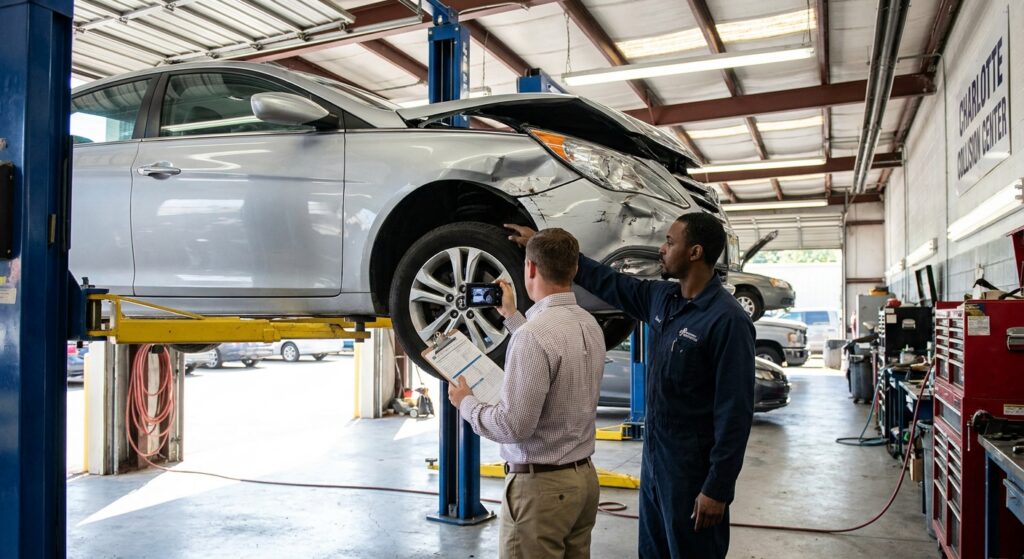

A Charlotte driver called me at Carma Legal from her car outside a body shop on Independence Boulevard, three days after a pickup truck ran a stop sign and T-boned her sedan, because the at-fault driver’s adjuster had just told her that her failure to honk or swerve meant she was partly to blame, and that under state law it could wipe out her claim entirely. She wanted to know if that was true, and whether anything she said in her first phone call had already cost her the case. The short answer is that North Carolina contributory negligence is real, it is unforgiving, and the adjuster was doing exactly what adjusters are trained to do. Over roughly 12 years, I have watched that scenario play out again and again. I would rather be candid with you than let you find that out after you have signed something. So here is how the rule works, how it gets used against people, and what can be done about it.
What North Carolina Contributory Negligence Actually Means for Your Claim
North Carolina contributory negligence is a rule that says if you are found even one percent at fault for your own accident, you may recover nothing. Not a reduced amount. Nothing. No medical bills, no lost wages, no property damage, and no compensation for your pain, even when the other driver was overwhelmingly to blame.
Most people assume the law works the way it does on television, where fault gets split and your check simply gets smaller. That is not how it works here. This doctrine is a complete bar to recovery, which means any negligence on your part that helped cause the crash, no matter how small, can erase your entire claim. You can read the general legal definition of contributory negligence at Cornell’s Wex legal dictionary, and it confirms the harsh mechanics: a plaintiff who contributes to their own injury can be barred from recovering at all.
What that means for you is stark. Picture a driver whose sedan was struck by a truck that blew through a stop sign. Liability looks obvious. But if the insurer can convince a jury she should have seen the truck coming and could have braked half a second sooner, that argument alone can hand her a zero. The other driver’s clear fault does not save her. Here, your own slice of blame does not shrink your recovery, it ends it.
This is why I take the intake process at Carma Legal so seriously, and why I am very intentional about preparing a case from the first conversation. In a state with a rule this strict, the details you give away early can decide everything.
How Adjusters Use This Rule Against You From the First Phone Call
Adjusters understand North Carolina contributory negligence better than most drivers ever will, and they use it as leverage from the very first phone call. The questions are friendly, routine, and designed to build a record of your fault before you understand what is at stake.
Before I represented injured people, I worked for the insurance companies, defending claims on their behalf, so there is no tactic in this playbook I have not already seen from the inside. The questions come early, usually in that first recorded statement, and they sound harmless. Were you distracted at all? Did you see the other vehicle before impact? Could you have braked sooner? Were you in a hurry? Had you looked down at your phone, even for a second? Each one is an invitation to admit a sliver of responsibility, and a sliver is all they need.
Here is why the first recorded statement is the most dangerous moment in your entire claim. You are stressed, you are hurt, you are trying to be helpful and honest, and you have no idea that one polite “well, I guess I could have” can become the centerpiece of a fault defense. The adjuster is calm because the adjuster has done this thousands of times. You have done it once. That imbalance is the whole point.
This is exactly why direct access to an attorney from day one matters so much. When you call Carma Legal, you reach me, not a paralegal or a rotating cast of staff, and I can tell you what to say and what not to say before you ever get back on the phone with the other side. When they call asking for “just a quick statement,” the answer they get is a prepared one.
Why a Split-Second Reaction Can Kill Your Entire Claim
Yes, a single split-second reaction can end your claim, because the rule applies to even the smallest lapse in ordinary care. A moment of inattention, a failure to swerve, a hesitation at a green light, any of it can be argued as contributory fault.
North Carolina courts have applied this rule with real bite. Appellate decisions have barred plaintiffs who were found only slightly at fault, and juries here are instructed that any negligence on the plaintiff’s part, however slight, defeats the claim. That is not an exaggeration for effect. Legal scholars who study this state have documented how a small apportionment of blame can eliminate an otherwise strong case, which is a large part of why reform advocates keep pushing to change it. The UNC Law Review’s analysis of the Fontenot case walks through how the rule operates and why critics call it too harsh for modern roads.
There is a technical point worth understanding, because it works in your favor if it is handled right. The defendant carries the burden of proving your contributory negligence by a preponderance of the evidence. In plain terms, they have to show you were at fault. But once they put any credible evidence of your fault in front of a jury, the burden starts to feel like it has shifted, and now your case depends on convincing that jury you did nothing wrong at all.
That is why I do not treat any case as a slam dunk, even when fault looks one-sided. On a busy intersection like South Boulevard, or a merge onto I-77, split-second decisions are routine, and defense firms know it. I prepare every Carma Legal file assuming the other side will raise contributory negligence, because here they almost always do.
Why This Rule Barely Exists Anywhere Else
North Carolina is one of only a handful of places in the country that still uses pure contributory negligence. Just four states, North Carolina, Virginia, Maryland, and Alabama, along with the District of Columbia, still follow this rule. The other 46 states use some form of comparative fault instead.
The difference is enormous. Under comparative fault, if you are found 20 percent at fault, your recovery is reduced by 20 percent and you still collect the other 80 percent. Your mistake costs you something, but it does not erase everything. The University of North Carolina’s School of Government has a clear breakdown of how these negligence doctrines differ across the country, and it shows just how far out of step this state’s approach is with the rest of the nation.
I am licensed in two states, North Carolina and Nevada, and Nevada is a comparative fault state. I have practiced in big firms in Las Vegas and in boutique firms in North Carolina, and Carma Legal now operates out of both Charlotte and Mesa, Arizona, which is also a comparative fault jurisdiction. Working across these systems gives me a clear-eyed view of how rare and how punishing this rule really is. In a comparative fault state, a jury that assigns you a little blame is annoying. In North Carolina, that same finding is fatal. The stakes are simply not the same, and any lawyer who treats a Mecklenburg County case the way a lawyer in most other states would treat theirs is doing you a disservice.
I bring this up not to alarm you, but because you deserve honest guidance. Most people searching for answers assume fault gets divided everywhere. It does not. Knowing you are in one of the strictest jurisdictions in the country is the first step to protecting yourself inside it.
How an Attorney May Neutralize the Rule Before It Wrecks Your Case
A prepared attorney can sometimes neutralize a contributory negligence argument before it ever becomes the story of your case, by controlling the narrative early, gathering objective evidence, and preparing you for the exact questions designed to trap you. Each case is different, and outcomes depend on the specific facts and evidence available.
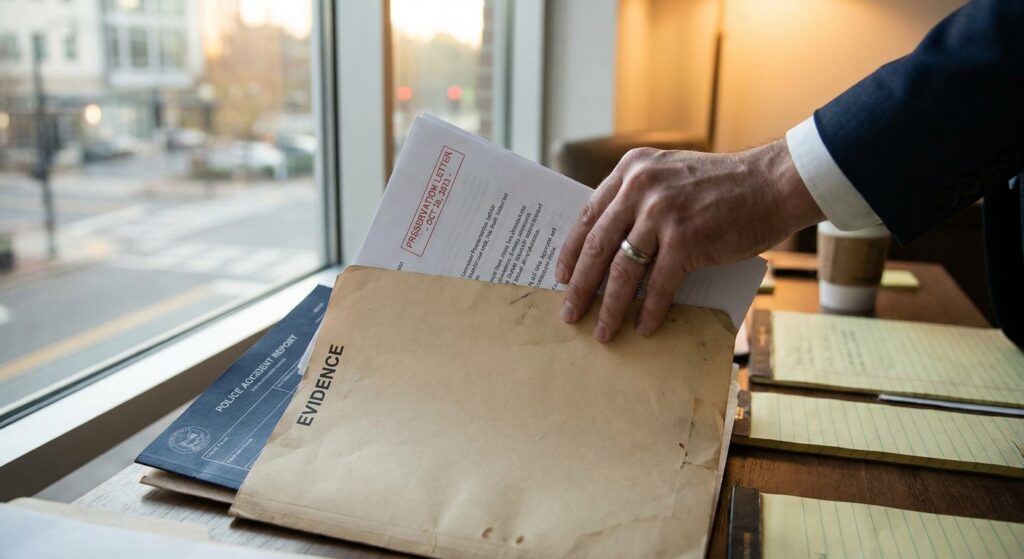
My approach at Carma Legal is built on being prepared from the beginning. That starts with the demand letter, where I set out the facts, the causation, and the other driver’s fault in a way that leaves the insurer little room to invent your share of blame. It continues with evidence. I look for traffic camera footage, dashcam video, and witness statements that support your version of events. When the physical evidence is contested, I bring in an accident reconstructionist to show what actually happened at the point of impact. And when a deposition is coming, I prepare you for the questions the defense will ask, precisely because they are trying to manufacture fault where there was none.
Consider a driver whose sedan was struck by a truck that ran a stop sign. Suppose the adjuster wanted her to concede she could have swerved. The right response is not to argue with the adjuster on the phone. It is to build a record: the physical damage pattern showing the truck’s path, the intersection sightlines, any witness who saw the truck run the sign, and, where it exists, footage from a nearby camera. Here are comparable situations, here are the similarities and differences, and here is the evidence that shows you did nothing wrong. That is how you take the contributory negligence card out of their hand.
I do this work myself at Carma Legal. You see my face on the website, and you hear my voice when you call. I manage every aspect of your case and keep the communication open throughout, answering your questions at every step, because in a state with this rule the difference between a dismissed claim and a real recovery often comes down to details only the attorney handling your file will catch.
What Should You Do If You Already Talked to the Adjuster?
If you have already given a recorded statement or made an admission, do not panic, and do not give up on your claim. An attorney can sometimes address the situation, but the earlier you get honest guidance, the less repair work there is to do.
The repair strategy is about answering a subjective admission with objective proof. If you told an adjuster you “maybe” could have braked sooner, that opinion can be contradicted by hard evidence: the timing shown on traffic footage, the reconstruction of speeds and distances, and the account of a neutral witness who saw the whole thing. One offhand comment does not have to become the truth of your case if there is stronger evidence pointing the other way. What I will not do is sell you false comfort. Some admissions are harder to overcome than others, and I would rather tell you that plainly than string you along.
The single most valuable thing you can do right now is talk to a lawyer before the next conversation with the insurer, so the company does not lock in a version of events that includes your alleged fault. Carma Legal offers a free consultation, and I work on a contingency fee basis, which means you pay nothing unless you recover. There is no cost to find out where your case really stands, and no reason to face another adjuster call unprepared.
Frequently Asked Questions
Can I still recover compensation if I was partially at fault for my accident in North Carolina?
Generally no. Under North Carolina contributory negligence, if you are found even one percent at fault, you can be barred from recovering anything at all. This differs sharply from the comparative fault systems used in most states, which reduce your recovery instead of eliminating it.
What questions should I not answer when an insurance adjuster calls after an accident?
Be very cautious with any question about whether you were distracted, whether you saw the other vehicle, or whether you could have done something differently. These questions are designed to establish contributory fault. The safest step is to speak with an attorney before giving any recorded statement.
Do most states have the same contributory negligence rule as North Carolina?
No. Only four states, North Carolina, Virginia, Maryland, and Alabama, plus the District of Columbia, use pure contributory negligence. The other 46 states use comparative fault, which reduces your recovery by your percentage of fault instead of wiping it out.
Can an attorney help if I already gave a recorded statement admitting some fault?
Sometimes. An attorney can obtain traffic footage, hire an accident reconstructionist, or find witnesses who contradict the narrative the insurer is building. Each situation is different, and outcomes depend on the specific facts and the quality of available evidence. Earlier involvement means less repair work, so it is worth getting guidance right away.
How do I know if the other driver’s insurance company is using this rule against me?
If an adjuster is asking whether you could have avoided the crash, whether you were paying full attention, or is suggesting you share some blame, they are building a contributory negligence defense. Those questions are a warning sign, not small talk.
Does Carma Legal charge upfront fees to review my case?
No. Carma Legal offers a free consultation and works on a contingency fee basis, which means you pay nothing unless you recover compensation. You can find out where your case stands at no cost.
Talk to the Attorney Before the Adjuster Locks in Your Fault
The most important move you can make in a North Carolina contributory negligence case is to get real preparation in place before the insurance company decides the story includes your blame. Once that narrative is set, it is far harder to undo. Call Carma Legal at 702-934-2228 for a free consultation to review your accident and protect your claim now, while there is still time to control the evidence and the record. When you call, you reach me, the attorney handling your case, someone who has spent roughly 12 years on both sides of these claims, and I will tell you honestly what you are facing and what we can do about it.
Talk Through Your Case Before the Clock Runs Out
If you were injured in an accident and worry that even a small mistake on your part might bar your recovery under North Carolina’s harsh contributory negligence rule, you deserve straightforward answers about what happened and where you stand. The attorneys at Carma Legal can review the circumstances of your accident, explain how the law applies to your situation, and help you understand your options before time limits foreclose them.
Case outcomes depend on the unique facts of each situation, and no attorney can guarantee a particular result. Past experience does not predict future outcomes.