
A client called me from a grocery store parking lot on Providence Road, two hours after his wreck on Queens Road, asking if he had just damaged his claim by telling the other driver’s adjuster he felt fine. The adjuster had opened with “I’m so glad you’re okay,” asked how he was feeling, and he reflexively said, “I’m fine, just shaken up.” Now his neck was stiffening, he had been reading that soft tissue injuries show up later, and he wanted to know if that one sentence would be used against him. If you are asking the same thing, here is what Carma Legal suggests you consider if an insurance adjuster calls after an accident, what you might safely say, and the words that can create challenges in and around Charlotte.
I have practiced law at Carma Legal for about 12 years, I am licensed in North Carolina, and I spent part of my career on the other side, defending claims for insurance companies. There is no adjuster tactic I have not already seen from the inside. That is the vantage point I want you to have before you say another word.
Why Does the Adjuster Call Before You See a Doctor?
The adjuster calls fast, often within 24 to 48 hours, because they want your statement locked in before you have seen a doctor, before your injuries have fully surfaced, and while your memory of the crash is still shaken. That timing is not an accident. It is the strategy.
In the first two days after a wreck, you do not yet know what is wrong with you. Whiplash, disc injuries, and concussion symptoms can take a day or two to announce themselves, which is why I generally advise Carma Legal clients to avoid speaking to the insurance company or signing anything in that early window. A recorded “I’m fine” from hour two can become the exact quote the insurer reads back when you report neck pain at day three.
North Carolina makes this more complicated than most states. We follow contributory negligence, which means if you are found even one percent at fault for the crash, you can be barred from recovering anything at all. Adjusters know this rule cold. So every casual, ambiguous statement you make (“I think I was going the speed limit,” “I never saw him coming”) can become potential evidence of fault. In a state where one percent ends the case, there may be no such thing as a harmless answer.
That is why I tell Carma Legal clients the early call is not a courtesy check-in. It is a recorded fact-gathering exercise, and the person on the other end is very good at it.
What to Do If an Insurance Adjuster Calls After an Accident: What You Must Know First
Here is the ground rule almost no one gives you: you owe the at-fault driver’s insurance company nothing, but you do owe your own insurer cooperation, and mixing those two duties can damage both claims. Sort out which is which before you say anything.
You have no contract with the other driver’s carrier. You never signed their policy, you pay them no premium, and you are under no legal duty to give them a statement. They cannot penalize you for declining. Your own insurer is different. Under North Carolina General Statutes § 58-3-40 and the standard cooperation clause in your own auto policy, you are required to give your carrier factual information about the loss. If you refuse, your own company can deny coverage.
The trap is treating both calls the same way. If you give the at-fault carrier the same loose statement you owe your own company, or if you give conflicting versions to each, you can create contradictions that undercut your property damage claim and your injury claim at once. So before you engage, take basic steps that can help protect you either way: photograph your vehicle damage and any visible injuries, and get medical attention promptly rather than talking your way through it. State insurance regulators publish guidance about documenting everything and not rushing a claim, as you can see in these insurance claim tips. Preparation from the beginning matters.
Step 1: Which Insurer Is Actually Calling You?
Your very first question decides which script you use. Ask the caller, directly, whether they represent your insurance company or the other driver’s insurer, because the answer changes everything you do next.
Say this before you answer a single question: “Before we continue, can you confirm whether you represent my insurance company or the other driver’s insurer?” Adjusters are trained to be warm and vague, and many callers assume the friendly voice is on their side. It often is not.
If the answer is the at-fault driver’s carrier, you can decline the recorded statement and route them to an attorney (Step 2). If it is your own carrier, you cooperate but keep it narrow to the facts (Step 3). Write the answer down along with the caller’s name. This one question can stop you from accidentally handing the opposing insurer a statement you thought you were giving to a friend.
Step 2: If It Is the At-Fault Driver’s Insurer, Use This Exact Script
If the other driver’s insurance company is calling, you can politely decline the recorded statement, give only the barest facts, and hand off further contact. You are allowed to do this, and it does not make you look guilty.
Consider using these words: “I appreciate your call, but I am not comfortable giving a recorded statement at this time. I will have my attorney contact you with the information you need. Can I have your name, claim number, and direct line?” Then stop talking. You do not owe them your version of the crash, your speed, or your medical condition.
Adjusters may press. That is normal, and you are allowed to hold the line. Guidance from state insurance departments on working with an adjuster reminds claimants they do not have to feel rushed or pressured into anything. Politely repeat your script and end the call. A recorded statement you never gave cannot be twisted later.
Step 3: If It Is Your Own Insurer, Cooperate but Stay Narrow
If it is your own carrier, you cooperate, because your policy requires it, but cooperation means the facts, not opinions about fault or guesses about your injuries. Give what the loss actually was, and nothing more.
Provide the objective, verifiable facts: the date, the time, the location, the vehicles and people involved, and the responding agency. That satisfies the cooperation clause. What the clause does not require is a liability opinion or an injury forecast. Avoid saying who was at fault, avoid speculating that “it wasn’t that bad,” and avoid giving a statement that contradicts what you will later tell the other carrier.
Your own insurer can deny coverage if you refuse to cooperate. It cannot force you to volunteer conclusions you are not qualified to make two days after a wreck, before you have finished seeing a doctor. Answer what happened. Skip what it means.
Step 4: What Should You Never Say, Even If Directly Asked?
Avoid admitting fault, avoid minimizing your injuries, avoid describing your speed or whether you were distracted, avoid referencing an old injury, and avoid saying any version of “I’m fine.” Those five categories create challenges in more North Carolina claims than any other mistake.
“How are you feeling?” is not small talk. It is engineered to produce “I’m fine,” which can become a recorded contradiction the moment neck pain or a concussion surfaces 48 hours later. That is what happened to one Carma Legal client who called me from the Providence Road parking lot: two hours after the crash he told the adjuster he felt fine, and by that evening his neck was stiffening.
The same trap hides in casual crash questions. “Did you see him coming?” invites an answer that sounds like inattention. “How fast were you going?” invites a number you cannot possibly verify yet. In a contributory negligence state, one careless phrase read back as an admission of one percent of fault can be treated as a complete defense. When in doubt, say you are still being treated and will follow up through your attorney.
Step 5: End the Call and Write Down Everything That Was Said
After you decline or limit your statement, hang up and immediately document the call, because that record becomes your evidence if the insurer later misquotes you or claims you admitted fault. Do it while it is fresh.
Write down the adjuster’s name, the claim number, the date and time, the direct line, and every question you were asked. If the adjuster pressured you with lines like “We just need a quick statement to process your claim” or “This is required,” note those words exactly, because they can be misleading. Nothing requires you to give the at-fault carrier a statement, and no claim is held hostage until you do.
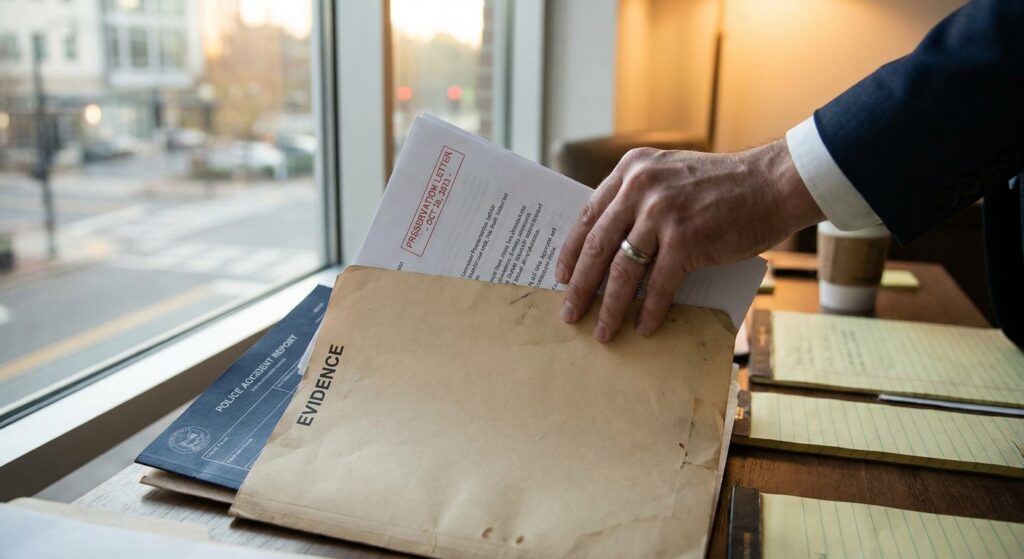
Keep this note with your crash photos and any medical paperwork. State insurance regulators walk accident victims through the same habit of documenting each step after an accident. When I take over a case at Carma Legal, this record tells me what the insurer already has and what they tried to pull. Knowing what to do if an insurance adjuster calls after an accident is more useful if you also keep a record of what was actually said.
If You Already Said Too Much, Is Your Case Over?
No. An early statement can make the claim more challenging, but it doesn’t necessarily end it. A single comment rarely outweighs the full weight of medical records, witness statements, and crash evidence, though it does mean the negotiation may start from a weaker position and may take more work.
I have handled matters like this at Carma Legal. In one case, a client had already engaged with the insurer on their own and received a lowball offer. Instead of just demanding more money, I pushed back with legal research and data-driven evidence: jury verdicts and settlements from similar cases in the same county, laid side by side to show what comparable injuries might resolve for. That raised the offer. I still did not believe it fairly compensated the client, so we kept pushing and moved the case to mediation, where we secured an offer that exceeded the client’s expectations, though outcomes vary and each case depends entirely on its own facts.
The point is simple. An early misstep can sometimes be managed, but it is managed by strategy and preparation, not by hoping the insurer forgets. The sooner an attorney steps in, the less time an early statement has to harden into the insurer’s whole theory of the case.
When Should You Route the Adjuster to an Attorney?
Consider routing the call the moment any of these are true: you feel pain, you have not yet seen a doctor, the adjuster asks about fault or prior injuries, or your wreck happened on a corridor where fault will be fought hard. When in doubt, hand off contact and let your attorney speak for you. Deciding what to do if an insurance adjuster calls after an accident gets simpler when you have someone whose job is to answer for you.
Charlotte’s heaviest corridors, I-77, Independence Boulevard, and South Boulevard, see wrecks every single day. Adjusters for national carriers know North Carolina’s contributory negligence rule can turn even a minor admission into a complete defense, which can make early calls in this market more aggressive than in comparative fault states. A sentence that would merely reduce a claim elsewhere can potentially end it here.
That is the bright line. If the stakes of a single word are that high, you may not want to improvise with the person whose job is to pay you less. You can give them your attorney’s number instead.
What Happens Once an Attorney Takes Over?
Once I take your case at Carma Legal, I send a representation letter and the adjuster’s calls to you stop. From there I gather your medical records and crash evidence and build the claim while you focus on healing, so negotiation can begin from a prepared position rather than a defensive one.
This is also where direct access matters. At Carma Legal, you speak to me, the attorney, not a rotating cast of paralegals. You see my face on the website and you hear my voice when you call. I manage every part of your case and keep the communication open, because after a bad adjuster conversation, the thing you need is honest guidance from someone who will actually pick up the phone.
My background is the reason the early tactics do not surprise me at Carma Legal: 12 years of practice, thousands of clients, and years spent defending these claims for insurance companies. I have watched which early statements can create claim challenges and which ones can be managed, from the inside. Bar ethics rules keep me from calling myself an “expert,” so I will just say I have seen the playbook before.
If an adjuster has already called and you are unsure whether you said too much, contact Carma Legal for a free consultation before you speak to the insurer again. Bring your call notes, your crash photos, and the claim number, and we can figure out together what the insurer has and what your next word should be.
Let the Right Team Handle the Conversation
After a wreck, an insurance adjuster’s call can feel urgent, but you don’t have to face it alone or unprepared. If you’re unsure what to say or worried you’ve already said too much, the team at Carma Legal can step in and handle all communication with insurers on your behalf. Protecting your claim starts with getting the right guidance before the next call comes in.
Outcomes vary in every case and depend on individual circumstances, evidence, and many factors outside any attorney’s control.