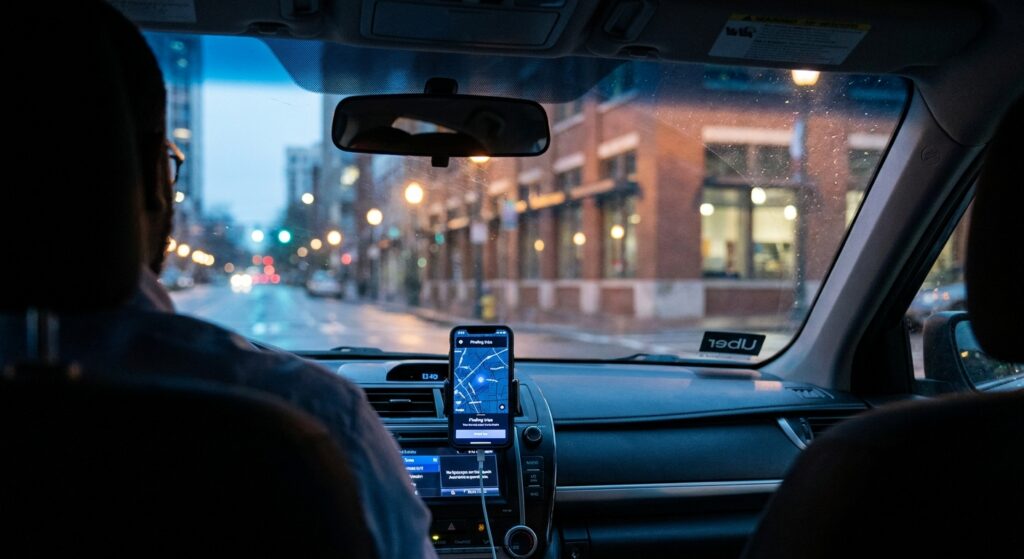
Maybe you have waited weeks for an adjuster to call you back. Maybe you just opened an offer that does not come close to covering your medical bills. Before I represented injured people, I worked for insurance companies and defended claims on their behalf, so I can tell you what that silence usually means. On that side of the table, delay is a strategy. The silence was the clock running, and every day it ran, the evidence that proves what happened to you got closer to being gone. As a personal injury lawyer at Carma Legal in Charlotte, NC, I prepare every case as if a jury will decide it, starting the day you hire me. That is how I take the clock away from the insurance company.
If you are in that spot, you are probably asking two questions. Is it too late to bring in a lawyer? And what did I lose by trying to handle this on my own first? Both are fair questions, and I would rather be candid with someone than tell them what they want to hear. Sometimes evidence is already gone. Often, though, more of it can still be found than the adjuster wants you to believe. Even when some proof is lost, the way a case is prepared from the moment an attorney steps in still changes how the insurer has to treat it.
This article explains what trial-ready preparation is, which evidence disappears first, what adjusters do with the time you give them, and how real jury verdict and settlement data can move a negotiation that has stalled.
What Does Trial-Ready Preparation From Day One Actually Mean?
Trial-ready preparation at Carma Legal means building your case from the first day as if a jury will decide it. The first step is locking down objective evidence of what happened before it can be repaired, sold, overwritten, or forgotten. It does not mean refusing to settle. It means any settlement offer gets measured against what a jury would actually see.
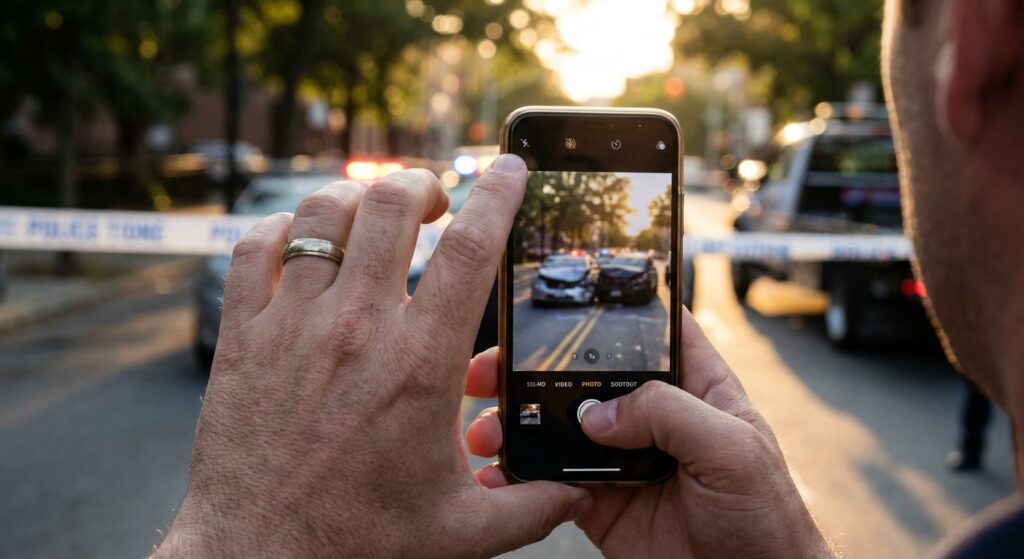
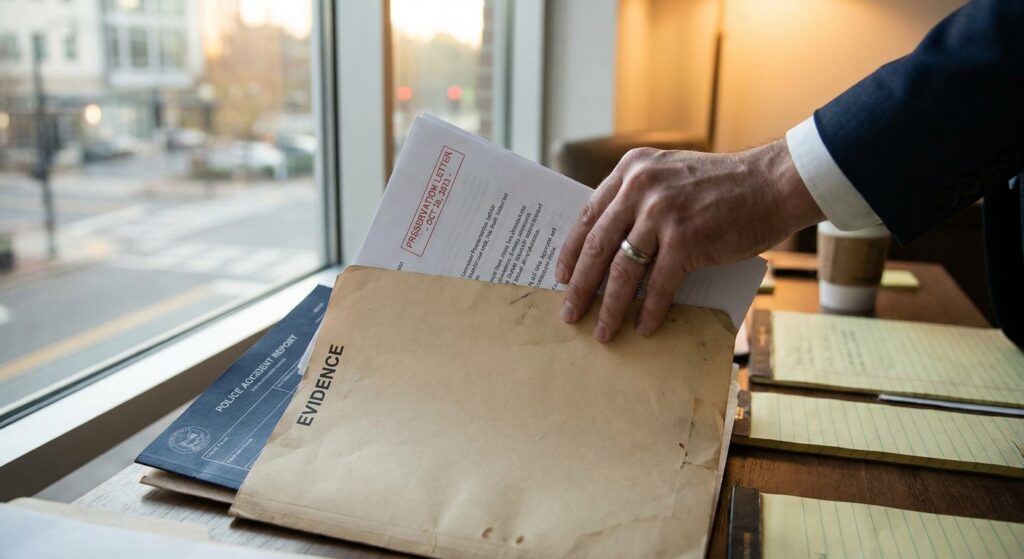
Think about renting an apartment. A tenant who photographs every wall and floor on move-in day rarely loses an argument about the security deposit, while a tenant who skips that step has only their word. A crash case works the same way. Carma Legal’s first priority on a new case is the objective record: the police report, the 911 records, the names and contact information of witnesses, satellite images of the scene, and any surveillance or traffic-camera footage that might show the crash. Preservation letters go out quickly, and in serious crashes, I also move to preserve the black box data stored in the vehicles. My rule is simple: preserve first, investigate second, and escalate when necessary.
The usual pattern runs in the opposite order. The injured person finishes treatment, someone sends a demand letter, the insurer says no, and only then does anyone start looking for evidence. By that point, months have passed. I do not want to discover in month six that a vehicle was salvaged or a video was recorded over in week two. That is the gap trial-ready preparation at Carma Legal is built to close.
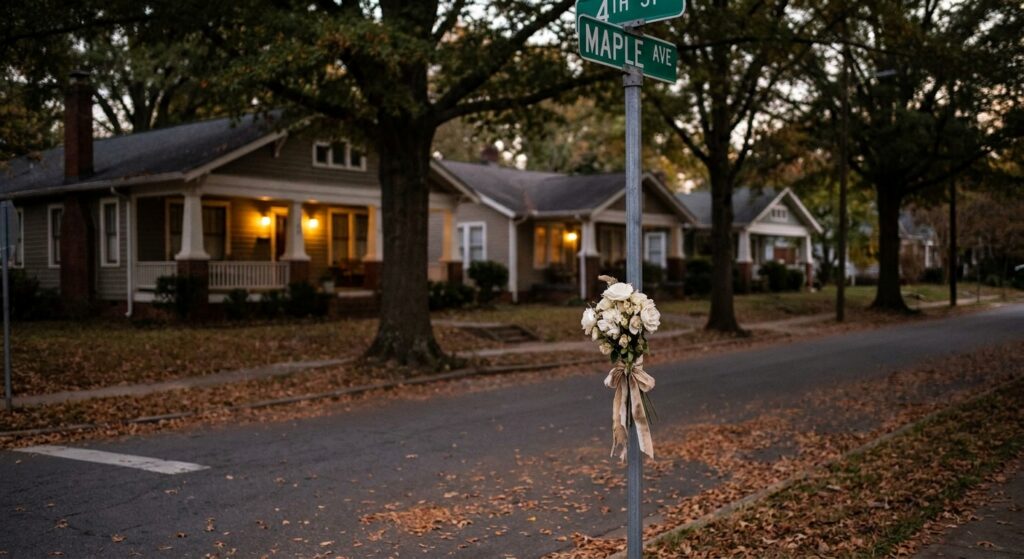
Picture a left-turn crash at a busy Providence Road intersection. The other driver tells the insurer the light was yellow and you were speeding. If nobody saved the 911 call from the bystander who saw it, and nobody asked the shop on the corner for its camera footage, the insurer can call the case a dispute. If that evidence was preserved in the first week, it stops being an argument and becomes a fact pattern.
The Evidence That Disappears While You Wait for the Insurer to Respond
Understanding why speed matters starts with knowing what is at risk. The most useful evidence in a crash case is often the most fragile: video, witnesses, the vehicles, and the electronic data inside them. Much of it can be lost within days or weeks, long before an adjuster finishes “reviewing” your claim.
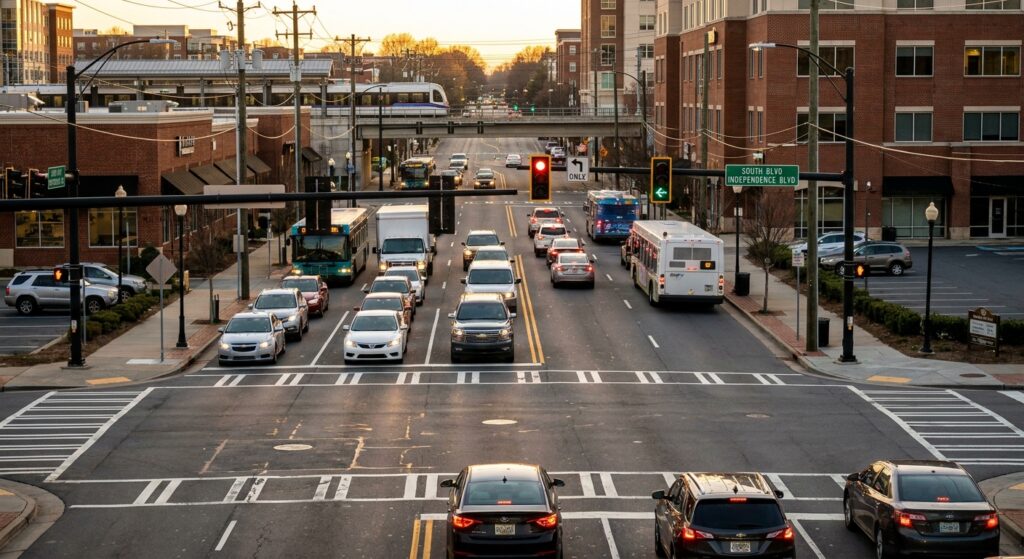
Surveillance video is usually the first to go. Gas stations, convenience stores, restaurants, and apartment complexes along roads like South Boulevard and Independence Boulevard often keep recordings for only a short window. Many systems record over old footage somewhere between a week and a month after it is captured. Not every traffic camera saves what it sees, and the ones that do may not hold it long. If no one asks for the footage in writing, it is usually gone for good.
Witnesses fade more slowly, but just as surely. The driver who pulled over after your rear-end crash on I-77 or I-85 may have given you a phone number at the scene. A few weeks later, that number may not work, the person may have moved, and their memory of which car moved first has softened.
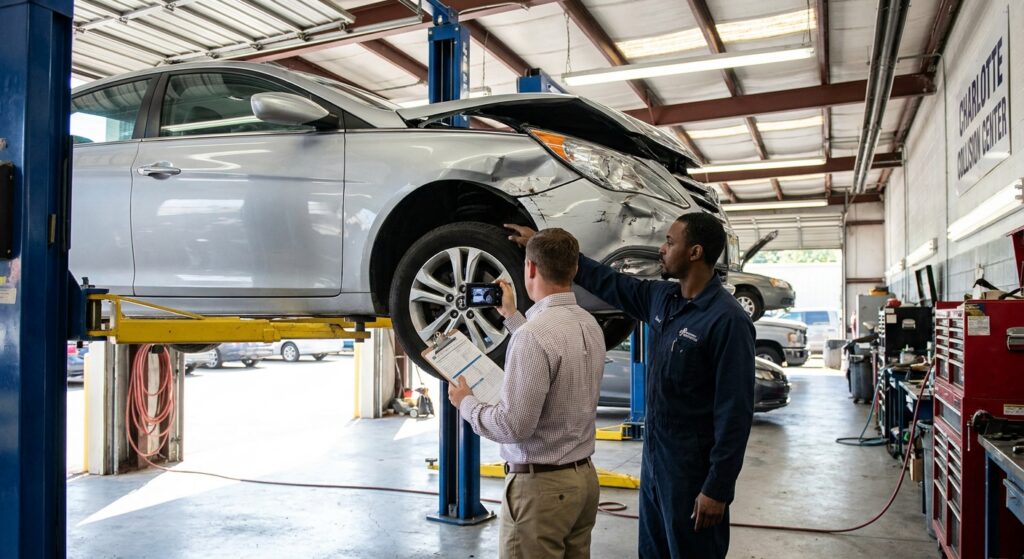
The vehicles themselves are next. Cars get repaired, or they are declared a total loss and sold at auction. Once the damage is fixed or the car is crushed, the crush pattern that showed the angle of impact cannot be rebuilt. The same is true for the event data recorder. A federal rule issued by the National Highway Traffic Safety Administration, 49 C.F.R. Part 563, sets standards for what these recorders capture when a manufacturer installs one, including speed, braking, and seatbelt use in the seconds around a crash. That data can be lost when a vehicle moves through salvage.
The law gives you tools, but only if the evidence still exists. Once a lawsuit is filed, Rule 34 of the North Carolina Rules of Civil Procedure lets a party request documents and inspect physical items like a vehicle. A request to inspect a car that has already been crushed gets you nothing. That is why the preservation letter matters: it puts the other side and third parties on notice early, while there is still something to save.
Each gap gives the adjuster room. Take a sideswipe on Independence Boulevard where both drivers say the other one changed lanes. Without video or an independent witness, the insurer can say liability is disputed and offer far less than your losses call for. In North Carolina, that move is especially dangerous. North Carolina follows contributory negligence, so if the insurer can convince a jury you were even slightly at fault, the law can bar your recovery entirely. Preserved evidence is how you keep that argument from taking hold.
Why Insurance Companies Want You to Wait (And What They Do With the Time You Give Them)
All of this explains why delay works in the insurer’s favor. Every week without preserved evidence makes your claim easier to dispute and cheaper to settle. Adjusters do not need to be rude to do this. Many are polite, sympathetic, and patient while the clock runs.
Because I spent part of my career defending claims for insurance companies, I have seen the playbook from the inside. The friendly call asking how you are feeling turns “I’m doing okay” into a note in the file. The request for a recorded statement comes early, before you know how badly you are hurt. The line that “we are still evaluating liability” can stretch for weeks while nothing happens. Requests for years of old medical records go looking for a prior injury to blame. None of this is unusual, and none of it is designed to help you.
In my experience, most injured people try to handle things themselves at first, and it makes sense why. At the start, the questions are about property damage: When can you get a rental vehicle? When will the insurer pay for your total loss? Then the pain sets in, and the questions shift to how to manage the bills and the adjuster calls. These are exactly the things I take over directly at Carma Legal. While you are on hold about a rental car, the insurer is not losing anything. You are, because the clock on the video, the witnesses, and the vehicles keeps running.
You may be worried that you already said something to the adjuster that hurt your case. That is a fair worry, and I will not pretend a recorded statement never matters. But one phone call is rarely the whole picture. A statement like “I’m fine,” given a few hours after a crash, reads very differently next to weeks of medical records and objective evidence of how the collision happened. That is one more reason to keep getting the medical care you need and to stop giving statements without an attorney.
You may also wonder whether a lawyer can actually stop the delays. Once I am involved, the insurer deals with me, the evidence is protected, and waiting no longer wears down your case the same way. When stalling continues, there are clear next steps: filing suit, pushing for mediation, and preparing for trial.
How Pushing Back With Jury Verdict Data Changes the Negotiation
Once the evidence is secured, the conversation with the insurer changes. Simply demanding more money gives the adjuster nothing to answer. Showing the adjuster what juries and settlements have looked like in similar cases in the same county forces the insurer to explain why its offer should fall below that record.
An adjuster can wave off “my client deserves more” in a sentence, but it is much harder to dismiss legal research and data-driven evidence. In Charlotte, the benchmark is what has happened in Mecklenburg County. Jury verdicts are public court records kept through the Mecklenburg County Clerk of Superior Court, and reported settlements from similar cases show what insurers have paid. Venue matters because the jury pool matters. A lowball offer has to be defended against comparables: how the crash happened, causation, permanency of the injury, and the treatment the person needed. In practice at Carma Legal, that means putting it in front of the adjuster plainly: here are comparable cases, here are the similarities and differences.
Here is one example from my practice at Carma Legal, with the client’s details kept private. In one documented engagement, a client received a lowball offer. Instead of simply demanding more money, I pushed back with legal research and data-driven evidence, including jury verdicts and settlements from similar cases in the same county. That raised the offer, but I still did not believe it fairly compensated this particular client. So we kept pushing and got the insurer to mediation, where we secured an offer that this client felt addressed their needs. That result reflected this client’s specific circumstances, and every case is different, so it is not a prediction of what any other client should expect. What that case shows is that being willing to keep pushing only works when the preparation behind it is real.
That is the link between early preparation and the negotiating table. Jury data only carries weight if the insurer believes you can actually take the case in front of a jury, and preserved video, located witnesses, and secured vehicle data are what make that believable.
What Happens When You Call a Personal Injury Lawyer in Charlotte, NC?
When you call Carma Legal, you talk to the attorney. The first conversation focuses on what happened, what evidence may still exist, and what needs to be protected right away. The consultation is free, and you pay no attorney fee unless there is a recovery for you.
If you search for a personal injury lawyer in Charlotte, NC, you will find a long list of names. The more useful question is who you will actually talk to once you sign. At many large firms, clients become file numbers, passed between case managers who did not gather the evidence and will not argue the case. That is not the firm I want Carma Legal to become. You see my face on the website, and you hear my voice when you call. The person managing the evidence, negotiating with the adjuster, and preparing for trial is the same person who answers your questions. I want to be able to tell my client’s story because I actually know their story.
Over roughly 12 years, I have represented many clients at both large law firms and boutique firms, after starting out defending claims for insurance companies. You can confirm any lawyer’s North Carolina license through the resources on the North Carolina Judicial Branch’s Find an Attorney page.
We at Carma Legal are very intentional about the cases we take. Not-at-fault intersection crashes are where early preparation makes the biggest difference, including T-bone collisions, left-turn failures to yield, red light and stop sign runners, vehicles crossing into oncoming traffic, and lane-change sideswipes.
People call from all kinds of places: a body shop lot while waiting on a damage estimate, an urgent care waiting room, or a parking lot after another frustrating adjuster call. Wherever you are calling from, the next steps at Carma Legal follow the same order:
- Preserve. Preservation letters go out, and the police report, 911 records, and any available footage are requested.
- Investigate. Witnesses are identified and contacted, and satellite images and scene details are gathered.
- Take over insurer communication. Adjuster calls, property damage, and rental questions come to me instead of you.
- Support your care. You focus on getting the medical treatment you need, and your records are tracked as they come in.
- Escalate when necessary. If the insurer stalls or lowballs, the case moves toward suit, mediation, or trial.
On the question of whether it is too late, North Carolina gives you three years from the date of injury to file most personal injury claims under N.C. Gen. Stat. § 1-52. The legal deadline is rarely the real problem. The evidence deadline is much shorter, and it is already running.
Questions Frustrated Claimants Ask Before They Hire a Lawyer
These are the questions people ask most often once an insurer has started stalling or has made an offer that feels wrong.
Is it too late to hire a personal injury lawyer if the insurance company already made an offer?
No. An offer is not a deadline, and you are not required to accept it. An attorney can still push back with jury verdict and settlement data from the same county and press for mediation. Some evidence may already be lost by then, which is why bringing in an attorney earlier is better.
What evidence disappears if I wait to hire a lawyer after a car accident?
Surveillance footage often goes first, since many systems record over it within a week to a month. Witnesses move, change numbers, or forget details. Vehicles get repaired, totaled, or sold at salvage, and black box data can be lost along with them. Preservation letters sent early help protect what still exists.
How does a personal injury lawyer in Charlotte prepare a case for trial from day one?
At Carma Legal, it starts with objective evidence. That means sending preservation letters, getting the police report and 911 records, contacting witnesses, pulling satellite images, and finding surveillance or traffic-camera footage. In serious crashes, it also means preserving black box data before the vehicles are repaired or sold.
Do I have to pay upfront to hire a personal injury lawyer in North Carolina?
No. Carma Legal handles injury cases on a contingency fee basis, which means you pay no attorney fees unless there is a recovery for you. Your first consultation is free, so you can learn what evidence still matters before you make any decision about hiring.
What is the statute of limitations for a personal injury claim in North Carolina?
Most North Carolina personal injury claims must be filed within three years of the injury under N.C. Gen. Stat. § 1-52. Evidence moves much faster than that legal deadline. Video, witness memories, and vehicle data can be gone within weeks, so waiting until close to the deadline usually costs proof.
Can I still recover compensation if I was partially at fault for an accident?
In North Carolina, the contributory negligence rule can bar recovery if you are found even slightly at fault. Independent evidence is your best defense against an insurer shifting blame.
Call Carma Legal at 702-934-2228 for a free consultation in Charlotte. You will speak directly with the attorney about what evidence can still be preserved and how trial-ready preparation changes your conversation with the insurance company. Before you call, write down the exact intersection or highway exit where you were hit, the time of day, and every business you remember on the nearby corners. Those corners are where the cameras are, and that list is the first thing I will want to work from.
Ready to Move Forward With Your Injury Claim?
If you’re uncertain whether your case will hold up under scrutiny or worried about settling too quickly, the difference often comes down to how your attorney prepares from the very first meeting. At Carma Legal in Charlotte, every personal injury case is built with the courtroom in mind, even when settlement is the goal. That preparation shapes everything from the evidence gathered to the value insurers place on your claim.
Each case is different, outcomes depend on the specific facts and law applicable to that case, and past results do not predict or guarantee results in your case.